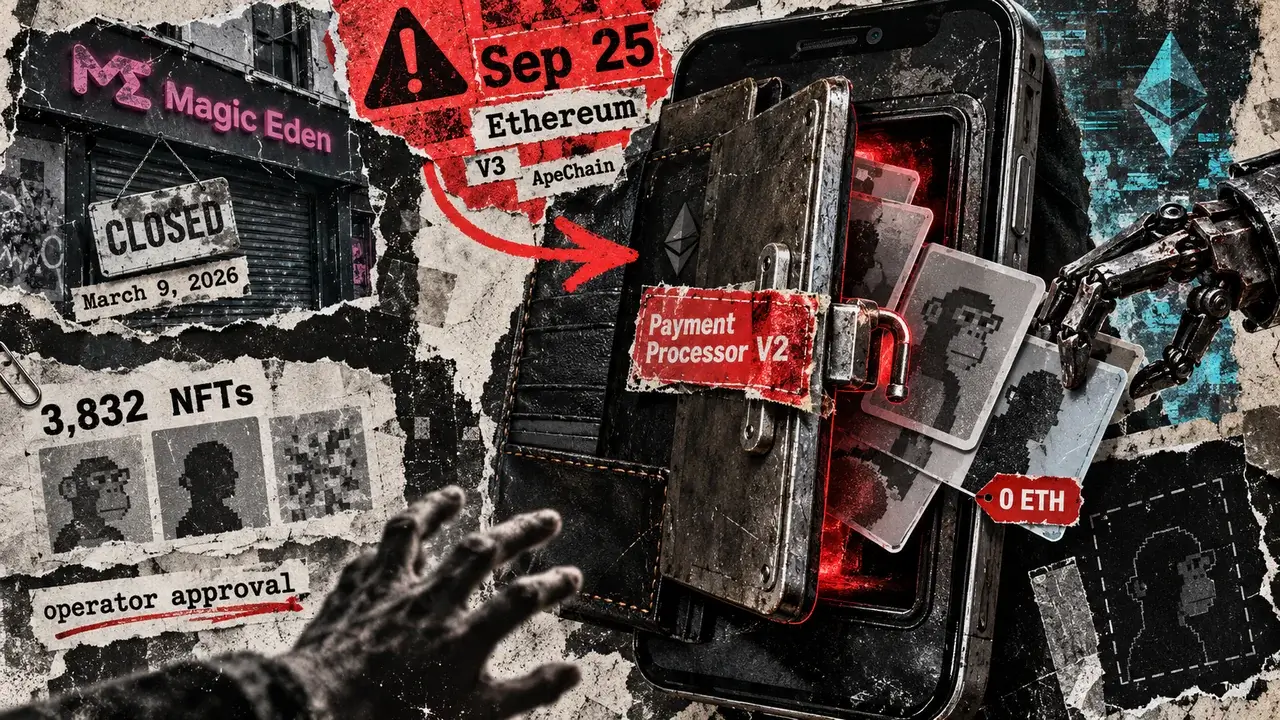
Old Magic Eden NFT approvals are putting user wallets at risk because smart contract 'allowances' granted to the platform's legacy Ethereum Virtual Machine (EVM) marketplace survived the site's closure. When users list NFTs, they grant the marketplace permission to move those assets; if these permissions are not explicitly revoked, they remain active indefinitely. Security researchers at Revoke.cash discovered that these 'ghost permissions' allow for the unauthorized transfer of assets, a vulnerability that was recently exploited by a whitehat actor to secure thousands of at-risk digital collectibles.
The whitehat intervention involved moving 3,832 NFTs into a secure escrow to protect them from potential exploiters who had begun scanning for these specific legacy permissions. While the whitehat's intentions were protective, the event has caused significant alarm across the NFT community, highlighting how easily 'zombie contracts' from defunct 2024-2025 era platforms can still affect modern 2026 portfolios. This incident serves as a stark reminder that simply stopping the use of a dApp does not terminate the underlying smart contract permissions stored on the blockchain.
From a regulatory and technical standpoint, this event is likely to accelerate the push for 'gasless revokes' and standardized permission expiration dates. US-focused platforms and security firms are increasingly advocating for more transparent wallet interfaces that alert users to high-risk, long-standing approvals. The fact that thousands of high-value NFTs were vulnerable despite the marketplace being officially 'closed' for some time suggests a major gap in the current Web3 user experience regarding 'post-lifecycle' asset security.
Market participants should watch for a potential surge in 'revocation' activity as users rush to clean up their wallet histories. Investors should also monitor whether other legacy marketplaces like OpenSea or LooksRare have similar lingering permissions that could be targeted. For now, the immediate recommendation for all EVM users is to utilize tools like Revoke.cash or Etherscan’s approval checker to identify and terminate any permissions associated with Magic Eden’s older contract addresses.