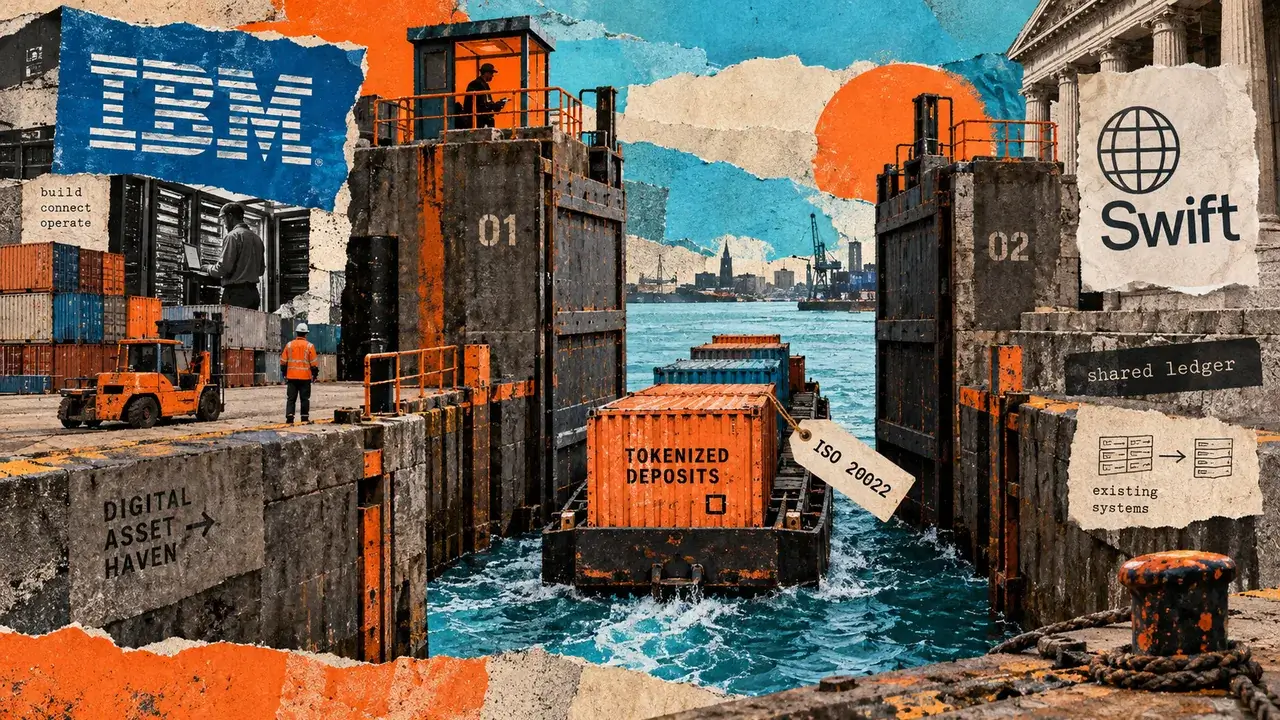
In early 2026, IBM and Digital Asset Haven successfully deployed a new ISO 20022 adapter that allows 17 major financial institutions to transmit tokenized deposit instructions directly through the SWIFT ledger. This adapter functions as a sophisticated translation layer, converting blockchain-native token data into the standardized ISO 20022 messaging format required by the global banking system. By doing so, it allows banks to experiment with digital asset liquidity without abandoning the regulatory frameworks and communication protocols that govern international finance.
The technical framework, powered by Digital Asset Haven’s technology, focuses on the messaging and instructional phase of the transaction lifecycle. By linking these 17 banks, the project aims to reduce the friction typically associated with cross-border tokenized transfers. However, a significant caveat remains: the final settlement of these transactions does not occur on a decentralized blockchain. Instead, the actual movement of funds is still executed via existing legacy settlement systems, which limits the immediate efficiency gains of a fully on-chain environment.
From a geopolitical and regulatory perspective, this move signifies the U.S. banking sector's cautious approach to digital transformation. While the integration utilizes blockchain-like ledgers for tracking, the persistent reliance on centralized cloud infrastructure introduces what experts call 'cloud risk.' This refers to the vulnerability of the system to outages or security breaches at the service provider level, which could potentially disrupt global payment flows if not properly mitigated through multi-cloud strategies or further decentralization.
For market participants, this development is a clear signal that the road to 'Real World Asset' (RWA) tokenization is being paved through hybrid models rather than total disruption. Investors should watch for whether these 17 banks move toward 'atomic settlement'—where the instruction and the payment happen simultaneously—or if they continue to use the SWIFT ledger merely as an advanced messaging board. The next milestone will be the expansion of this pilot to include retail deposit tokens, which would require even stricter regulatory oversight from the Federal Reserve.