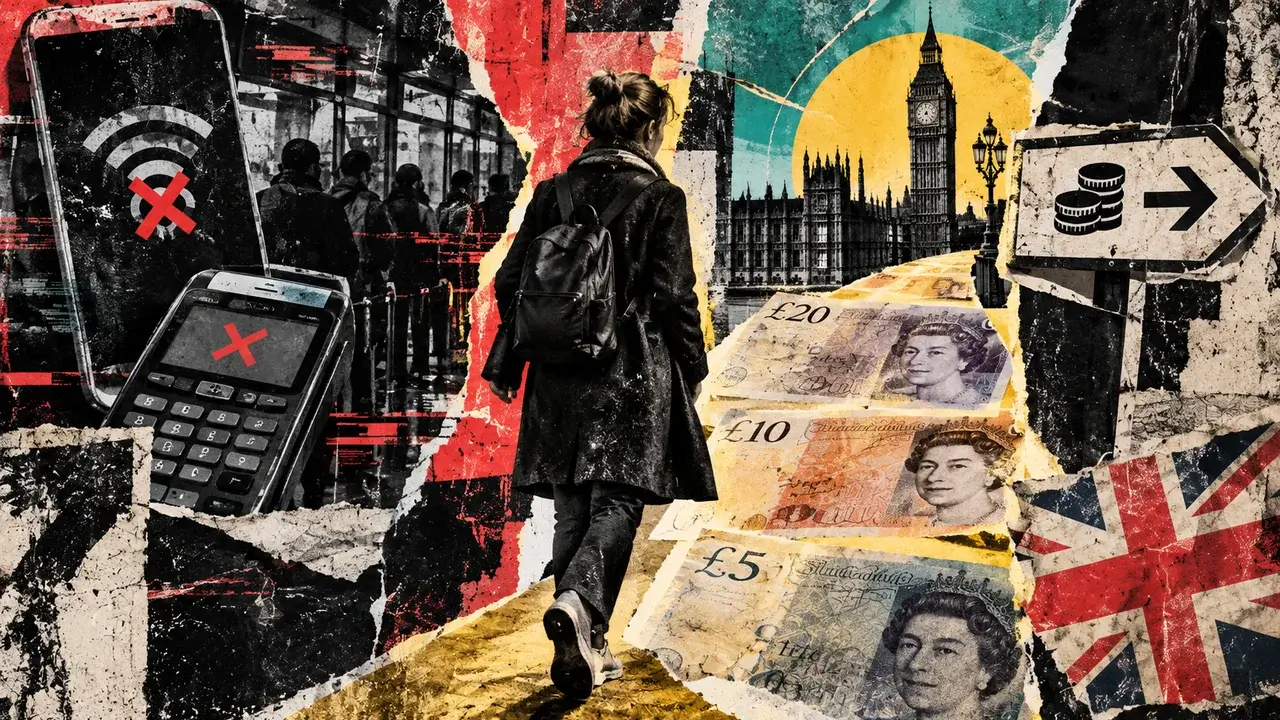
UK residents are increasingly keeping physical cash at home in 2026 as a safeguard against a series of high-profile bank app failures and unexplained card declines. This behavior signals a deep-seated need for permissionless money—assets that can be spent without third-party approval or technical uptime reliance. For the crypto market, this shift validates the core value proposition of Bitcoin (BTC), positioning it as a digital version of the 'cash under the mattress' strategy that remains accessible even when traditional financial rails fail.
The UK's recent financial data shows a significant increase in physical currency demand despite the government’s push for a cashless society. This irony stems from technical vulnerabilities in the traditional banking stack; when centralized payment processors go offline, consumers lose all purchasing power. Bitcoin, operating on a decentralized network with near-perfect uptime, offers the same sovereignty as physical cash but with the efficiency of a global digital infrastructure, making it an attractive fail-safe for the modern era.
As the British public becomes more aware of the fragility of 'permissioned' money, UK-based crypto exchanges have reported a spike in first-time buyers who cite system reliability as their primary motivation. Investors are shifting their perspective, viewing BTC not just as a speculative vehicle but as 'digital cash' that provides an exit from systems that can be switched off at any moment. This narrative shift is expected to bolster Bitcoin's support levels as it transitions from a high-risk asset to a necessary utility.
Moving forward, market participants should watch for the UK government's response, particularly regarding the development of a Central Bank Digital Currency (CBDC). If future CBDCs include programmable restrictions or 'kill switches,' the flight toward truly permissionless assets like Bitcoin is likely to accelerate. Additionally, upcoming 2026 regulatory reviews on self-custody wallets in the UK will be a critical indicator of how easily citizens can maintain their financial independence during traditional banking crises.