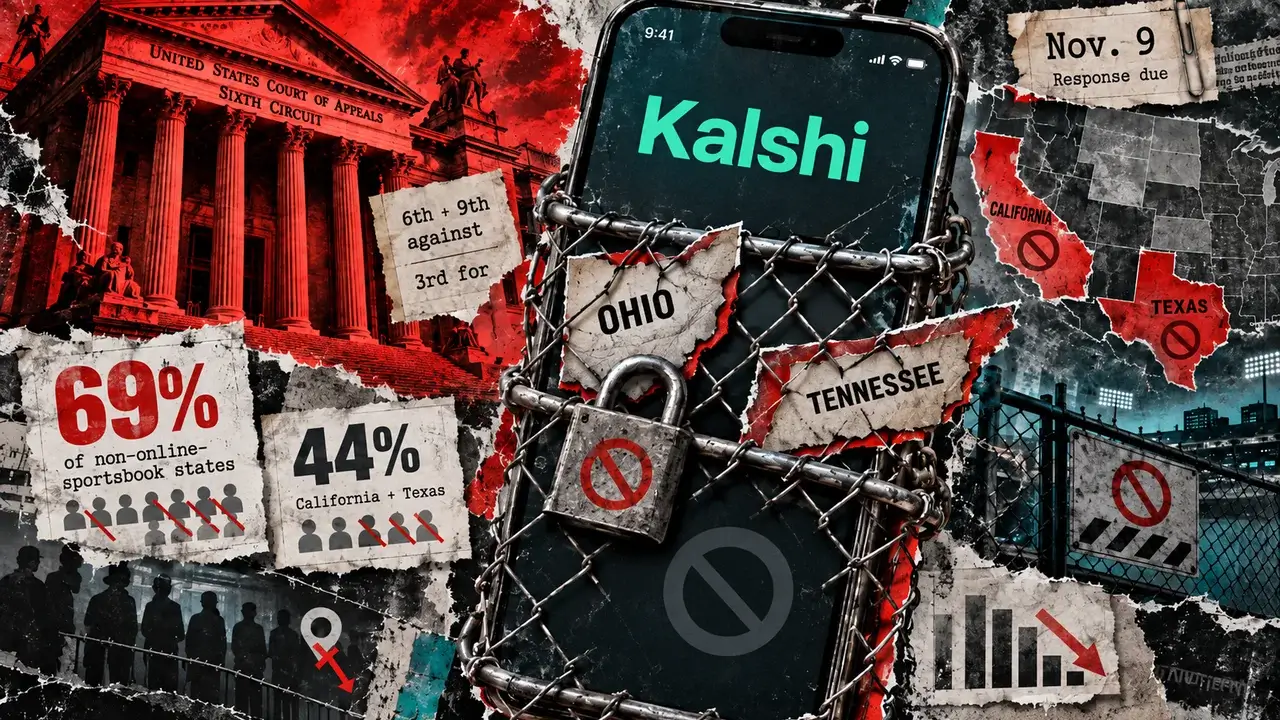
The U.S. Sixth Circuit Court of Appeals has ruled that Kalshi must geofence and lock out users in Ohio and Tennessee for sports-related contracts to comply with state-level gambling prohibitions. In the ruling issued September 25, 2026, the court rejected Kalshi’s legal argument that its status as a federally regulated exchange under the Commodity Futures Trading Commission (CFTC) preempts state law. The decision marks a significant shift in the legal landscape for prediction markets, clarifying that federal oversight does not grant a 'free pass' to bypass localized betting restrictions.
The court specifically addressed Kalshi's concern that state-by-state compliance would conflict with its duties as a federal exchange. The judges dismissed this, noting that geofencing technology provides a practical and workable method for the platform to satisfy both federal regulations and state statutes simultaneously. This second appellate win for state regulators reinforces the power of individual states to define and prosecute illegal gambling, even when the underlying assets are structured as financial contracts.
This ruling creates a complex regulatory environment for the broader prediction market industry, which has seen explosive growth in 2026. By allowing Ohio and Tennessee to enforce their specific gambling laws against a CFTC-regulated entity, the court has potentially opened the door for other states to pursue similar litigation. This could lead to a fragmented U.S. market where certain contracts are available only in specific jurisdictions, complicating the user experience and limiting total market liquidity.
For crypto investors and DeFi participants, this legal precedent is a warning that decentralized and centralized prediction platforms alike remain vulnerable to state-level enforcement. While Kalshi operates as a regulated U.S. entity, the logic applied here could eventually be extended to geofence users of decentralized protocols if state attorneys general decide to crack down on 'unregulated' sports betting. Market participants should closely monitor whether other circuits follow the Sixth Circuit’s lead or if Kalshi attempts an appeal to the Supreme Court to resolve the federal preemption conflict.