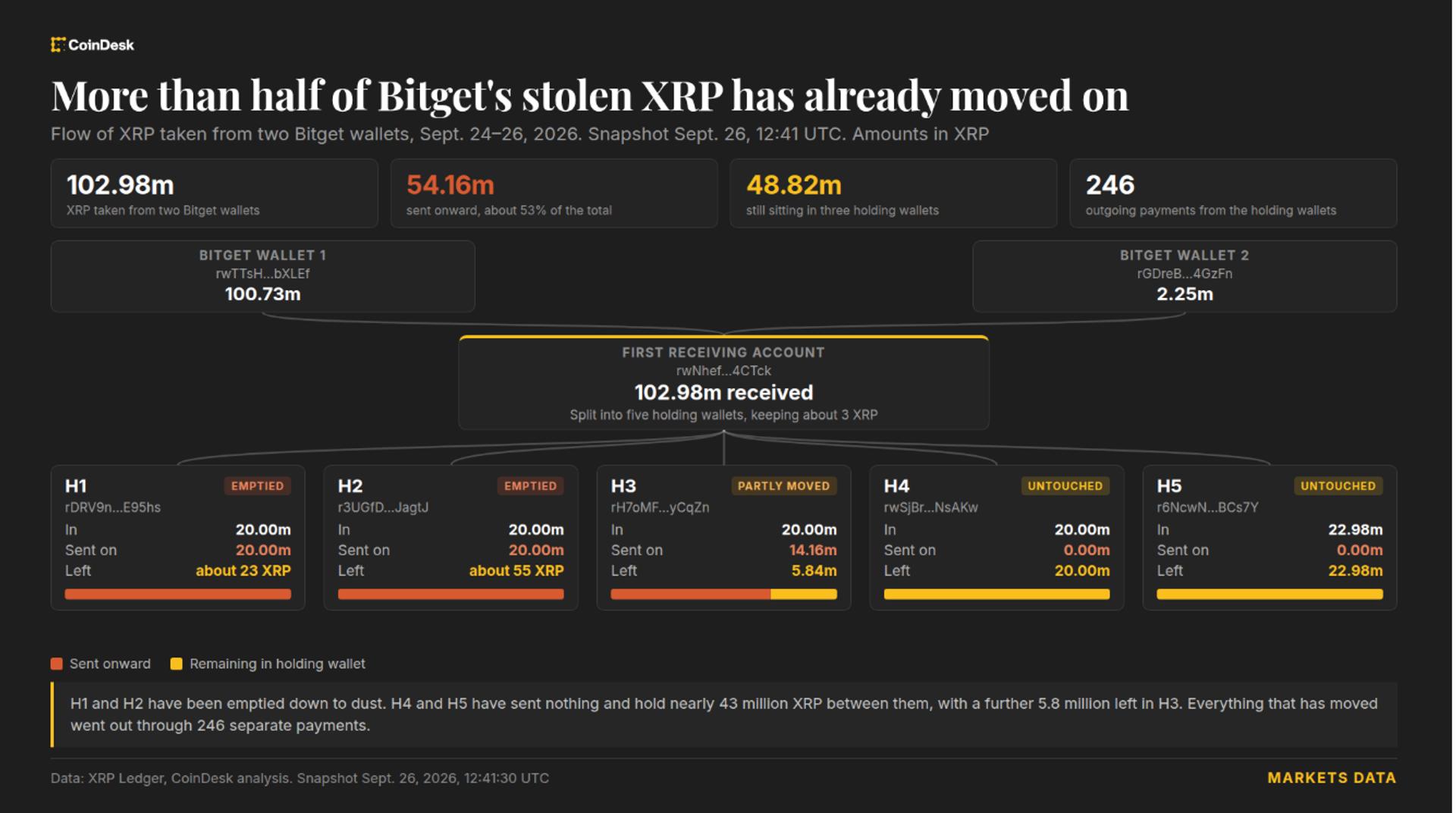
Ripple Labs is unable to freeze the $83 million in XRP stolen during the Bitget exploit because the XRP Ledger (XRPL) is a decentralized blockchain without a built-in mechanism to blacklist native XRP addresses. Unlike certain centralized stablecoins that include "freeze" functions in their smart contracts, XRP transactions are immutable once confirmed on the ledger. Ripple, as a developer of the protocol, does not possess a "kill switch" or unilateral control over individual user wallets, meaning the funds remain mobile as long as they stay within the decentralized ecosystem.
Recent on-chain data shows the Bitget hacker is actively capitalizing on this technical reality. Two of the exploiter's primary wallets have been nearly emptied, and a third account is currently being drained of its holdings. While approximately $75 million remains across five original holding accounts, the rapid movement of these assets suggests a sophisticated attempt to fragment the stolen funds before centralized off-ramps can coordinate manual blacklisting efforts.
This situation places Ripple in a complex position in 2026. While the inability to freeze funds reinforces Ripple’s long-standing argument that the XRPL is truly decentralized—a critical point for regulatory clarity in the U.S.—it also presents a significant challenge for victimized exchanges like Bitget. Law enforcement and blockchain forensics teams are now forced to rely on tracking the funds to centralized service providers rather than stopping the movement of the assets at the protocol level.
For the broader market, the focus shifts to whether the hacker can successfully liquidate $83 million without crashing the XRP price or being caught at a KYC-compliant exchange. Investors should expect heightened volatility for XRP as these funds move toward mixers or decentralized exchanges. Furthermore, this event will likely renew calls for more robust security protocols at centralized exchanges to prevent such massive outflows of capital in the first place.