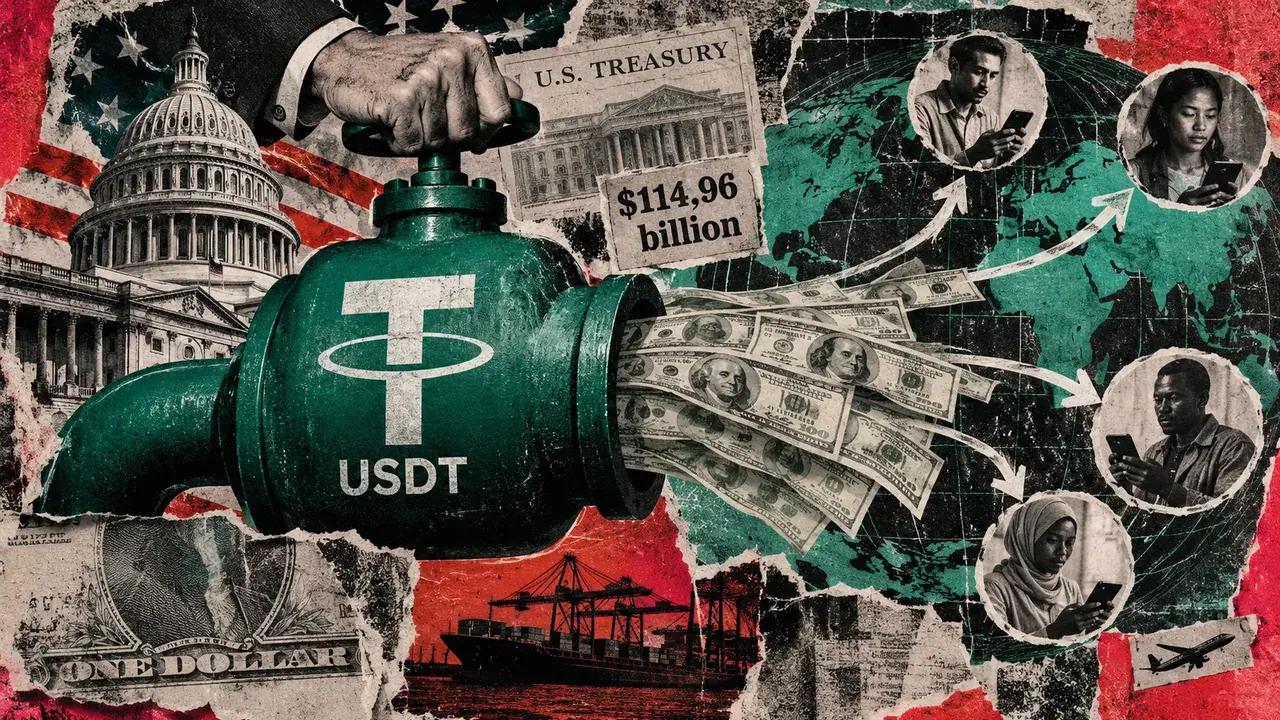
Tether’s $114 billion stockpile of U.S. Treasury bills has effectively turned the stablecoin issuer into one of the world’s most significant private creditors to the United States government. This enormous financial exposure serves as a 'shield' against aggressive regulatory shutdowns, as any sudden disruption to Tether could trigger a forced sell-off of U.S. debt, potentially destabilizing the Treasury market. Washington's relationship with Tether has evolved from one of pure enforcement—evidenced by past fines for misleading reserve disclosures—to a complex form of mutual dependence where the U.S. benefits from Tether's insatiable appetite for American debt.
In 2026, the geopolitical utility of Tether has become a primary argument for its survival. By circulating billions of dollar-pegged tokens globally, Tether extends the reach of the U.S. dollar into emerging markets and decentralized finance (DeFi) ecosystems where traditional banking is restricted. This 'dollarization' of the digital economy aligns with long-term U.S. interests, even as domestic regulators continue to debate the long-term risks of stablecoins. The distance between the previous fines and today’s tacit acceptance highlights a pivot toward prioritizing national debt liquidity over strict crypto-native compliance.
For investors and market participants, this dynamic creates a unique 'too big to fail' scenario within the crypto space. While Tether still faces scrutiny regarding its audit transparency and operational risks, the sheer volume of its Treasury holdings makes it a systemic component of the broader U.S. financial apparatus. As long as the U.S. government requires high demand for its debt, Tether’s role as a buyer of last resort for Treasuries provides a layer of political protection that smaller stablecoin issuers lack.
Moving forward, market observers should watch for potential legislative moves that could formally integrate stablecoin issuers into the federal financial system. If Washington moves to codify the status of high-volume Treasury holders like Tether, it could lead to a new era of regulated but protected stablecoins. However, any sign of Tether diversifying away from U.S. debt into other assets could quickly erode this political goodwill and invite renewed regulatory pressure from the SEC and Department of Justice.