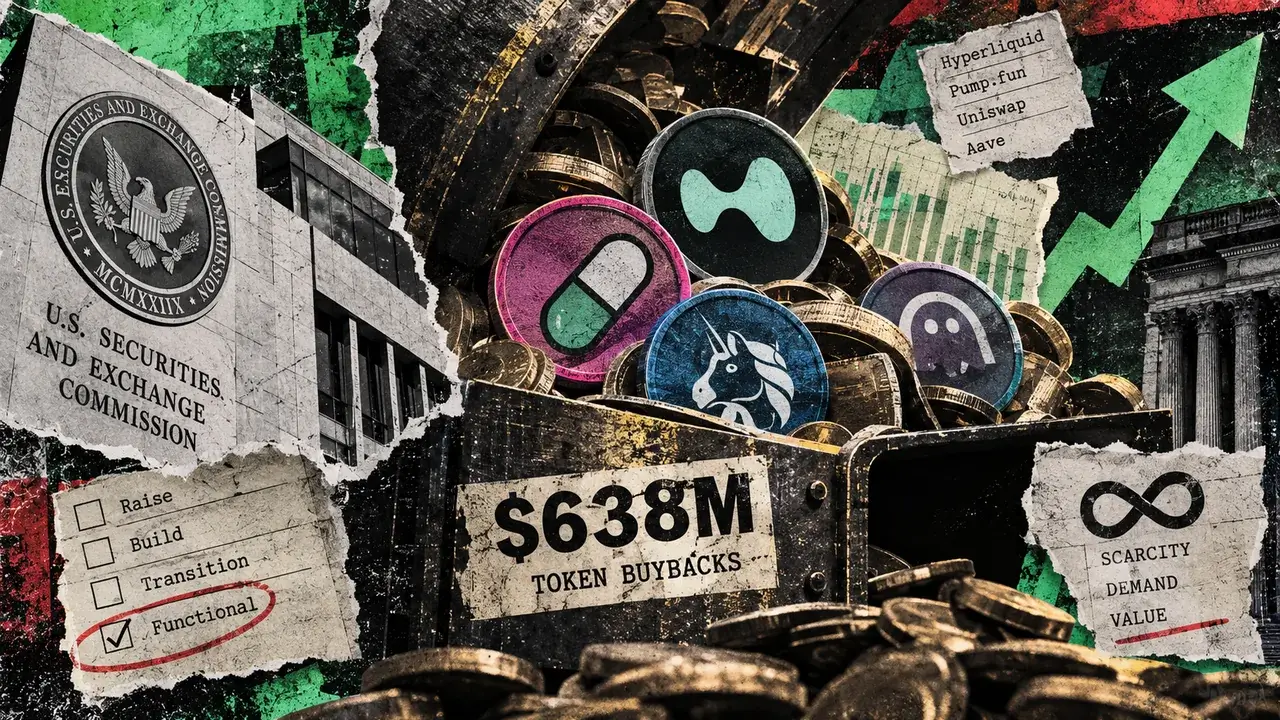
The SEC's recent decision to clear significant regulatory hurdles regarding protocol treasury management has directly enabled a record $638 million in crypto token buybacks through late August 2026. By providing clarity that specific buyback and burn mechanisms do not necessarily constitute an unregistered securities offering, US regulators have unlocked a massive wave of capital return to token holders. This year's total already eclipses the $545 million recorded during the same period in 2025, representing a maturing market that is increasingly adopting traditional corporate finance strategies.
According to data from Allium Labs, two specific entities have dominated this trend. Hyperliquid led the market with roughly $370 million in buybacks, while Pump.fun followed with approximately $200 million. Together, these two projects account for nearly 90% of the total buyback volume in 2026. The concentration of activity in these high-volume protocols suggests that the market is rewarding platforms that generate significant internal revenue and utilize that revenue to stabilize their ecosystem's native assets.
The political and regulatory context is vital here, as the SEC had spent the previous two years scrutinizing buybacks as a form of price manipulation or evidence of a centralized "common enterprise." The shift in September 2026 indicates a more nuanced approach from Washington, acknowledging that decentralized protocols require flexible treasury tools to remain competitive. This move is particularly beneficial for US-focused crypto intelligence and investment firms, which can now model token value based on consistent buyback pressure rather than speculative hype alone.
Looking ahead, market participants should watch for other major DeFi protocols to follow the lead of Hyperliquid and Pump.fun. If the current trajectory continues, total buybacks for the 2026 calendar year could realistically approach the $1 billion mark. Investors should monitor whether the SEC issues a formal framework for these activities or continues to provide clarity through piecemeal enforcement exemptions, as this will determine if smaller, emerging protocols can safely implement similar value-accrual mechanisms.