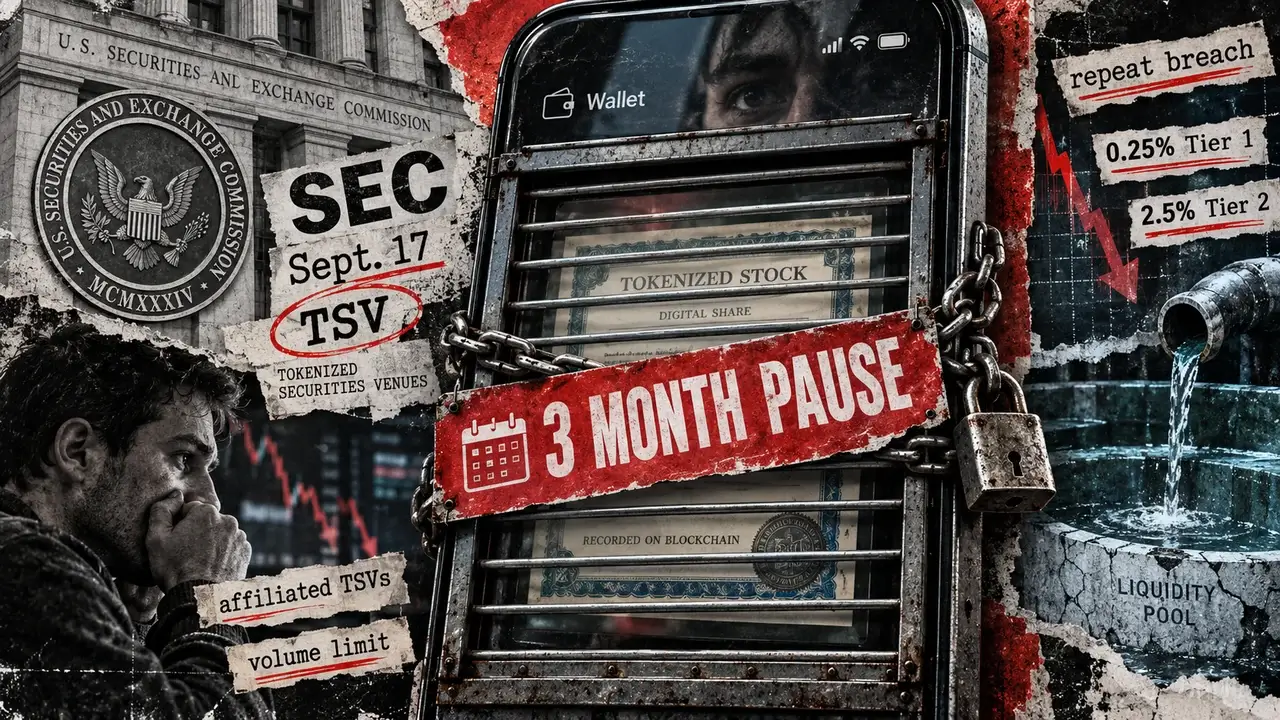
Investors in tokenized stocks may face unexpected three-month trading suspensions when platforms are required to perform mandatory reconciliation between digital tokens and the underlying equities held by traditional custodians. These halts typically occur during major corporate actions, such as stock splits or mergers, where the blockchain-based record of ownership must be verified against legacy brokerage systems. By pausing trading for up to 90 days, issuers ensure that every token in circulation remains backed 1:1 by a physical share, protecting the integrity of the asset's valuation.
As the Real World Asset (RWA) sector matures throughout 2026, the friction between instant blockchain settlement and traditional T+1 settlement cycles has become a primary focus for US regulators. The SEC has emphasized that while tokenization offers the convenience of 24/7 trading, these assets remain bound by federal securities laws. The 90-day window provides a legal buffer for platforms to resolve 'orphaned tokens' or technical discrepancies that can arise when smart contracts interact with traditional financial infrastructure during high-volatility periods.
For the average retail investor, this regulatory requirement introduces a significant liquidity risk. Unlike decentralized cryptocurrencies that trade freely across global exchanges, tokenized stocks are centralized products. If an issuer initiates a compliance halt, the asset becomes effectively illiquid, preventing holders from exiting their positions even if the underlying stock price fluctuates wildly on traditional exchanges like the NYSE or NASDAQ.
Moving forward, market participants should monitor the development of the 'Unified Ledger Standards,' a proposed framework aimed at reducing these lengthy reconciliation windows to under 24 hours. Until these technological and regulatory bridges are fully optimized, investors should carefully review the 'Liquidity and Suspension' clauses in their RWA provider’s terms of service. Watching the integration of Chainlink’s Proof of Reserve or similar oracle solutions will be critical, as these technologies may eventually automate the verification process and eliminate the need for manual three-month halts.