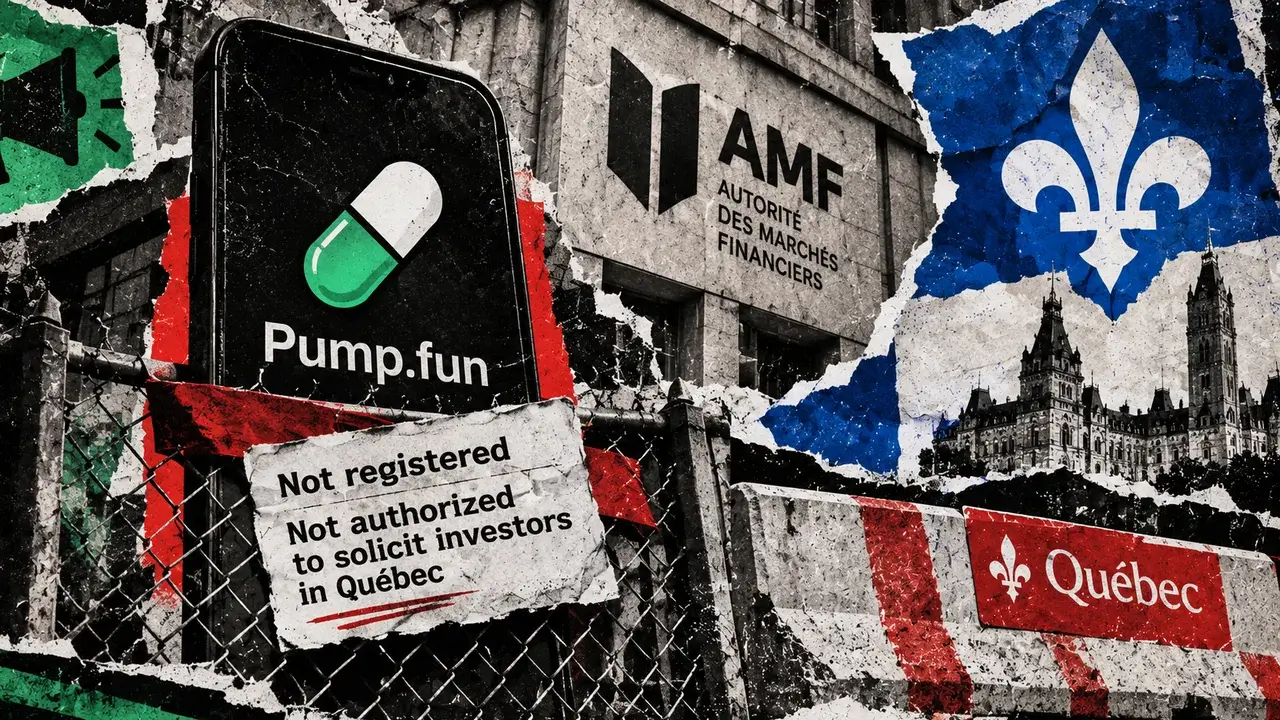
On September 25, 2026, Quebec’s financial regulator, the AMF, issued a public alert stating that the popular meme-coin platform Pump.fun is not authorized to solicit investors within the province. The regulator highlighted that the platform is currently operating without the mandatory registration required to offer securities or investment services to the public. For Canadian users, this means the platform lacks the oversight and consumer protection mechanisms required by provincial law, leaving traders with limited legal recourse in the event of fraud or platform failure.
Despite the stern warning, the AMF has not yet announced a formal website ban or restricted access to decentralized wallets associated with the service. The alert focuses specifically on the platform's solicitation practices, suggesting that while the site remains technically accessible, the regulatory body is closely monitoring its activities. This action follows a surge in meme-coin volatility throughout 2026, which has drawn the attention of multiple North American regulators concerned about high-risk retail speculation.
This regulatory friction reflects a broader 2026 trend where the Canadian Securities Administrators (CSA) are tightening their grip on 'gamified' crypto trading environments. By flagging Pump.fun, the AMF is reinforcing the standard that any platform facilitating the launch and trade of digital assets must comply with strict KYC (Know Your Customer) and AML (Anti-Money Laundering) protocols. The AMF’s stance is a proactive measure to prevent unregistered entities from targeting vulnerable retail investors during the current market cycle.
For the broader crypto market, this development could lead to a localized decline in liquidity as Canadian investors become wary of potential geofencing. If Pump.fun fails to engage with the AMF to rectify its registration status, a full IP-based block for Canadian residents may follow, similar to actions taken against offshore exchanges earlier in the year. Traders should watch for similar warnings from the Ontario Securities Commission (OSC) to see if a nationwide enforcement trend emerges.