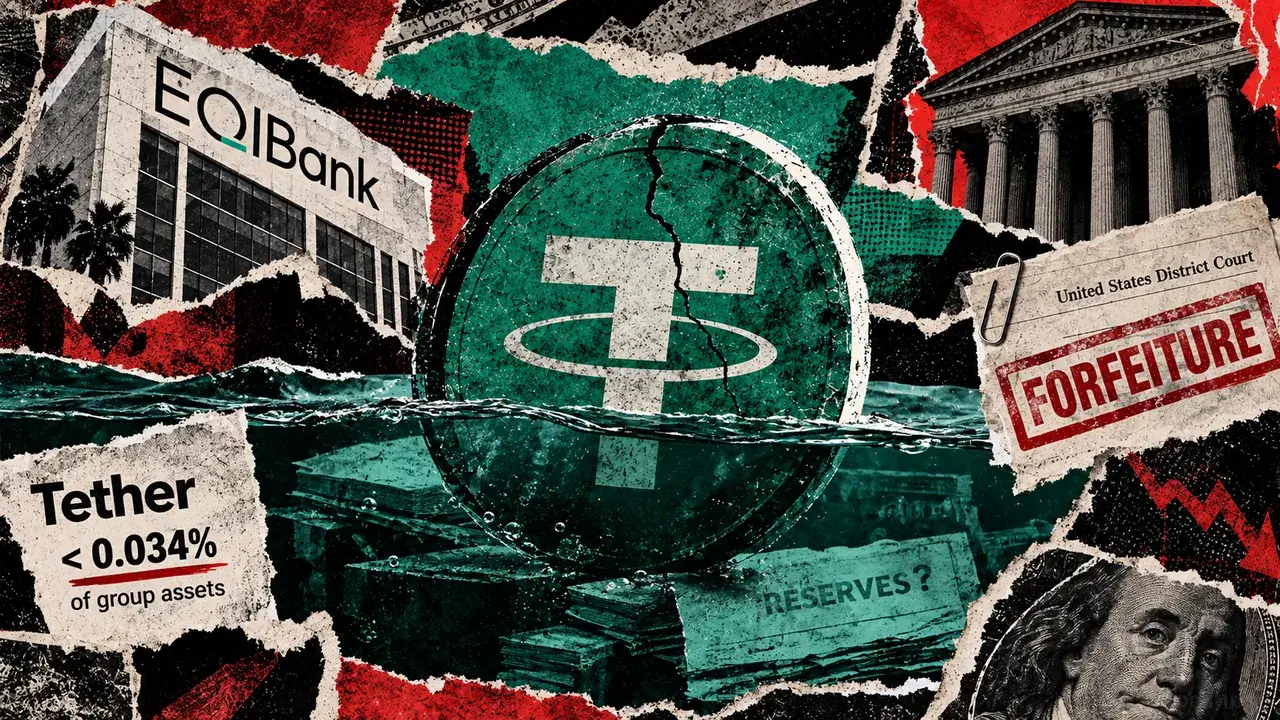
While the US government’s recent $84 million asset seizure involving Capstone-held accounts is confirmed, Tether has not disclosed whether the seized balance constitutes a portion of the USDT reserves. This lack of clarification has reignited long-standing concerns regarding the transparency and physical location of the collateral backing the stablecoin. If the funds are indeed part of the USDT reserve, the seizure represents a direct legal intervention by US authorities into Tether’s liquidity pool, potentially impacting its ability to maintain a 1:1 peg during periods of high redemption.
The seizure occurred following a federal investigation into financial intermediaries used by major crypto entities to access the US banking system. Court documents filed in January 2026 suggest that Capstone functioned as a conduit for various offshore firms, and the $84 million in question was frozen due to alleged violations of anti-money laundering (AML) protocols. The primary question for the market remains whether Tether was using these specific accounts to house its cash or cash-equivalent reserves, a detail the company has historically been hesitant to provide in granular detail.
From a regulatory standpoint, this action underscores the US Department of Justice’s aggressive stance on 'shadow banking' within the crypto industry. By targeting the intermediaries that stablecoin issuers rely on, US regulators can exert control over offshore companies that otherwise lack a domestic footprint. This geopolitical tension between US law enforcement and offshore issuers creates a volatile environment for USDT holders who depend on the stability of the dollar-pegged asset.
Market participants should watch for Tether’s next quarterly attestation to see if it reflects a loss or a 'frozen' asset category, which would confirm the link to the Capstone seizure. Additionally, the outcome of the Capstone court proceedings will be critical; if the funds are permanently forfeited, it could force Tether to bridge the $84 million gap through other revenue streams to ensure full collateralization. For now, the lack of a denial from Tether is causing a slight premium on regulated competitors like USDC as traders hedge against potential reserve impairment.