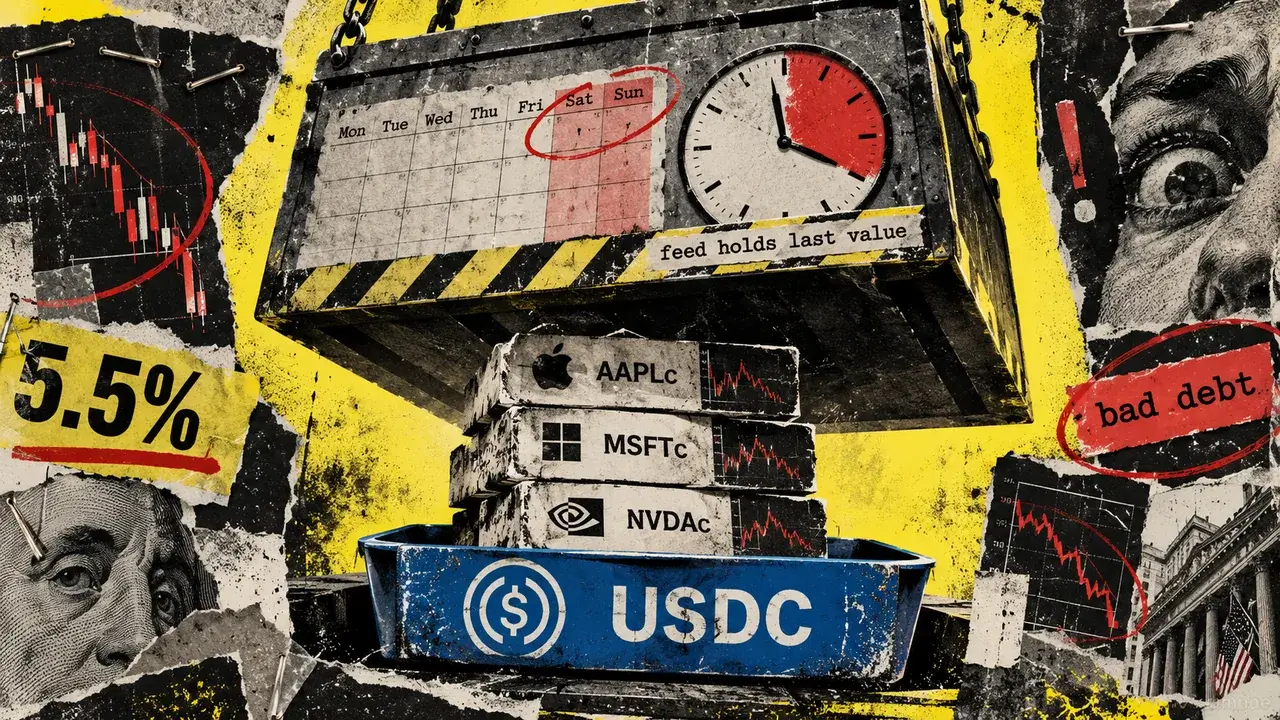
The Aave stock-token price gap on Base creates a specific liquidity risk for USDC lenders because the protocol’s price oracles for tokenized equities do not update during the weekend. While DeFi markets operate 24/7, the seven Coinbase stock tokens used as collateral on the Base hub rely on traditional market hours. Consequently, if a significant negative event occurs over the weekend, USDC lenders are stuck with collateral valued at Friday's prices, potentially leading to under-collateralized positions that cannot be liquidated until traditional markets reopen on Monday morning.
Currently, the Base hub permits up to $21 million in USDC borrowing against these seven Coinbase stock tokens. This integration represents a major step in the 2026 push for Real World Asset (RWA) adoption within DeFi, yet it highlights a fundamental friction between legacy finance and blockchain technology. The $21 million cap acts as a buffer to prevent systemic failure, but the 'stale' price feed remains a point of contention for conservative liquidity providers who prioritize immediate solvency.
From a regulatory perspective, this weekend gap is likely to draw scrutiny from U.S. oversight bodies like the SEC and CFTC, which are increasingly focused on how synthetic or tokenized equities interact with decentralized lending pools. As of early 2026, the industry is closely watching whether Aave or its oracle providers will implement 'circuit breakers' or dynamic Loan-to-Value (LTV) ratios that adjust automatically on Friday evenings to account for this weekend volatility risk.
Investors and USDC lenders should monitor the utilization rates on the Base hub and the volatility of the underlying Coinbase stock. If market sentiment for tech stocks turns bearish, the risk of a 'gap-down' opening on Monday increases the likelihood of bad debt within the pool. Watch for potential governance proposals within the Aave DAO to increase the reserve factor or decrease borrowing limits for these specific RWA collateral types to mitigate these weekend-specific risks.