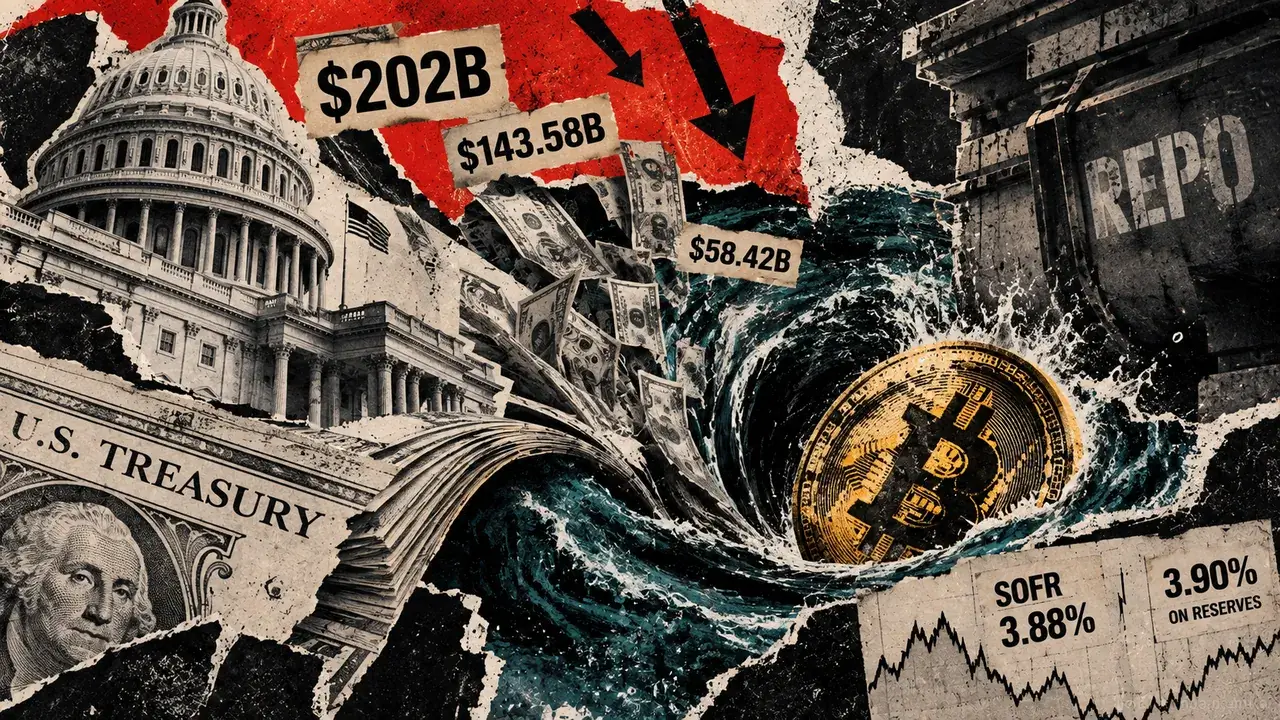
The $202 billion US Treasury settlement scheduled for September 30, 2026, is expected to act as a liquidity drain that could spark a surprise move in Bitcoin prices. When massive amounts of Treasury coupons are settled, it typically requires significant cash outflows from the private sector, often tightening the availability of dollars in the repo market. If the Secured Overnight Financing Rate (SOFR) rises sharply during this period, it signals that financing is becoming more expensive, which historically puts downward pressure on high-risk assets like Bitcoin as traders reduce leverage.
This settlement comes at a time when the 2026 fiscal calendar is under intense scrutiny due to shifting Federal Reserve policies. The influx of Treasury supply can lead to a 'liquidity crunch' where market participants sell off liquid assets to meet financing obligations. Bitcoin, which often serves as a high-beta proxy for global dollar liquidity, is particularly sensitive to these shifts. Traders are currently monitoring Bitcoin derivatives, specifically funding rates and open interest, to see if the market is prepared for a sudden spike in volatility or if a forced liquidation cascade is imminent.
Geopolitical tensions and recent shifts in U.S. fiscal management have made these month-end settlements more impactful in 2026 than in previous years. Because the Treasury is issuing larger volumes of debt to manage the national deficit, the pressure on the banking system's balance sheets is magnified. For crypto investors, this means the 'surprise move' could manifest as a sharp correction if SOFR shows signs of stress, or conversely, a relief rally if the financing markets remain calm despite the heavy supply.
Moving forward, market participants should keep a close eye on the spread between SOFR and the effective federal funds rate leading up to September 30. A widening spread would be a bearish signal for Bitcoin, suggesting that the cost to carry long positions is rising. Additionally, watching the Bitcoin futures basis can provide clues on whether institutional players are hedging against a potential liquidity shock or betting on the market's resilience in the face of heavy Treasury issuance.