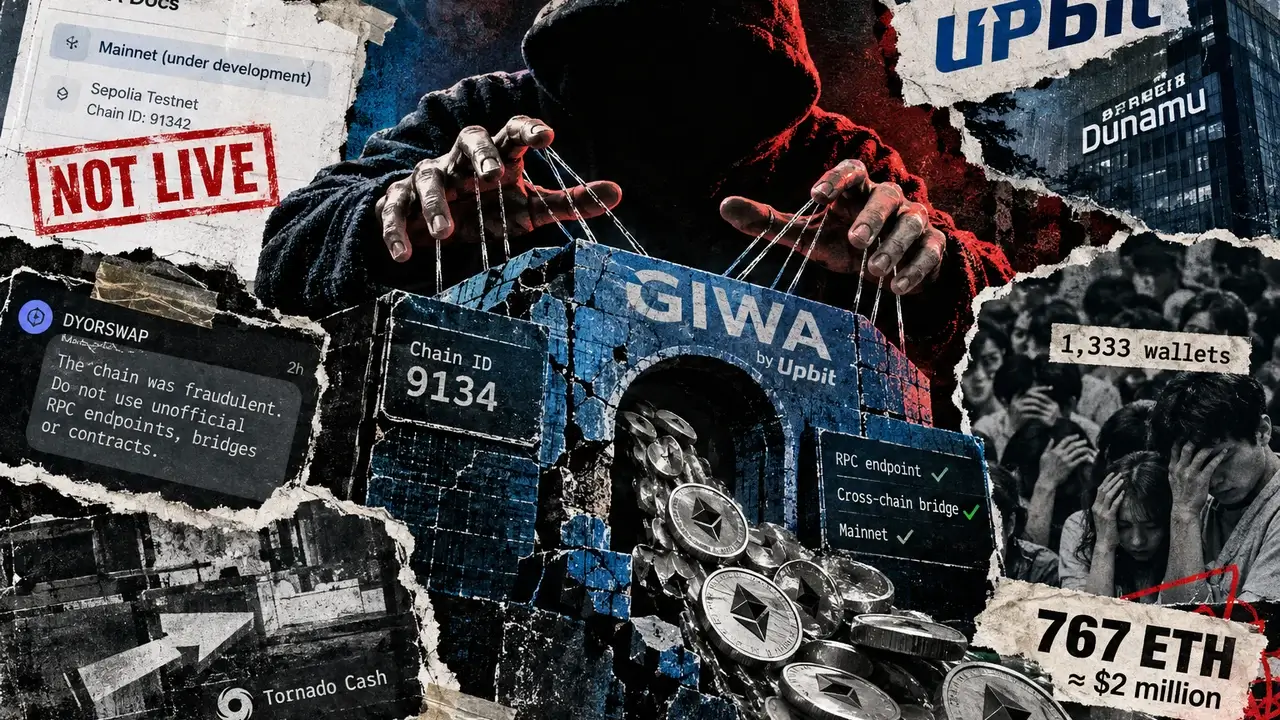
The fake GIWA blockchain scam stole 767 ETH by convincing users they were interacting with a legitimate Ethereum Layer 2 mainnet launch. By deploying a counterfeit RPC endpoint and a functional but malicious cross-chain bridge, the attackers were able to trick 1,333 distinct wallets into authorizing deposits. Once the funds reached the fraudulent network, the scammers utilized their control over the infrastructure to drain approximately $2 million worth of assets, leveraging the official Chain ID 9134 to provide a false sense of security.
This incident represents a significant escalation in infrastructure-level phishing, where attackers no longer just spoof websites but build entire counterfeit network layers. The use of Upbit’s backing of the real GIWA project served as a powerful social engineering tool, lowering the guard of retail investors who expected a high-security environment from a project associated with a major South Korean exchange. The sophistication of the fake bridge highlights a growing risk in the DeFi sector where users are encouraged to bridge assets to new networks for early incentives.
From a regulatory and geopolitical perspective, this theft is likely to trigger renewed calls from US and South Korean authorities for stricter standards regarding RPC providers and wallet safety protocols. As Ethereum continues to scale through Layer 2 solutions in 2026, the ease with which Chain IDs and network identifiers can be spoofed remains a critical vulnerability. This event underscores the need for centralized exchanges and infrastructure providers to implement more robust verification systems for public RPC endpoints.
Investors and developers should watch for a formal response from Upbit and the legitimate GIWA team regarding security patches and potential reimbursement schemes. Furthermore, this incident may lead to a shift in how Ethereum wallets, like MetaMask and Rabby, handle the addition of new networks, potentially requiring more stringent verification for non-standard Chain IDs to prevent similar drainer attacks in the future.