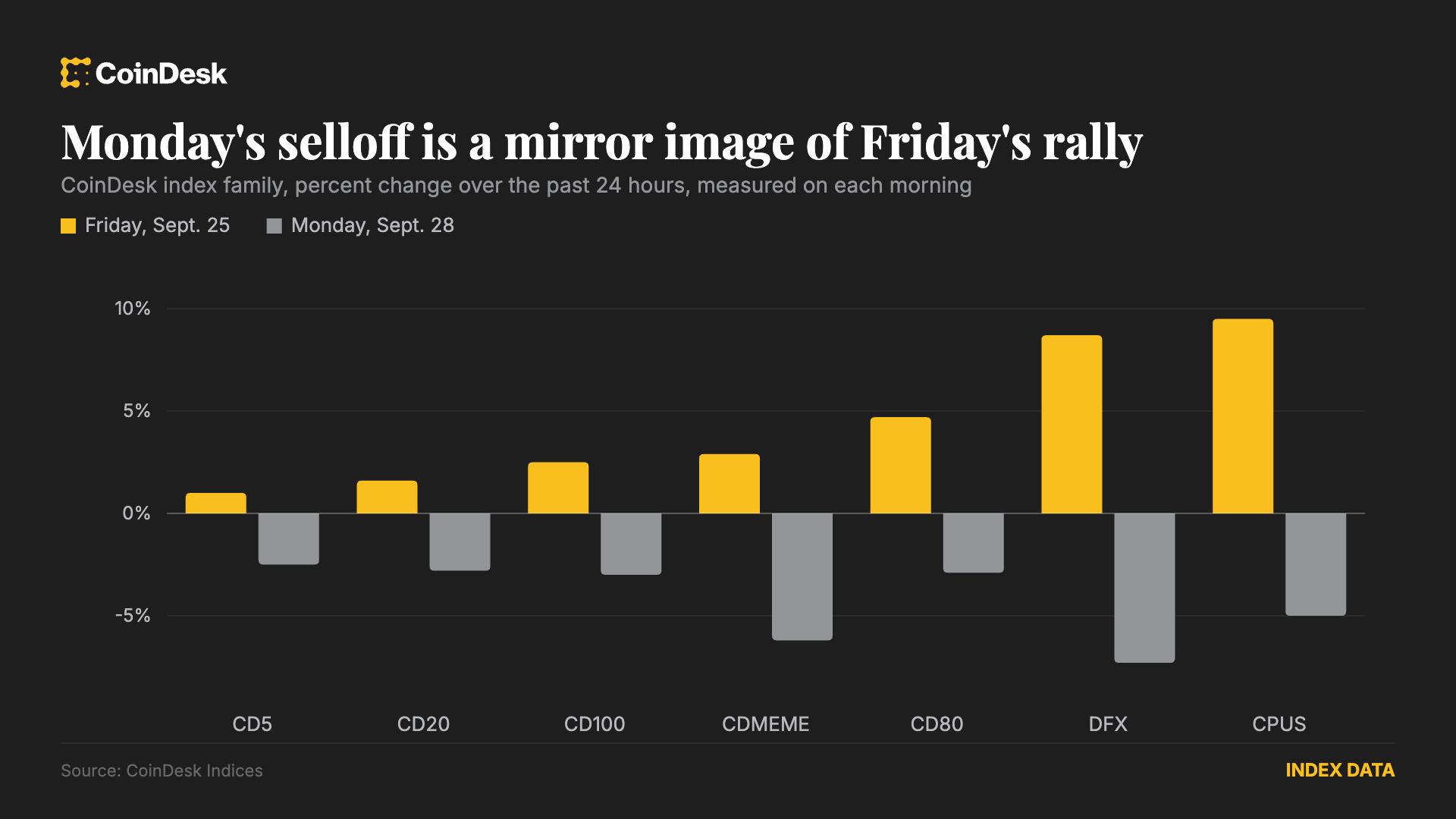
Bitcoin fell to the $83,000 level, a 1.7% decrease, as market sentiment cooled following a strong Friday rally. The broader digital asset market faced steeper declines, with the CoinDesk 100 dropping 2.6%, a move largely triggered by crude oil prices surging back above the $100 per barrel mark. This shift suggests that the 2026 market remains highly sensitive to energy-driven inflation, which historically pressures high-growth risk assets like cryptocurrencies.
The market pullback was most evident in the altcoin sector, which surrendered nearly all of its recent gains. Tokens that led the previous session's surge were the first to face liquidation as traders reacted to the macro-economic shift. The disparity between Bitcoin's relatively stable 1.7% dip and the wider market's 2.6% fall suggests that investors are rotating out of speculative altcoins and back into the relative stability of Bitcoin or cash positions.
The resurgence of oil prices above $100 serves as a significant headwind for the US economy in 2026. Higher energy costs typically signal persistent inflation, which complicates the Federal Reserve's potential for further rate cuts. For crypto investors, this renewed inflation narrative often creates a scenario where oil competes with Bitcoin for liquidity, especially when rising energy costs threaten to squeeze discretionary income and institutional risk appetite.
Moving forward, the $83,000 level for Bitcoin remains a critical psychological support zone. Analysts are now closely watching the $100 oil threshold; if crude remains elevated throughout the week, the crypto market may experience extended volatility. Investors should monitor the upcoming energy sector reports and inflation data to determine if this retracement is a temporary correction or the start of a broader risk-off trend for the quarter.