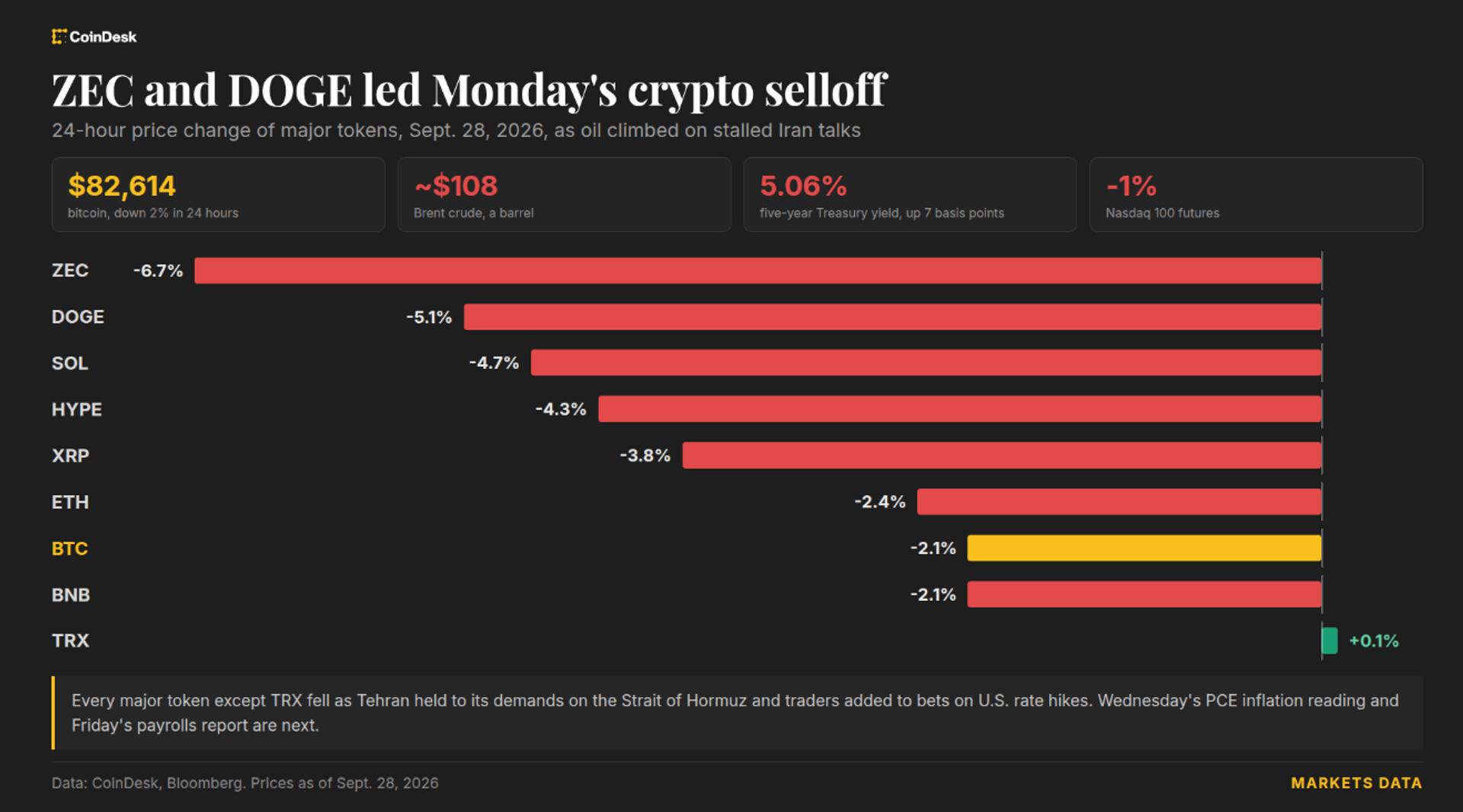
Bitcoin’s decline below $83,000 is the direct result of a cooling global appetite for risk, driven by the recent deadlock in Iran diplomatic negotiations and a sharp spike in energy costs. As Brent crude oil nears $108 per barrel, investors are pricing in higher persistent inflation, which historically pressures the Federal Reserve to maintain a hawkish stance on interest rates. This geopolitical friction has momentarily halted the momentum Bitcoin sustained throughout early 2026, forcing a retest of lower support levels as liquidity moves toward the U.S. dollar.
The sell-off was not limited to Bitcoin; ZCash (ZEC) emerged as the biggest loser among major tokens, reflecting a broader retreat from altcoins with high sensitivity to market volatility. Traders are currently repositioning their portfolios in anticipation of this week’s upcoming U.S. jobs and inflation reports. If these indicators suggest the economy is overheating, the probability of a significant Fed rate increase will rise, likely placing further downward pressure on decentralized assets that flourished under previous low-rate expectations.
Geopolitically, the stalling of Iran talks in April 2026 has reignited fears of supply chain disruptions in the Middle East. For the crypto sector, this matters because energy prices are a primary overhead cost for institutional mining operations. A sustained climb in oil prices toward $110 could squeeze miner margins, potentially leading to increased selling pressure as operations liquidate holdings to cover operational expenses.
Looking forward, the $83,000 mark has now transitioned from a support floor to a psychological resistance level. Market participants should watch the Brent crude price action and the Federal Open Market Committee (FOMC) sentiment closely. A failure to reclaim $83,000 before the release of Friday’s jobs data could signal a deeper correction, with analysts eyeing the $78,000 range as the next major area of interest for buyers.