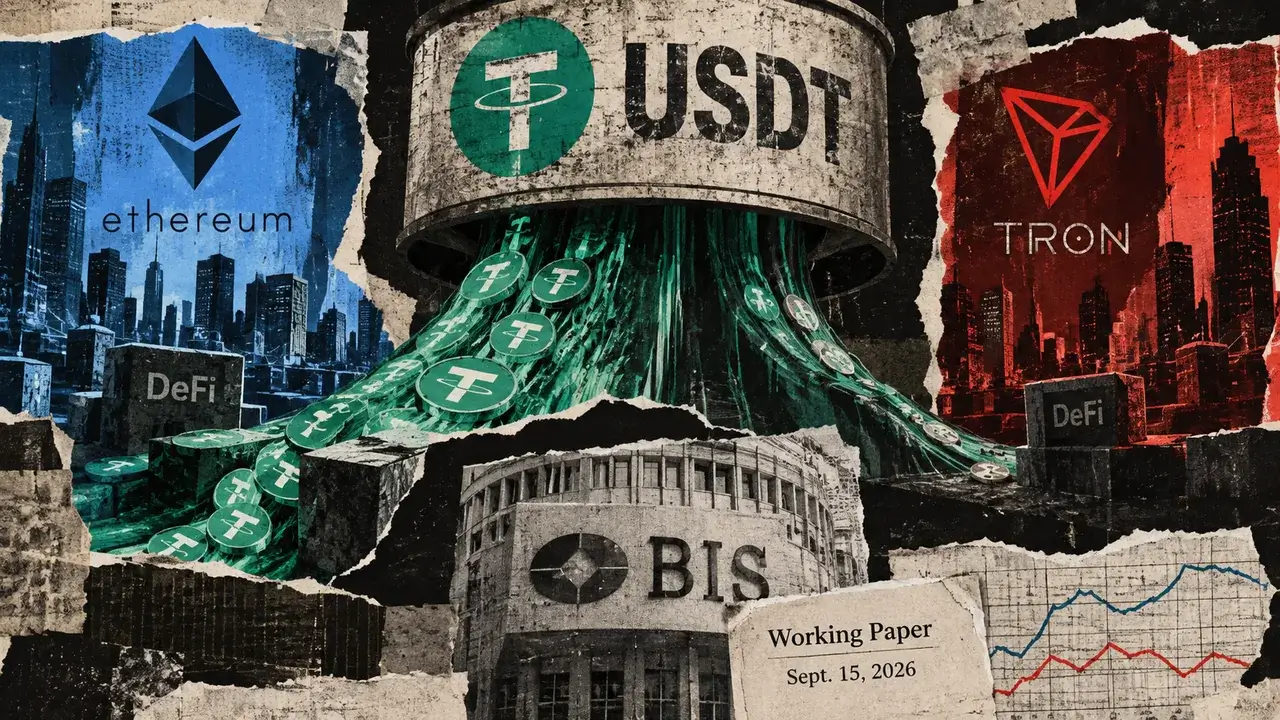
According to the latest 2026 report from the Bank for International Settlements (BIS), USDT’s smart contract holdings on Ethereum have stalled because users are increasingly moving funds to Externally Owned Accounts (EOAs) for settlement and storage. While the total supply of USDT on Ethereum grew significantly through the start of the year, the percentage of that supply interacting with DeFi protocols has reached a cyclical low. This shift suggests that USDT is being treated more as a "digital dollar" for simple transfers rather than a foundational building block for decentralized finance activities.
The BIS data highlights a stark contrast between network architectures, noting that Tron’s smart contract utilization for USDT has remained consistently low, hovering around 1% of its total issuance throughout the study period. On Ethereum, the historical trend of high smart contract integration is reversing. As institutional players continue to enter the space in 2026, they appear to favor the security of direct wallet custody over the risks associated with protocol-based smart contracts, which are often subject to higher regulatory scrutiny and technical exploits.
From a regulatory and geopolitical perspective, the BIS’s focus on these metrics indicates growing concern over stablecoin concentration and the systemic risks of "programmable" assets. If USDT continues to exit the DeFi space, it could signal a liquidity transition for Ethereum-based lending platforms that have traditionally relied on the stablecoin for deep pools. Analysts suggest that this trend might also be driven by the rising popularity of regulated, yield-bearing stablecoins which are beginning to capture the smart contract market share that USDT once dominated.
For US-based investors and crypto participants, this trend matters because it signals a maturing market where stablecoins are bifurcating into two distinct roles: transactional cash and DeFi collateral. The stalling of smart contract holdings suggests that Ethereum's "money legos" are becoming more reliant on alternative assets like USDC or decentralized alternatives. Moving forward, readers should watch for upcoming BIS recommendations regarding stablecoin reserves and whether Ethereum’s Layer 2 scaling solutions can successfully migrate USDT back into the smart contract ecosystem by lowering interaction costs.