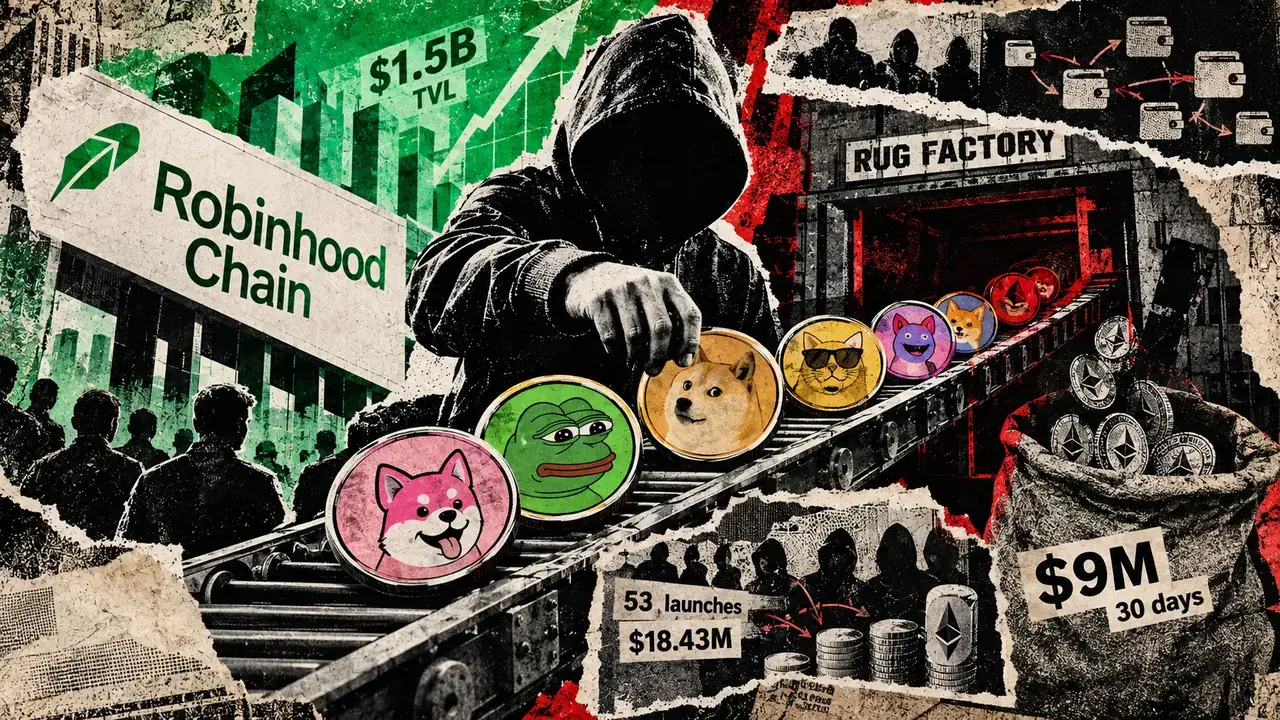
Memecoin rug factories are targeting the Robinhood Chain by deploying hundreds of high-risk tokens designed to drain liquidity from retail investors. According to a report by blockchain security firm GoPlus on September 28, 2026, a specific high-risk operation has been identified routing more than $9 million through a common fund-consolidation network within the last month. These actors are leveraging the rapid $1.5 billion growth of the Robinhood ecosystem to mask large-scale theft, using the network's high transaction volume to hide their tracks.
The 'rug factory' model identified by GoPlus represents a shift toward industrial-scale fraud. Unlike isolated scams, these coordinated entities automate the creation and promotion of hundreds of tokens, artificially inflating their value before abruptly removing liquidity. The discovery of a second major factory this week suggests that as the Robinhood Chain attracts more retail capital, it has become a primary target for organized syndicates capable of bypassing traditional on-chain security red flags.
From a market and regulatory perspective, this surge in illicit activity poses a significant challenge for Robinhood’s decentralized ambitions. As a US-focused entity under heavy scrutiny from the SEC and FINRA, the proliferation of automated scams on its proprietary chain could trigger new calls for stricter oversight of Layer-2 scaling solutions and retail DeFi platforms. While the $1.5 billion in total value locked (TVL) signals strong adoption, persistent security threats may deter institutional participation and erode retail trust in the long term.
Investors should watch for Robinhood’s response, particularly regarding potential upgrades to its chain-level security filters or the integration of real-time monitoring tools to flag factory-linked wallets. As the fourth quarter of 2026 approaches, the ability of the network to curb these 'common fund-consolidation' tactics will be a critical indicator of whether the Robinhood Chain can sustain its growth without becoming a permanent playground for sophisticated bad actors.