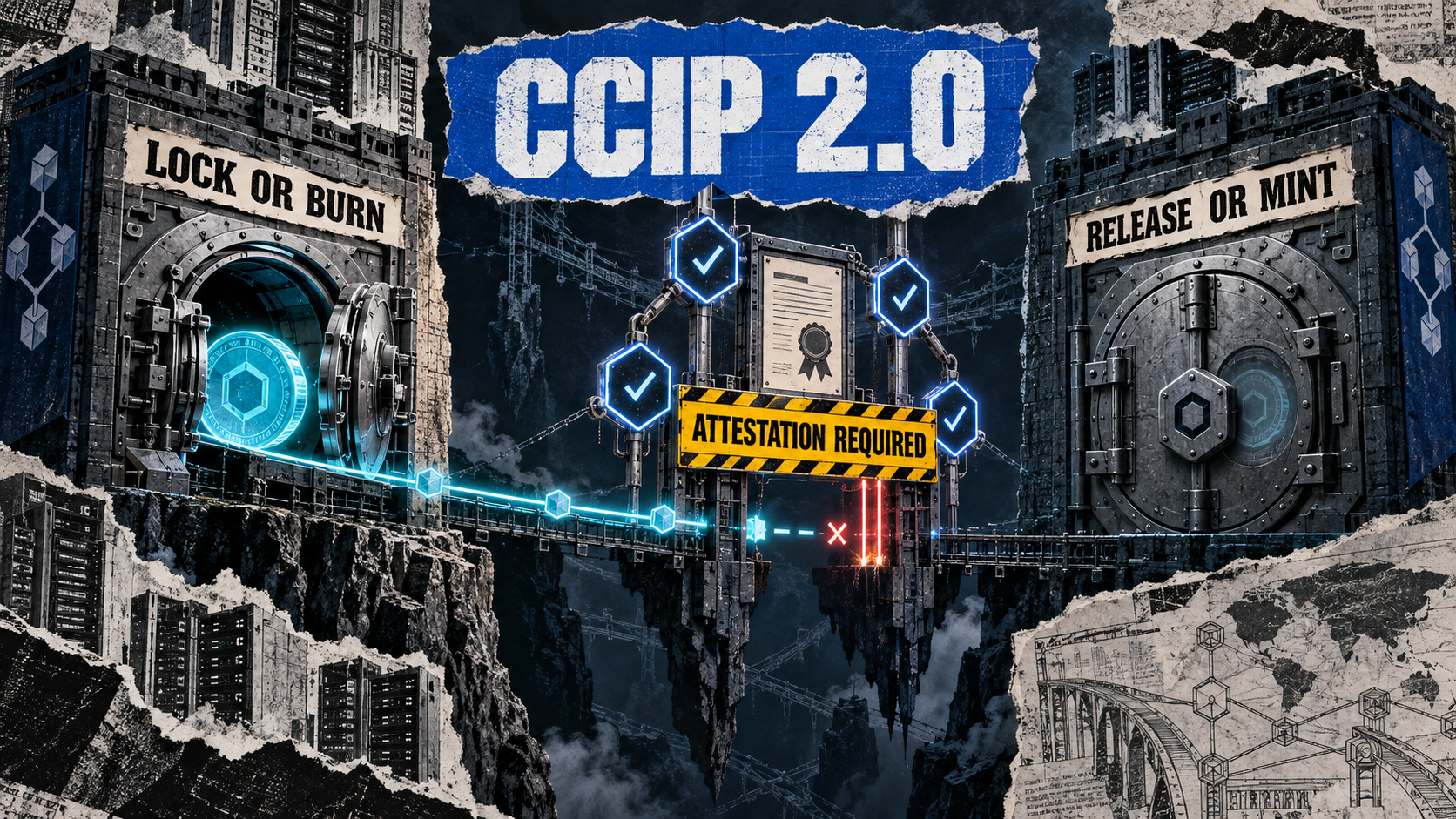
Chainlink’s CCIP 2.0 update has introduced a specific architectural risk through the use of 'issuer gates,' which can cause cross-chain transactions to stall at the destination chain. While the protocol is designed to facilitate seamless interoperability, these optional required verifiers allow token issuers to halt the release of tokens on a destination chain after the user has already locked or burned their assets on the source chain. This creates a potential 'limbo' state where a user no longer controls their original assets but has not yet received the equivalent tokens on the new network, exposing a critical vulnerability in bridge finality.
The technical issue centers on the sequence of operations within CCIP 2.0. In traditional bridge architectures, the verification happens prior to the finality of the source-chain transaction. However, the issuer gate mechanism acts as a post-lock barrier. If an issuer’s verification node fails to trigger or intentionally denies the release—whether due to regulatory compliance, technical error, or security suspicion—the user’s funds remain effectively inaccessible. As of early 2026, major production use cases for these gates remain largely unverified in high-volume environments, leading to concerns regarding the 'liveness' of cross-chain DeFi protocols.
From a regulatory perspective, this feature is likely a response to US demands for greater control over asset flows. By allowing issuers to 'gate' transactions, Chainlink provides a tool for protocols to comply with OFAC requirements or anti-money laundering (AML) freezes in real-time. While this makes CCIP 2.0 more attractive to institutional players seeking to navigate the evolving US crypto legal landscape, it creates a friction point for decentralized finance (DeFi) purists who prioritize trustless, unstoppable code over centralized oversight.
For the broader market, the potential for stalled transactions could lead to increased slippage and liquidity fragmentation. If a major liquidity provider’s funds are caught in an issuer gate during a period of high volatility, it could trigger cascading liquidations on the destination chain. Analysts suggest that the market impact on LINK will depend on how transparently Chainlink and its partners handle these stall events. If the gates are perceived as a tool for censorship rather than safety, liquidity may migrate toward more permissionless alternatives.
Moving forward, investors and developers should closely monitor the implementation of the first major institutional bridges using CCIP 2.0. The primary indicators of health will be the uptime of issuer verifiers and the presence of 'fail-safe' mechanisms that allow users to reclaim assets if a gate remains closed for an extended period. Until these safety nets are standard, users should exercise caution when bridging large volumes of assets through protocols utilizing the CCIP 2.0 issuer gate framework.