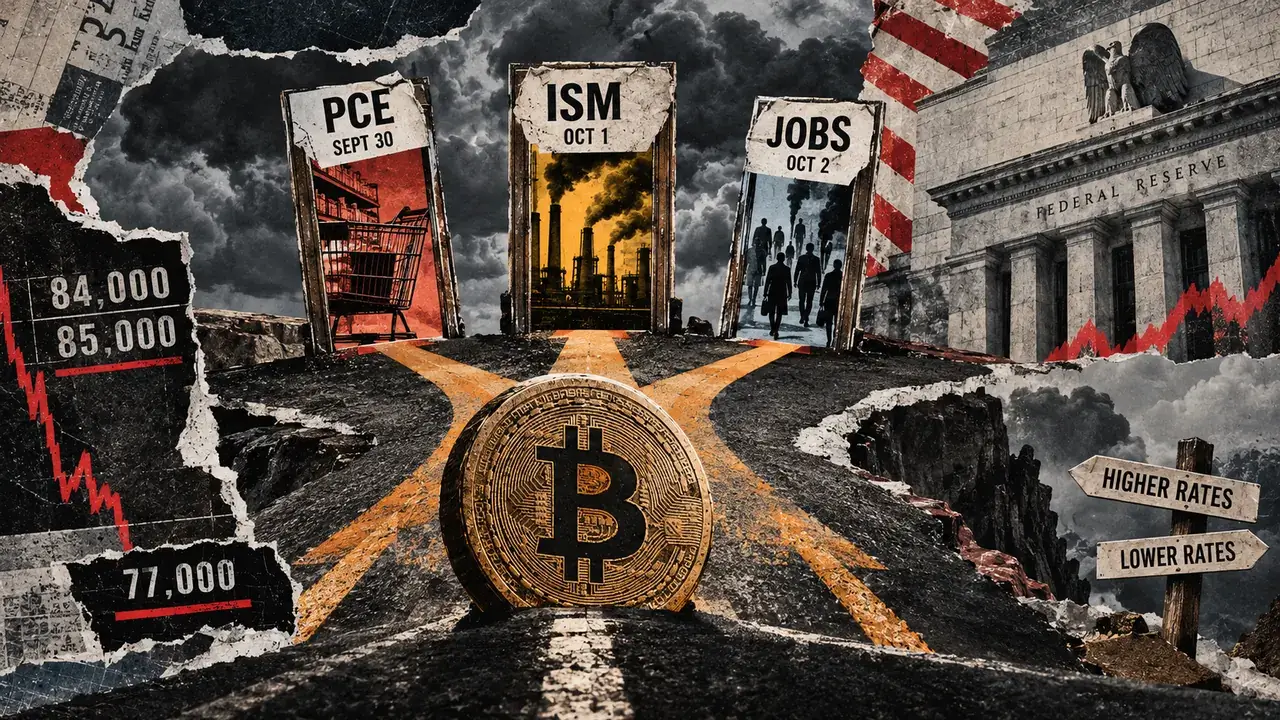
Bitcoin's climb toward the $85,000 mark hinges on the divergence between the September factory survey and the Friday payroll report, which provide conflicting views on the health of the US economy. While industrial data suggests a cooling trend that could favor risk-on assets, a strong payroll report would likely signal persistent inflation, potentially stalling Bitcoin's current upward momentum. This $85,000 threshold represents a critical technical test for the asset following a period of macroeconomic uncertainty.
Following a volatile August 2026, Wall Street is currently weighing two different inflation stories that are pulling market sentiment in opposite directions. The factory survey released on Thursday indicates a potential slowdown in production costs, hinting that the Federal Reserve might have room to loosen its stance. However, investors are bracing for the Friday payroll data, which remains the definitive metric for labor market strength and potential wage-push inflation that could force the Fed to maintain higher interest rates.
For Bitcoin, the $85,000 level is the most significant psychological barrier since its last all-time high. If the combined data suggests a 'soft landing' or a cooling labor market, institutional capital is expected to flow into BTC as a hedge against potential currency debasement. Conversely, 'hot' economic data could strengthen the US Dollar Index (DXY), creating a significant headwind that could push Bitcoin back toward the $78,000 support zone.
Traders and institutional desks should closely monitor the DXY reactions immediately following the Friday payroll release. As the US enters the final months of 2026, the interaction between these inflation metrics and institutional spot ETF inflows will be the primary driver for whether BTC can sustain a breakout above $85,000 or if the current rally will face a significant correction due to restrictive monetary policy expectations.