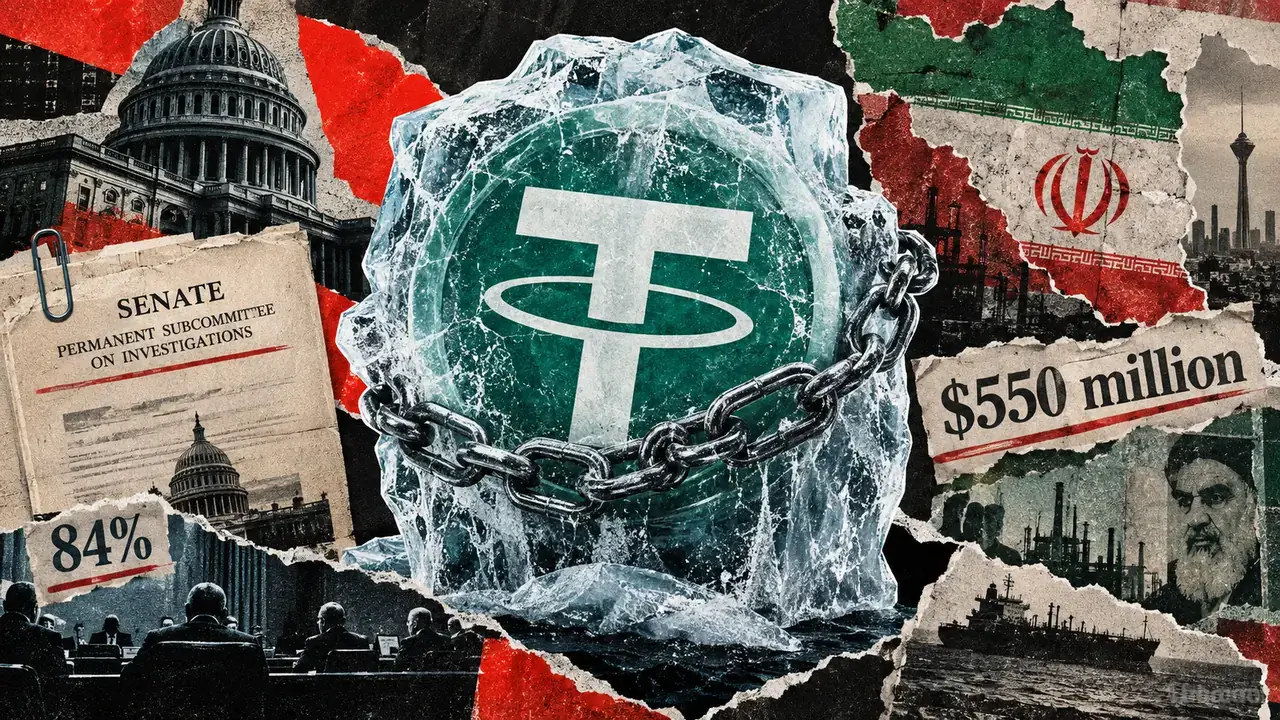
The US Senate is investigating Tether’s enforcement protocols because a preliminary report from the Permanent Subcommittee on Investigations suggests that nearly $35 million in Iran-linked funds bypassed blacklisting efforts in 2026. While Tether successfully froze approximately $550 million in USDT associated with Iranian entities earlier this year, Democratic minority staff on the subcommittee claim that delays in acting on 846 identified wallets allowed tens of millions of dollars to continue circulating through the global financial system. The investigation seeks to determine if these delays were technical in nature or a result of systemic compliance failures.
Released on September 28, 2026, the subcommittee’s findings highlight a friction point between private stablecoin issuers and federal enforcement. The report analyzed hundreds of wallets flagged for suspicious activity, noting that while Tether eventually complied with many requests, the time lag between identification and blacklisting provided a window for bad actors to offramp or transfer assets. Tether has defended its record, pointing to the record-breaking $550 million in successful freezes as evidence of its commitment to global security and cooperation with international law enforcement.
This investigation carries significant geopolitical weight as the US continues to tighten its financial blockade on Iran. For years, stablecoins have been viewed by regulators as a primary tool for sanctioned nations to access US dollar liquidity outside of the traditional banking system. The Senate's focus on Tether, the world's largest stablecoin issuer, signals a growing appetite in Washington for stricter federal oversight of offshore crypto entities that facilitate dollar-pegged transactions.
For the crypto market, this scrutiny is inherently bearish for sentiment regarding USDT’s regulatory standing. If the subcommittee recommends formal enforcement actions or if the findings lead to new legislation requiring instantaneous blacklisting capabilities, it could impact Tether’s operational model and its dominance in the liquidity pools of major exchanges. Traders are watching for a formal response from Tether leadership and potential follow-up hearings that could involve other stablecoin providers.
In the coming months, investors should monitor whether the Department of Justice (DOJ) or the Treasury Department adopts the subcommittee's findings to initiate formal penalties. Additionally, the focus will shift to whether Tether introduces new automated compliance tools to bridge the time gap identified by the Senate, as this could set a new industry standard for stablecoin issuers operating in a high-stakes geopolitical environment.