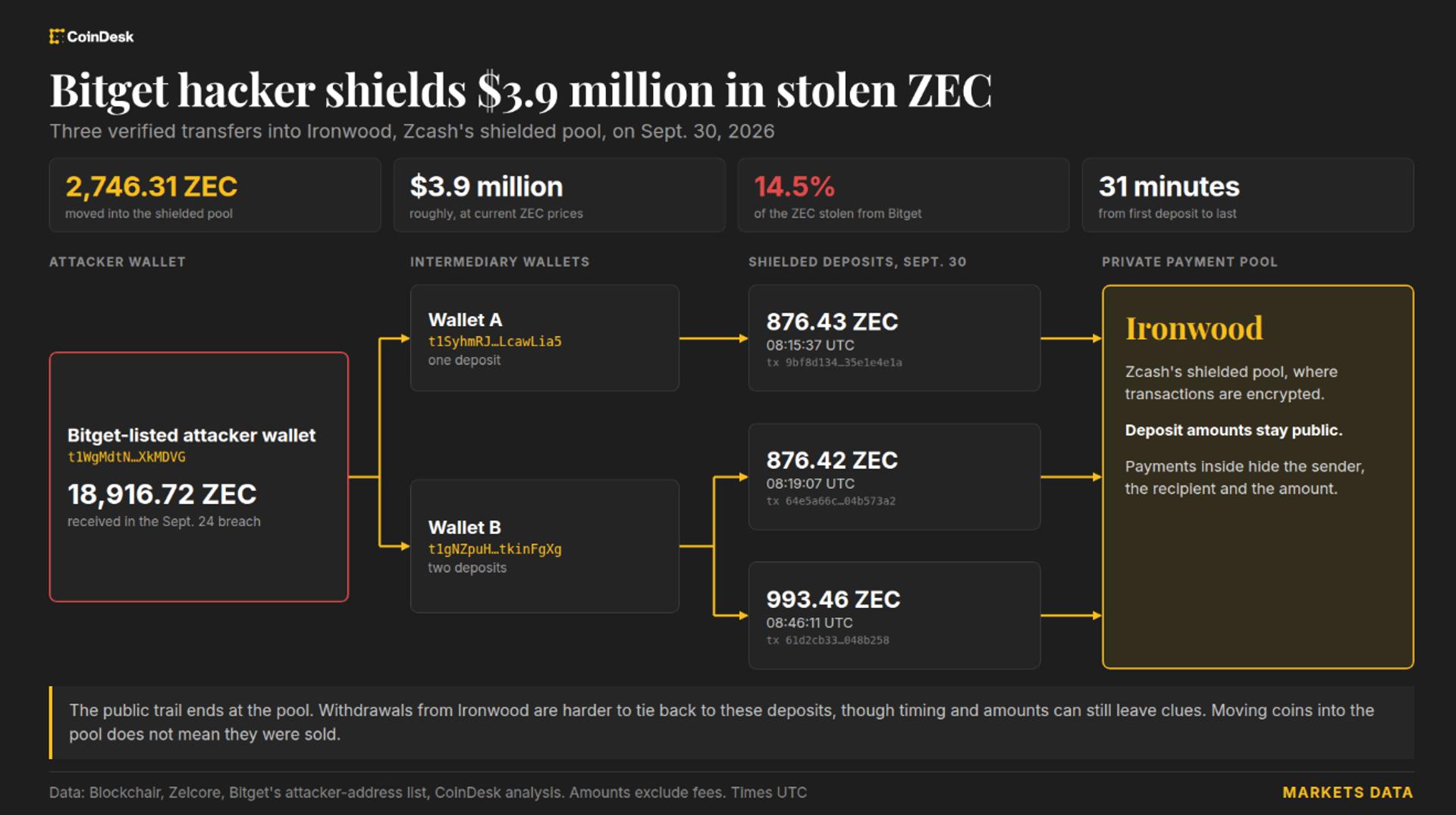
Hackers associated with the recent Bitget exploit have moved approximately $4 million in Zcash (ZEC) into Zcash’s Ironwood private pool, a move designed to make the stolen funds nearly impossible to trace. By initiating three distinct transfers, the attackers shifted about 15% of the total stolen ZEC into this shielded environment. The Ironwood protocol allows users to conduct transactions that hide all identifying metadata, including the addresses of the parties involved and the specific amounts being moved, presenting a significant hurdle for blockchain forensic firms.
This tactical shift highlights the ongoing battle between cybercriminals and crypto investigators in 2026. While Zcash was designed to provide financial privacy for legitimate users, its 'shielded' pools remain a point of contention for global regulators. The move into Ironwood suggests the attackers are methodically laundering the proceeds of the Bitget breach rather than attempting a large-scale dump on centralized exchanges, where KYC (Know Your Customer) protocols would likely trigger immediate freezes.
For the broader crypto market, this incident underscores the persistent vulnerability of centralized exchanges and the dual-use nature of privacy-preserving technology. Regulators in the U.S. have recently increased scrutiny on 'anonymity-enhanced cryptocurrencies' (AECs), and this high-profile laundering event could provide the impetus for stricter enforcement actions against privacy protocols or the exchanges that list them. The ability of hackers to effectively 'go dark' with millions of dollars remains a primary concern for the SEC and Treasury Department.
Bitget users and ZEC holders should prepare for heightened volatility as the investigation continues. While Bitget has not yet recovered the $4 million, the exchange is reportedly working with specialized intelligence units to monitor any potential 'unshielding' events where the funds might exit the private pool into a transparent address. Investors are watching to see if this leads to a broader delisting of privacy coins on U.S.-based platforms to satisfy anti-money laundering requirements.
Moving forward, the industry will be focused on whether advanced chain-analysis techniques can find a way to deanonymize these shielded transactions. The success or failure of these recovery efforts will likely dictate the regulatory narrative surrounding Zcash and similar privacy-centric assets for the remainder of 2026. If the hackers successfully exit the Ironwood pool without detection, it could signal a major shift in how digital heists are finalized.