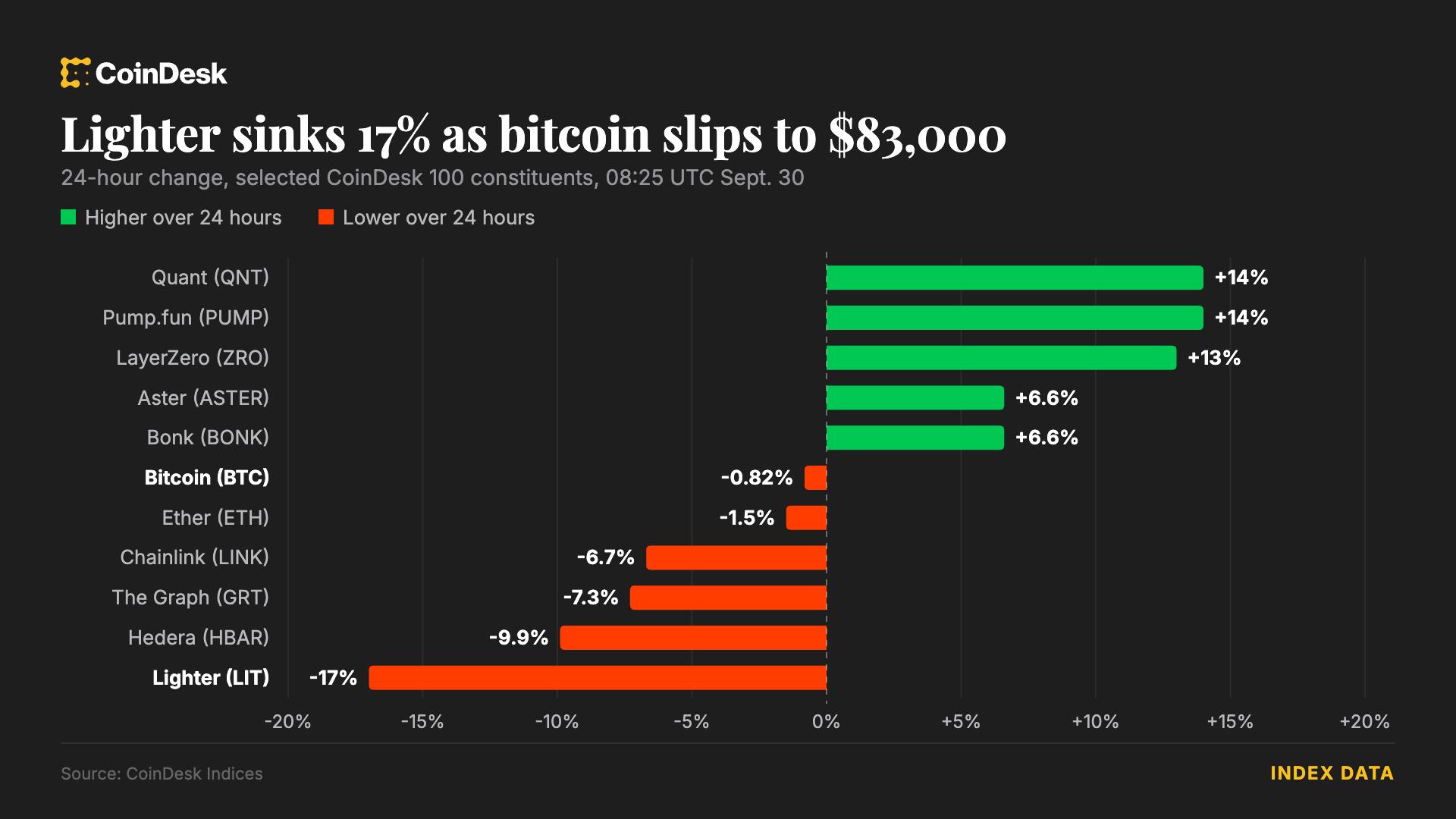
Lighter (LGHT) experienced a sharp 17% decline because Robinhood’s plan to offer perpetual futures to U.S. retail investors threatens the market share of decentralized trading platforms. As Robinhood bridges the gap between traditional brokerage and advanced crypto derivatives, investors are rotating out of niche DeFi protocols that previously dominated the perps space. This shift suggests that 2026 will be defined by a battle for liquidity between regulated centralized exchanges and autonomous DeFi structures.
The market reaction was further exacerbated by macroeconomic headwinds, as Bitcoin hit a psychological ceiling at $83,000. The 30-year U.S. Treasury yield topped 5.6% during the same period, reaching a multi-year high that has increased the appeal of fixed-income assets over volatile cryptocurrencies. This yield spike acts as a gravity well for capital, preventing Bitcoin from sustaining its momentum despite the positive retail sentiment surrounding new product launches.
For the DeFi sector, Robinhood’s entry into perps represents a significant regulatory milestone but a short-term liquidity drain. Lighter, which had gained traction for its efficient execution models, now faces a reality where retail traders may prefer the tax reporting and insurance protections of a US-listed broker. Other DeFi tokens also reversed their gains as the market recalibrates the value proposition of decentralized derivatives in a highly regulated environment.
Looking ahead, traders should watch for the official launch date of Robinhood’s perps and the subsequent impact on on-chain trading volumes. If Treasury yields remain above 5.5%, Bitcoin is likely to continue its consolidation phase near $80,000-$83,000. For Lighter and similar DeFi projects, the ability to offer unique incentives or lower fees will be critical to surviving the retail migration to centralized platforms throughout the remainder of 2026.