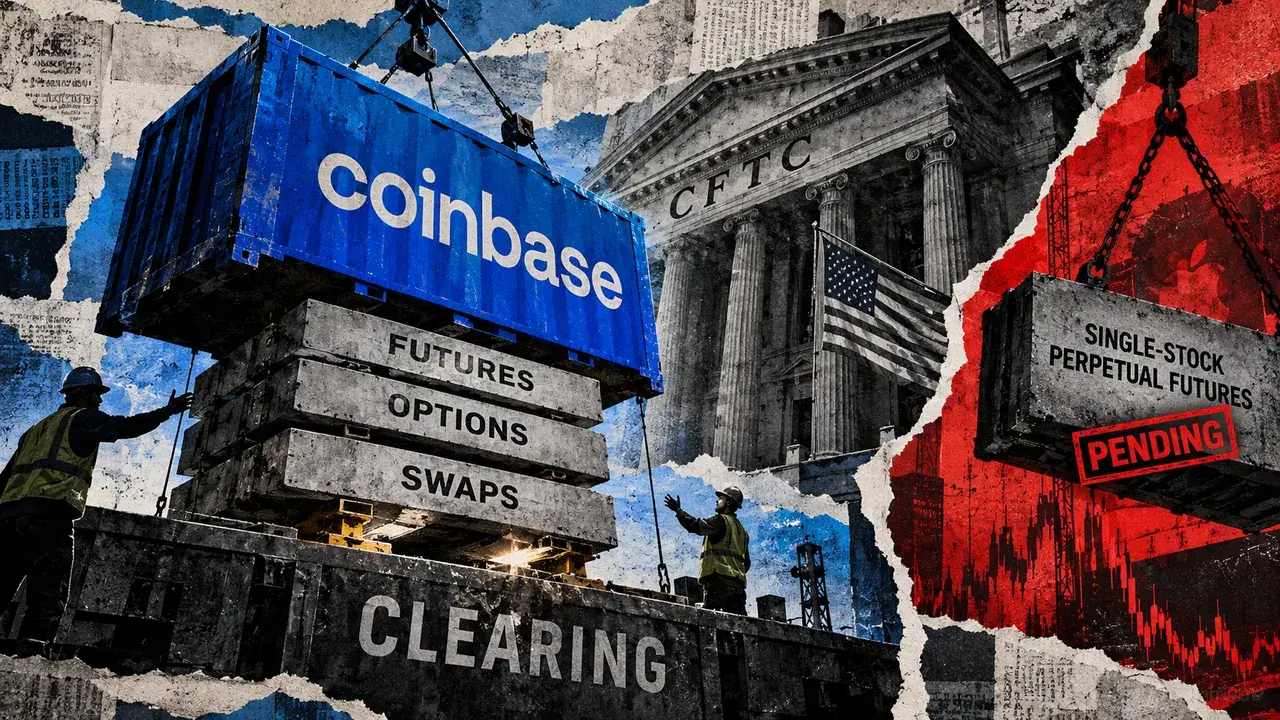
Coinbase's newly completed derivatives stack, anchored by its domestic clearinghouse, allows the exchange to offer fully collateralized derivatives to US retail and institutional clients under a streamlined regulatory framework. By acting as its own clearinghouse, Coinbase reduces reliance on third-party financial intermediaries, lowering costs and improving settlement efficiency for participants trading Bitcoin and Ethereum futures. This move solidifies Coinbase's position as a primary gateway for regulated crypto leverage in the United States, providing a safer alternative to offshore platforms.
The completion of this infrastructure in early 2026 follows an intensive period of regulatory maneuvering with the Commodity Futures Trading Commission (CFTC). The clearinghouse specifically handles fully collateralized derivatives, which requires users to post the full value of their positions, thereby mitigating the systemic risks associated with highly leveraged 'naked' shorts. However, the most anticipated part of Coinbase's broader strategy—the integration of stock-futures—remains sidelined. This pending proposal seeks to allow users to trade both traditional equities and crypto futures within the same interface.
This development occurs during a pivotal 2026 regulatory environment where US authorities are pushing for greater transparency in clearing and settlement processes. By securing this internal infrastructure, Coinbase is effectively insulating itself from the counterparty volatility that has historically plagued the sector. For the broader market, this signals a major shift toward 'onshoring' liquidity, as institutional investors who were previously wary of custodial risk now have a compliant, US-based clearing mechanism to utilize.
Looking forward, the market implications are bullish for Coinbase’s revenue diversification, though the true industry shift depends on the pending stock-futures approval. Analysts are watching the CFTC and SEC closely for signs of a unified framework that would permit the cross-margining of crypto and stocks. If granted, Coinbase could potentially capture a significant portion of the retail brokerage market currently dominated by traditional platforms like Robinhood. Traders should monitor volume growth in Coinbase's derivatives arm over the next two quarters as a primary indicator of institutional adoption.