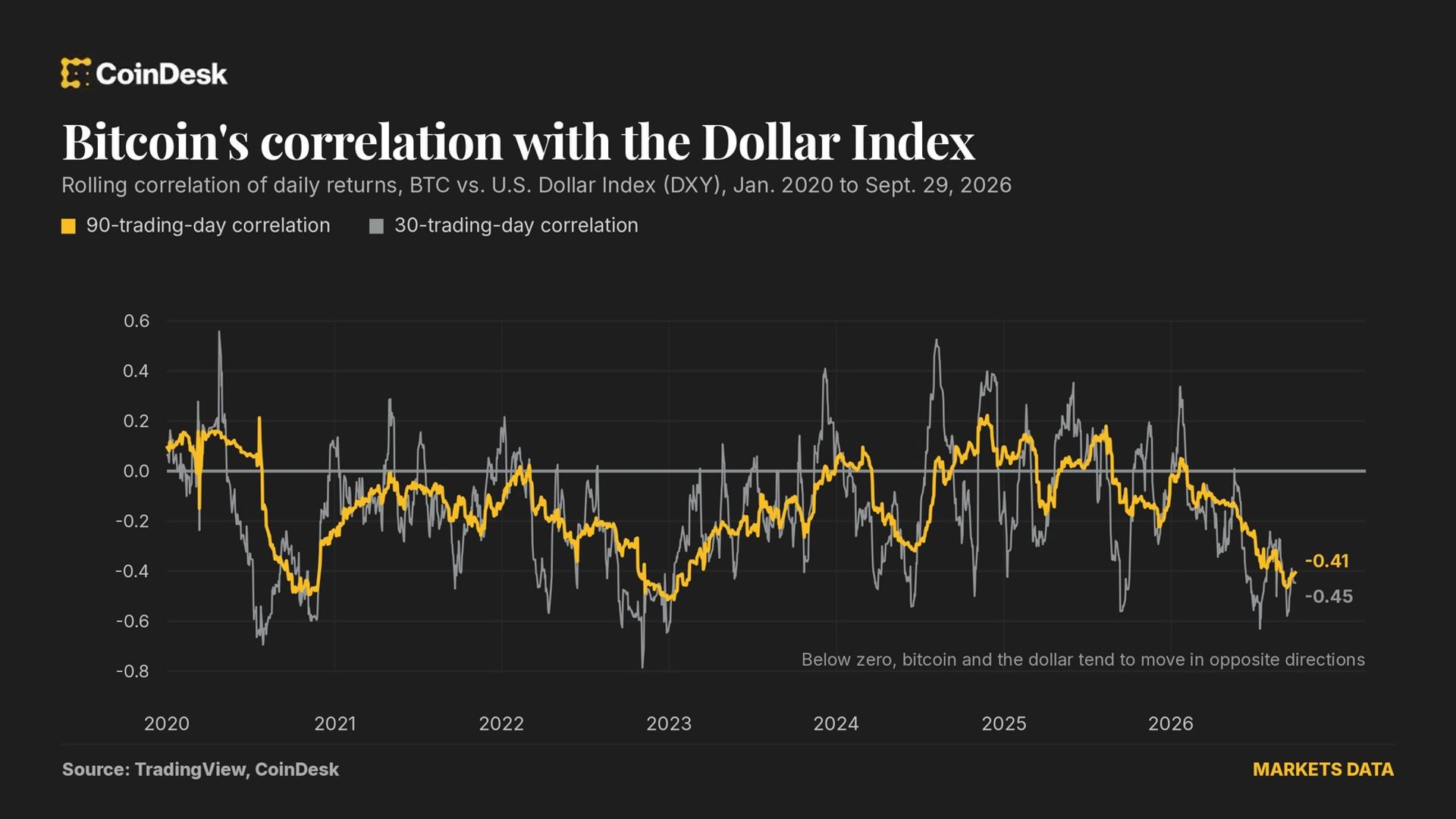
A strengthening US Dollar is currently a weaker threat to Bitcoin because the long-standing inverse correlation between the two assets has weakened significantly throughout the 2026 market cycle. In previous years, a spike in the US Dollar Index (DXY) typically signaled a 'risk-off' environment that led to immediate Bitcoin liquidations. However, current market dynamics show Bitcoin behaving more like a global neutral reserve asset, allowing it to maintain value even as the greenback gains ground against other fiat currencies.
The late 2026 economic landscape is characterized by unique fiscal pressures and a shift in institutional sentiment. While the Federal Reserve's current policy stance continues to support dollar strength, Bitcoin's specific supply constraints and wide-scale corporate adoption have created a structural buffer. Institutional traders are now increasingly treating BTC as a hedge against long-term currency debasement rather than a speculative high-beta asset, which effectively mitigates the selling pressure usually associated with a rising DXY.
For investors, this means that monitoring the DXY in isolation is no longer a reliable strategy for predicting Bitcoin's short-term price trajectory. Recent data indicates that global liquidity levels and consistent spot ETF inflows are currently more influential drivers for BTC than the relative strength of the dollar. This evolution reflects a maturing crypto market that is becoming less susceptible to the volatility of the traditional foreign exchange market.
Moving into the final quarter of 2026, market participants should closely watch US Treasury liquidity injections and shifts in international trade settlement. If Bitcoin continues to hold its support levels while the dollar remains strong, it will provide definitive proof that the asset has entered a new phase of market maturity. Traders should also look beyond the USD/BTC pair and monitor how Bitcoin performs against a basket of other major global currencies to gauge true international demand.