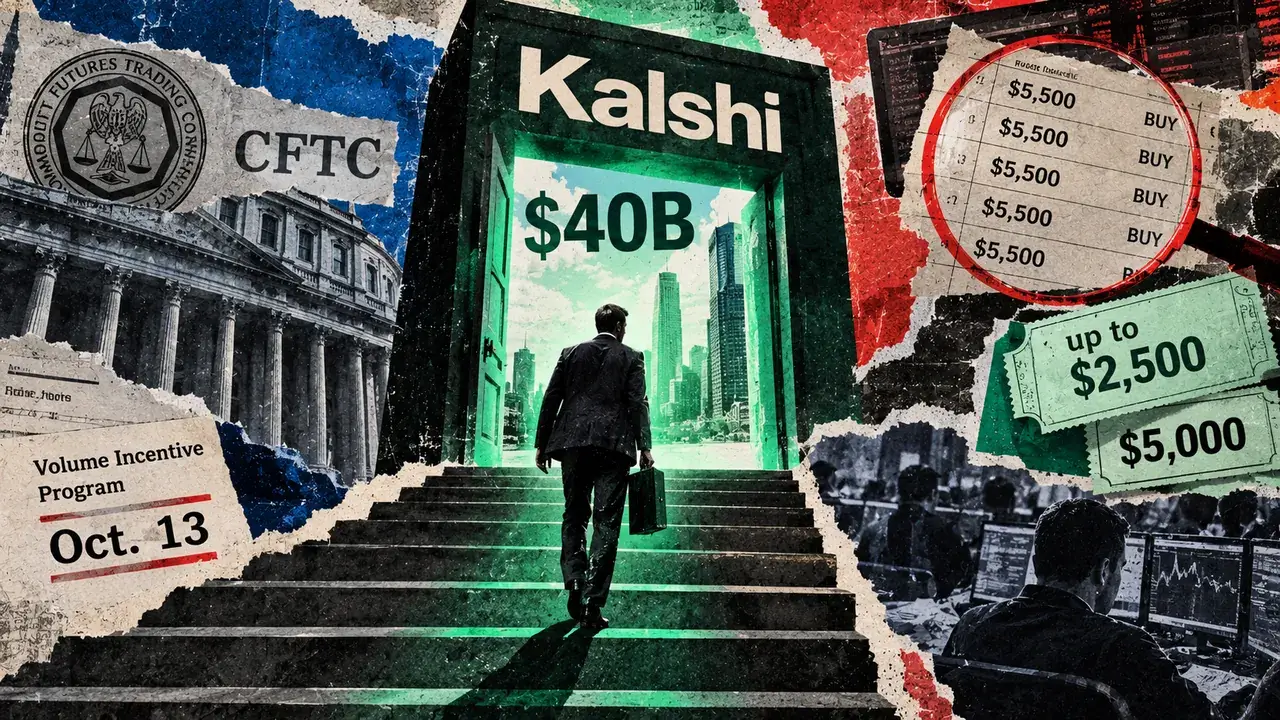
Kalshi announced the early termination of its Volume Incentive Program, effective no earlier than October 13, 2026, in response to growing pressure from the Commodity Futures Trading Commission (CFTC). The program, which was originally designed to boost liquidity by rewarding high-volume traders, is being cut short as regulators investigate whether these incentives artificially inflated trading volumes across Kalshi’s prediction markets, particularly those involving cryptocurrency events and political outcomes. By ending the program, Kalshi aims to distance itself from allegations that its recent $40 billion growth milestone was fueled by non-organic activity.
The decision follows a September 28, 2026, filing where Kalshi informed the CFTC of the shift in its fee structure. The platform had previously relied on these incentives to attract institutional-grade liquidity, but critics have questioned the organic nature of this volume, suggesting that rebate-driven activity can often mimic wash trading. The CFTC’s intensifying scrutiny suggests that US regulators are becoming less tolerant of incentive structures that may obscure the true market demand for event-based contracts.
This development occurs within a broader US crackdown on prediction markets that leverage crypto-adjacent structures. The CFTC has been increasingly vocal about the risks associated with "event contracts" that function as derivatives, and Kalshi’s move signals a tactical retreat to maintain its status as a regulated exchange in the United States. For the broader DeFi and prediction market industry, this highlights the challenge of scaling liquidity in a high-compliance environment without drawing federal enforcement actions.
Readers should watch for a potential drop in Kalshi’s open interest and daily volume following the October 13 deadline, which could impact market depth for upcoming 2026 election and crypto-related contracts. Furthermore, the outcome of the CFTC's ongoing review of Kalshi’s volume reporting will likely set a major precedent for other platforms, potentially forcing them to implement more stringent reporting standards to prove that their growth is driven by genuine market participants rather than automated incentive harvesting.