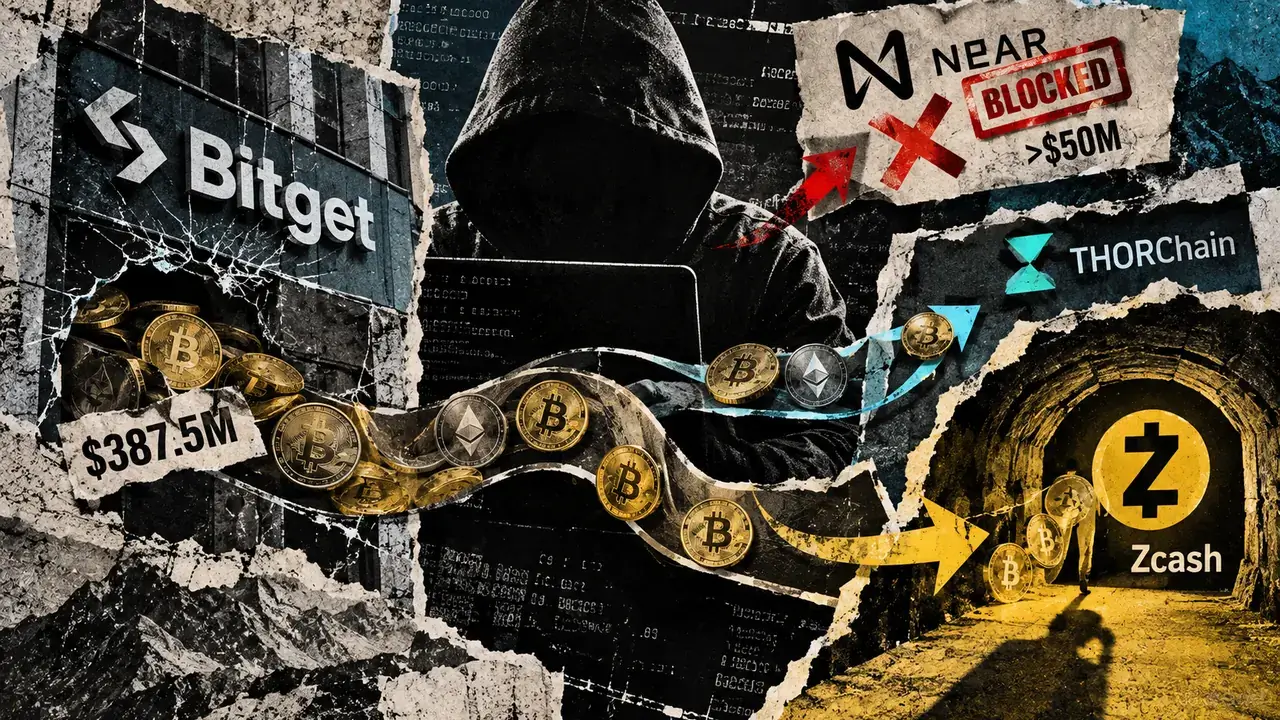
The hackers responsible for the $387.5 million Bitget breach are now utilizing Zcash’s (ZEC) privacy features to hide their illicit gains, following the successful blocking of a $50 million laundering route by security firms. On-chain data indicates that approximately 2,746 ZEC, valued at roughly $3.9 million, was moved into Zcash’s "Ironwood" shielded pool through three distinct transactions this Wednesday. This tactical shift directly addresses the hackers' need for anonymity as centralized exchanges and bridge protocols have significantly increased surveillance on the original stolen assets.
This activity was first flagged by blockchain investigator ZachXBT, who noted that the hackers adapted their strategy after a large portion of their previous laundering infrastructure was neutralized. By moving funds into shielded pools, the attackers aim to sever the transparent link between the stolen Bitget assets and their eventual off-ramping. This maneuver follows a broader 2026 trend where cybercriminals are abandoning traditional mixers that face extreme regulatory pressure in favor of privacy coins with native encryption layers that are harder to track.
The development places renewed regulatory scrutiny on privacy-preserving protocols in the United States. As hackers exploit ZEC's shielded features to move millions in stolen capital, U.S. authorities like FinCEN may increase pressure on domestic exchanges to delist privacy coins or implement stricter compliance measures for shielded transactions. The ability of these bad actors to successfully funnel $3.9 million into private pools demonstrates the persistent technical challenges facing global law enforcement in tracking sophisticated on-chain movements.
For the crypto market, this event underscores the evolving security risks within the exchange ecosystem and the sophistication of modern hacking groups. While Zcash provides legitimate privacy for law-abiding users, its recurring role in high-profile laundering schemes could lead to heightened volatility or renewed delisting threats from tier-one exchanges. Investors should monitor for further movements of the remaining $300+ million in stolen Bitget funds and potential legislative reactions regarding the use of privacy-enhancing technologies.