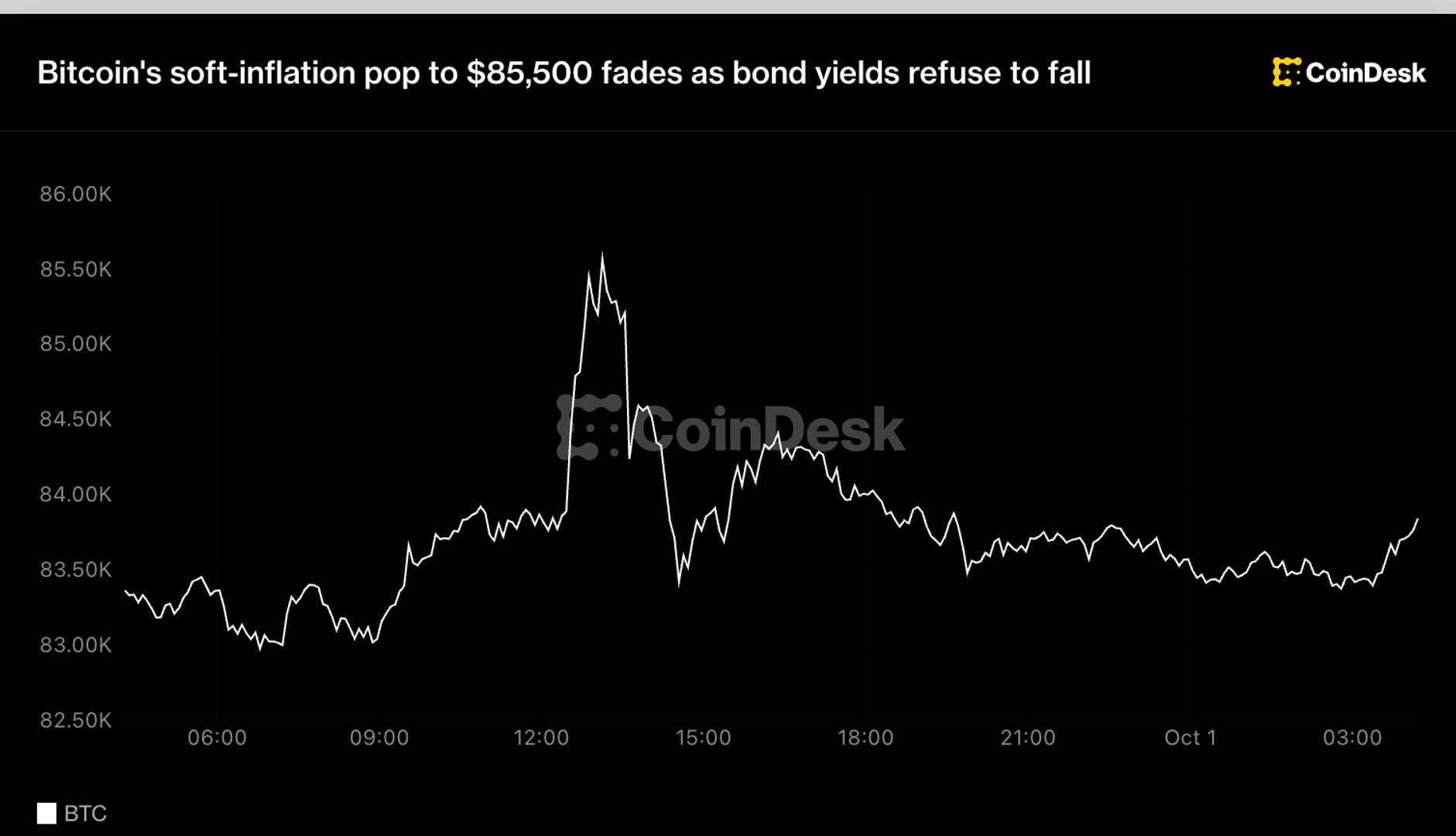
Bitcoin retraced its gains to $85,500 on Wednesday because persistent high Treasury yields neutralized the bullish momentum generated by a soft Personal Consumption Expenditures (PCE) report. While the PCE data suggested cooling inflation—typically a catalyst for crypto rallies—investors remained cautious as government bond yields held steady at their highest points since 2002. This decoupling suggests that the crypto market is currently more sensitive to the cost of capital than to marginal improvements in consumer price stability.
The intraday volatility saw Bitcoin briefly breach the $85,000 resistance level immediately following the release of the inflation data. However, the move was short-lived as the macro environment remained unexpectedly tight. Yields on benchmark Treasuries did not follow the downward trajectory typically expected after a soft inflation print, instead maintaining a grip on the market that effectively drained liquidity away from digital assets and back into fixed-income instruments.
This market reaction highlights a significant shift in the 2026 economic narrative, where cooling prices alone are no longer enough to sustain a Bitcoin bull run. The "higher-for-longer" sentiment in the bond market reflects ongoing concerns regarding government debt levels and fiscal policy, which are keeping yields elevated even as the Federal Reserve sees progress on the inflation front. For the first time in years, the correlation between cooling inflation and crypto upside is being tested by the sheer gravity of the bond market.
For crypto traders, the focus now shifts from inflation prints to the bond market's reaction to upcoming fiscal announcements. If Treasury yields remain near these multi-decade highs, Bitcoin may struggle to maintain support above the $80,000 mark regardless of how low inflation numbers go. Investors should watch the upcoming Federal Reserve commentary to see if officials intend to address the volatility in the yield curve, which could provide the necessary tailwind for Bitcoin to reclaim and hold the $85,000 level.