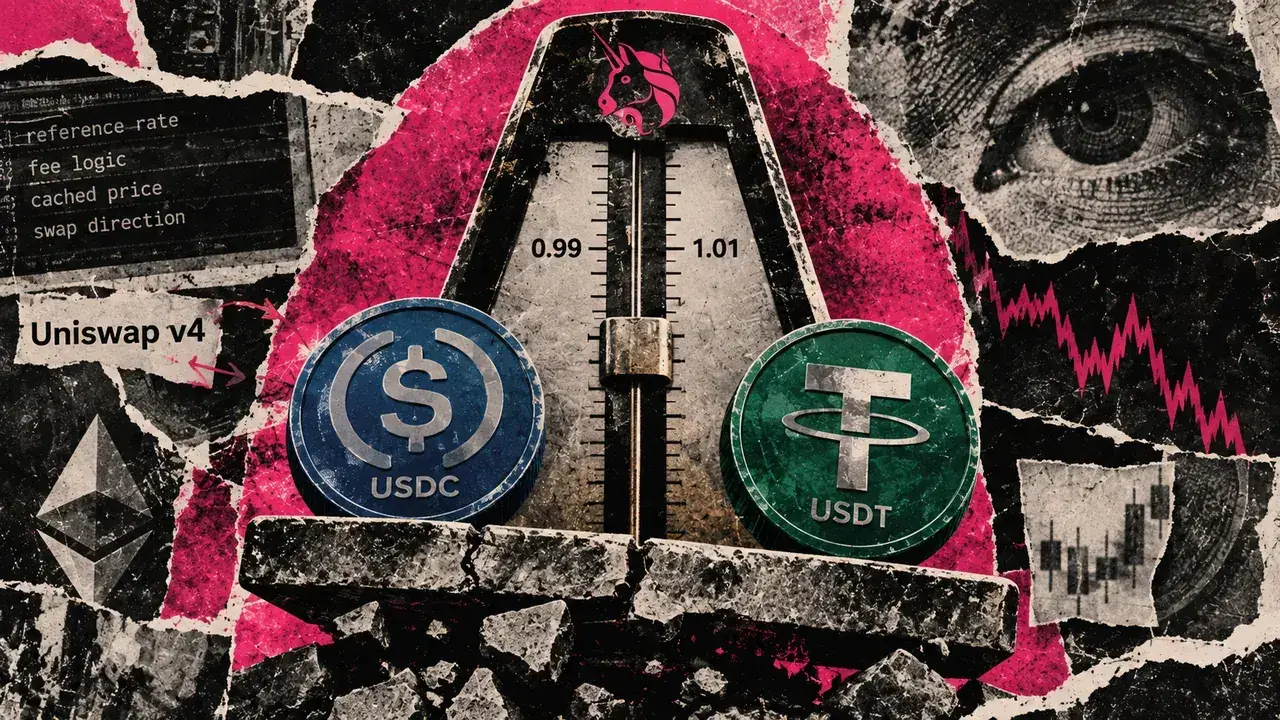
The Uniswap StablePair hook impacts liquidity provider (LP) returns by failing to adequately compensate them for the inventory risk they assume during stablecoin rebalancing. The mechanism suffers from three critical flaws: a fee structure anchored to a fixed rate regardless of market conditions, a failure to protect against adverse selection, and the prioritization of protocol-level rebalancing value over individual LP profitability. These issues mean that when stablecoin prices fluctuate or pools become imbalanced, the fees generated are often insufficient to cover the underlying cost of holding the less desirable asset.
Technically, the StablePair hook was designed for Uniswap v4 to optimize stable-to-stable swaps by internalizing arbitrage value. However, current 2026 analysis reveals that the 'configured rate' fee model is too rigid for the dynamic nature of modern DeFi. Because the fees do not scale with the risk of the pool’s inventory, LPs are essentially subsidizing the efficiency of the swap for traders without receiving a commensurate risk premium, leading to a net drain on their expected returns.
This discovery comes at a pivotal time for the DeFi sector as decentralized exchanges increasingly rely on customizable hooks to differentiate their liquidity logic. For the broader market, these flaws highlight a growing tension between protocol efficiency and sustainable yield for capital providers. As Uniswap remains a primary liquidity hub, the inability to mitigate these risks could lead to a migration of sophisticated LPs toward newer, more adaptive automated market makers (AMMs) that offer dynamic fee adjustments to combat loss-versus-rebalancing (LVR).
Investors and DeFi participants should watch for upcoming governance proposals aimed at patching these hook vulnerabilities or introducing version 4.1 updates. Until a more dynamic fee mechanism is integrated, LPs utilizing StablePair hooks for stablecoin pairs should closely monitor their exposure to inventory risk, particularly during periods of peg instability among major stablecoins. The community's response to these findings will likely determine Uniswap's ability to maintain its dominance in the stablecoin swap market throughout the remainder of 2026.