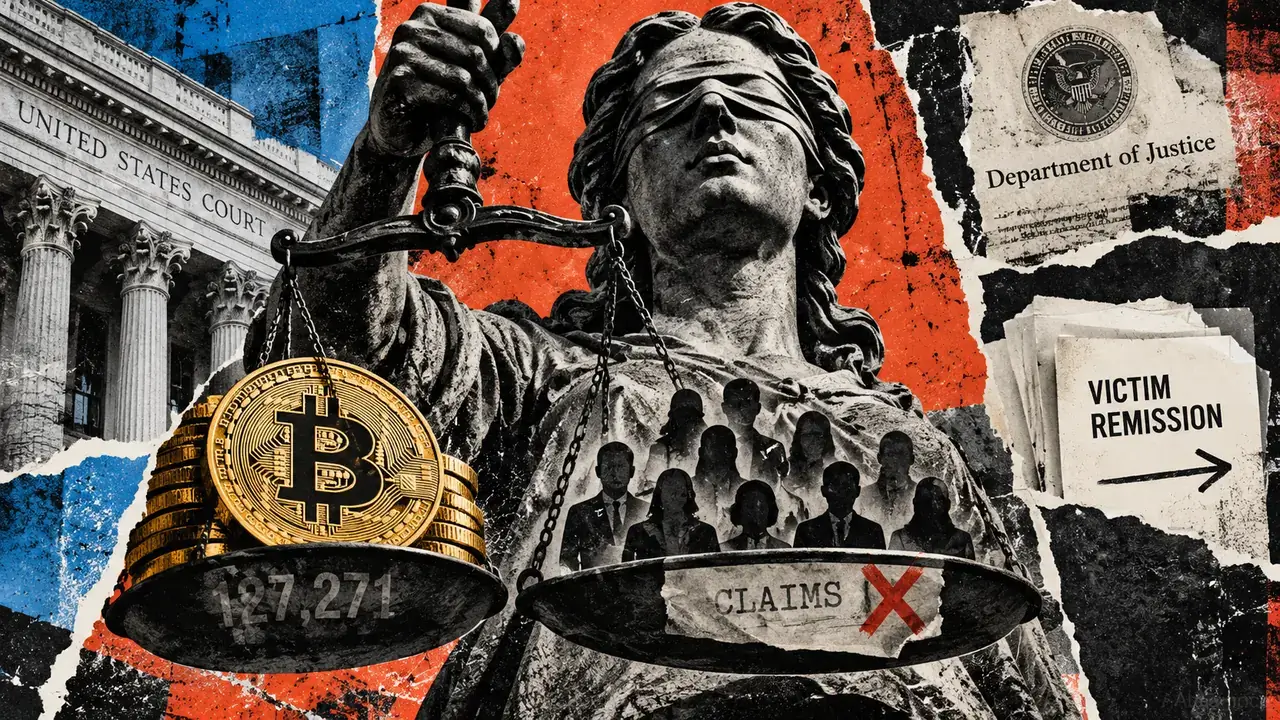
The US court blocked the petition because the claimants failed to establish a direct, "plausible link" between their specific losses and the 127,000 Bitcoin (BTC) currently held in government-seized wallets. The September 25, 2026, ruling clarifies that victims cannot bypass the formal Department of Justice (DOJ) remission process simply by asserting general claims of theft. Instead, the court found the evidence insufficient to prove a superior legal interest in the specific digital assets at the time they were seized, effectively keeping the multibillion-dollar stash under federal control.
This legal battle highlights the significant evidentiary hurdles faced by victims of large-scale crypto crimes. In this case, the court noted that the DOJ's remission process—where the government decides how to redistribute seized funds—is entirely discretionary and dependent on the finalization of the forfeiture process. Because the petitioners could not trace their individual lost coins directly into the seized pool, the court maintained that the executive branch, not the judiciary, holds the authority to decide the fate of the assets.
From a regulatory perspective, this decision reinforces the dominance of the DOJ’s Money Laundering and Asset Recovery Section (MLARS) in managing high-value crypto forfeitures. For the broader industry, it signals that the US legal system will maintain a strict interpretation of standing in crypto-related seizures. This makes it increasingly difficult for third-party claimants to intervene in government liquidations, potentially streamlining the government's ability to move or sell large quantities of Bitcoin without judicial interference.
Investors and market analysts are now closely watching for the DOJ’s next move regarding the liquidation of these 127,000 tokens. While the court's decision removes one immediate hurdle for the government, any large-scale sale of these assets could introduce significant sell-side pressure on BTC prices. Moving forward, the focus shifts to the administrative remission phase, where victims will need to meet specific DOJ criteria to apply for potential compensation from the recovered funds.