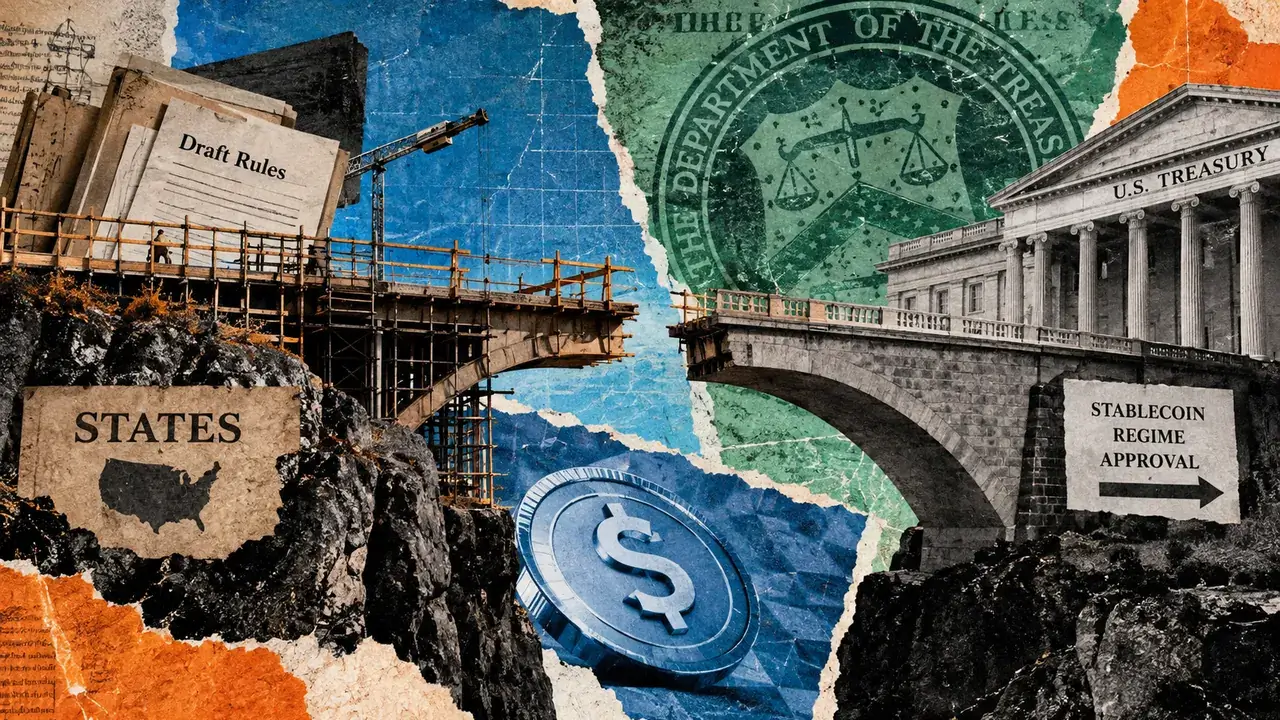
The U.S. Department of the Treasury has introduced a conditional certification pathway for state regulators seeking to authorize stablecoin issuers under the latest federal oversight framework. This allows states to file preliminary documentation to meet initial filing windows even if their specific local regulations are still in the legislative or administrative pipeline. By providing this flexibility, the Treasury aims to prevent states from being locked out of the national stablecoin ecosystem due to procedural delays at the local level.
However, the Treasury emphasized a clear distinction between filing and approval. While conditional certifications satisfy timing requirements, a substantive review of a state's stablecoin framework will not begin until a complete submission is provided. This ensures that while states can 'reserve their spot,' the federal government maintains strict standards for reserve transparency and consumer protection before any official endorsement is granted.
This development is a significant relief for proactive states like New York and Wyoming, which are currently updating their existing digital asset laws to align with new federal standards. For stablecoin issuers, this clarity reduces the risk of regulatory gaps where a state-licensed issuer might have lost federal standing during a transition period. It signals a cooperative federal-state model that seeks to integrate, rather than replace, established state-level crypto oversight.
Market participants should watch for which states are the first to utilize this conditional filing process, as it will indicate which jurisdictions are most aggressive in securing their place in the regulated U.S. dollar-pegged asset market. The next major milestone will be the first transition from a conditional filing to a substantive federal approval, which will set the benchmark for reserve auditing and operational compliance for the remainder of 2026.