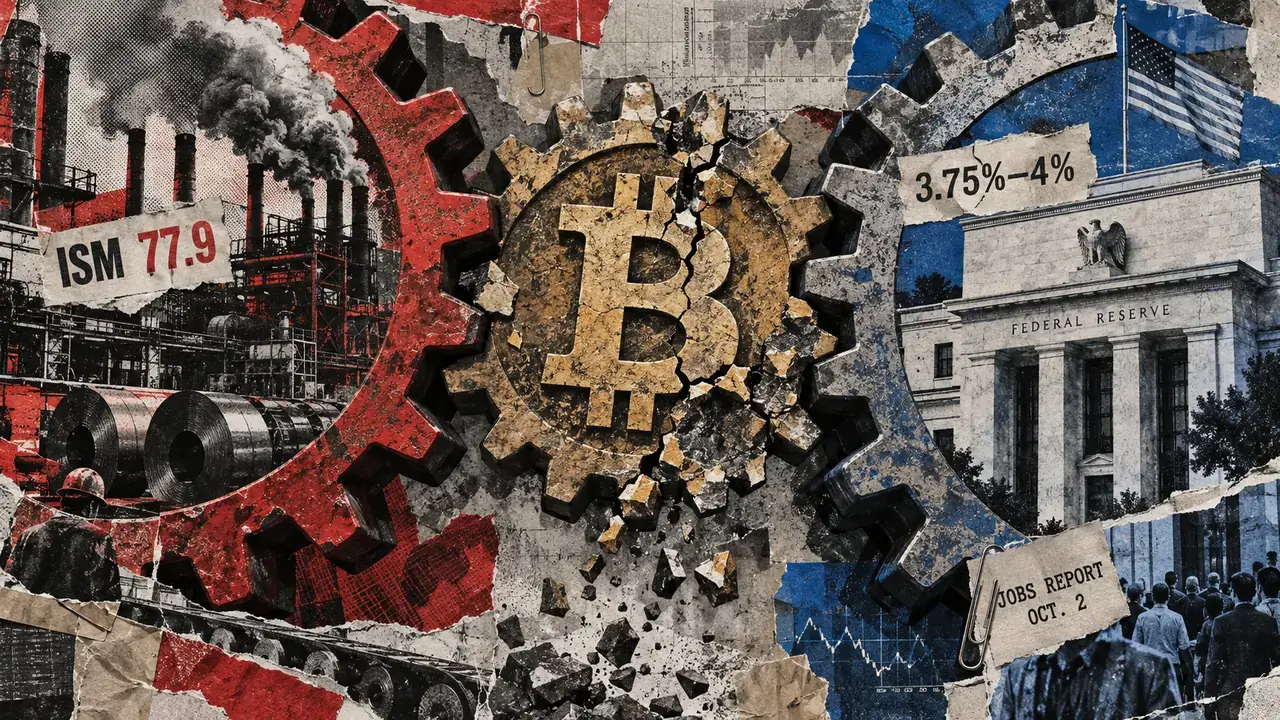
The spike in US factory costs is expected to exert downward pressure on Bitcoin’s price by bolstering the case for the Federal Reserve to maintain high interest rates. As manufacturers report rising input prices alongside expanding orders and employment, the renewed threat of inflation creates a headwind for risk-on assets. Consequently, Bitcoin’s recent attempt to stabilize above $85,000 is now at risk as investors brace for a potentially hawkish shift in monetary policy.
The latest data indicates that the industrial sector is heating up, with manufacturers passing higher costs down the supply chain. This resilience in the manufacturing sector, coupled with expanding payrolls, suggests that the US economy is not cooling as quickly as the Fed might have hoped. This data serves as a critical precursor to Friday’s official employment figures, which will provide the definitive evidence needed for the next interest rate decision.
From a market perspective, this inflationary signal typically benefits the US Dollar Index (DXY), which often shares an inverse relationship with Bitcoin. If factory costs continue to climb, the 'higher-for-longer' interest rate narrative will likely gain momentum, reducing the excess liquidity that has fueled BTC's rise in early 2026. Traders are increasingly cautious, fearing that a hot economy will force the Fed to abandon plans for easing.
Investors should watch Friday’s payroll data as the final piece of the puzzle. If labor market strength mirrors the manufacturing expansion, the resistance at $85,000 may prove too difficult to overcome in the short term. For now, the crypto market remains highly sensitive to macro data, with the potential for increased volatility as the debate over US interest rates intensifies.