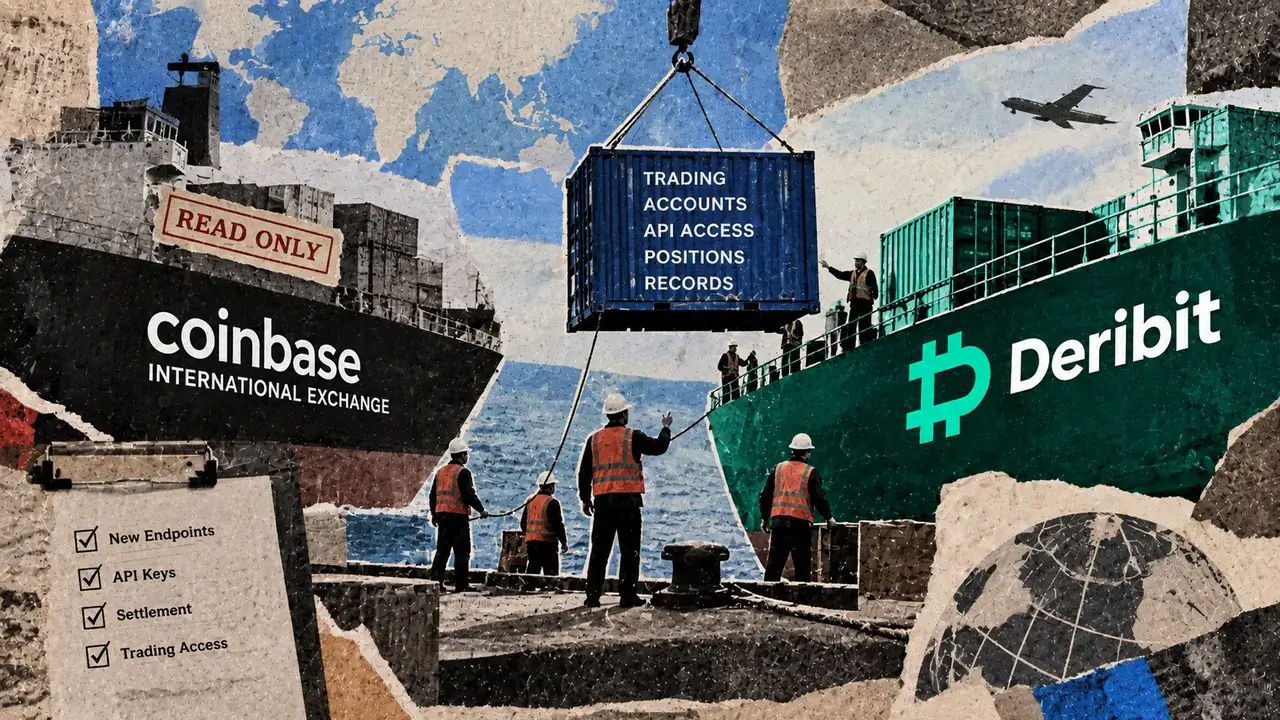
On October 1, 2026, Coinbase officially completed its infrastructure migration to Deribit-powered systems for its International Exchange, a move that fundamentally changes how institutional clients interact with the platform. This transition means that all active trading has ceased on the legacy venue, which is now restricted to read-only access for historical data and settlement auditing. Institutions are required to migrate their operations to the new infrastructure to continue executing derivatives and spot trades outside of the United States.
The migration is part of a broader strategic push by Coinbase to enhance its offshore liquidity and execution speeds by leveraging Deribit’s specialized derivatives architecture. This 'cutover' involves significant changes to API integrations, clearing processes, and the way trade records are archived. For institutional users, this means a mandatory update to their internal accounting and trade execution software to align with the new venue’s technical specifications.
From a regulatory and geopolitical standpoint, this move reinforces Coinbase’s strategy to maintain a robust international presence while domestic US regulations remain in flux. By streamlining its international arm with Deribit’s infrastructure, Coinbase is better positioned to compete with global derivatives giants. It also creates a clearer technical demarcation between its highly regulated US spot operations and its high-leverage international offerings, which may appease regulators looking for strict jurisdictional separation.
Market participants should watch for potential shifts in trading volume and liquidity depth on the new venue over the coming weeks. While the transition aims for greater efficiency, the initial migration period often involves a 'wait-and-see' approach from large-scale market makers. Additionally, institutional clients should ensure they have fully exported all necessary tax and compliance data from the old read-only venue before any future decommissioning of the legacy interface occurs.