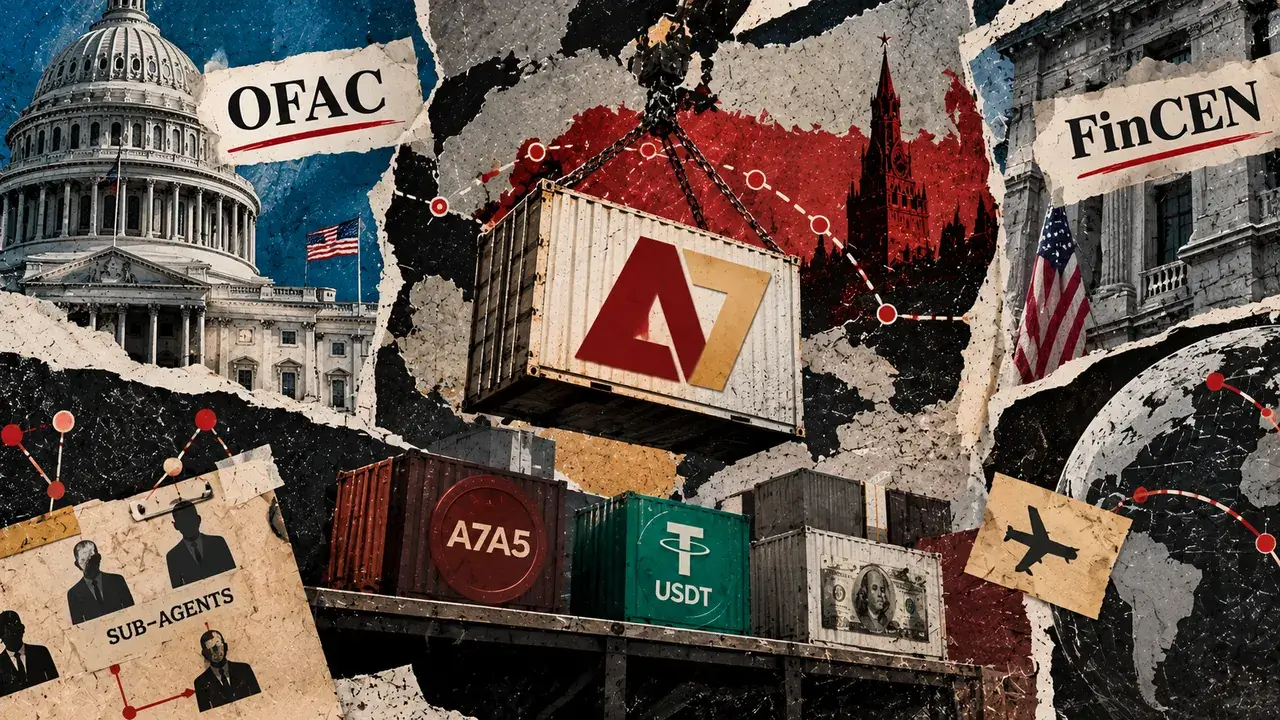
On October 1, 2026, the U.S. Department of the Treasury ramped up its enforcement against illicit finance by designating a sprawling $17 billion crypto payment network accused of acting as a sanctions 'escape route' for Russian interests. The Office of Foreign Assets Control (OFAC) expanded its blocking sanctions to cover the entire network, which primarily utilized Tether (USDT) to facilitate cross-border transactions. Simultaneously, the Financial Crimes Enforcement Network (FinCEN) proposed a new rule to restrict sub-agent transfers, a move intended to block the specific technical channels used to move funds through intermediary layers without proper oversight.
The investigation revealed that these networks functioned as a shadow banking system, allowing Russian entities to convert large volumes of capital into stablecoins to settle international trade and move assets out of the country. By targeting the broader network rather than just individual wallets, the U.S. government is signaling a shift toward systemic disruption. US officials emphasized that the scale of this $17 billion operation represented a significant threat to the integrity of the global financial system and the effectiveness of current geopolitical sanctions.
This regulatory pincer movement involves both the immediate freezing of assets held by designated entities and the long-term tightening of reporting requirements for crypto service providers. The FinCEN proposal regarding sub-agent restrictions is particularly noteworthy, as it seeks to close loopholes where smaller, unregulated payment processors act as funnels for larger exchanges. This reflects a growing consensus in Washington that centralized stablecoins require more aggressive monitoring to prevent them from becoming permanent tools for sovereign-level sanctions evasion.
For the cryptocurrency market, these actions underscore the heightening regulatory risk surrounding centralized stablecoins like USDT. While the impact on global liquidity remains to be seen, the move could lead to a 'de-risking' trend where exchanges and institutional desks distance themselves from transactions involving specific regional corridors. Investors and traders should watch for increased compliance costs and potential shifts in stablecoin dominance if further restrictions are placed on the issuance or redemption of USDT in response to these Treasury findings.