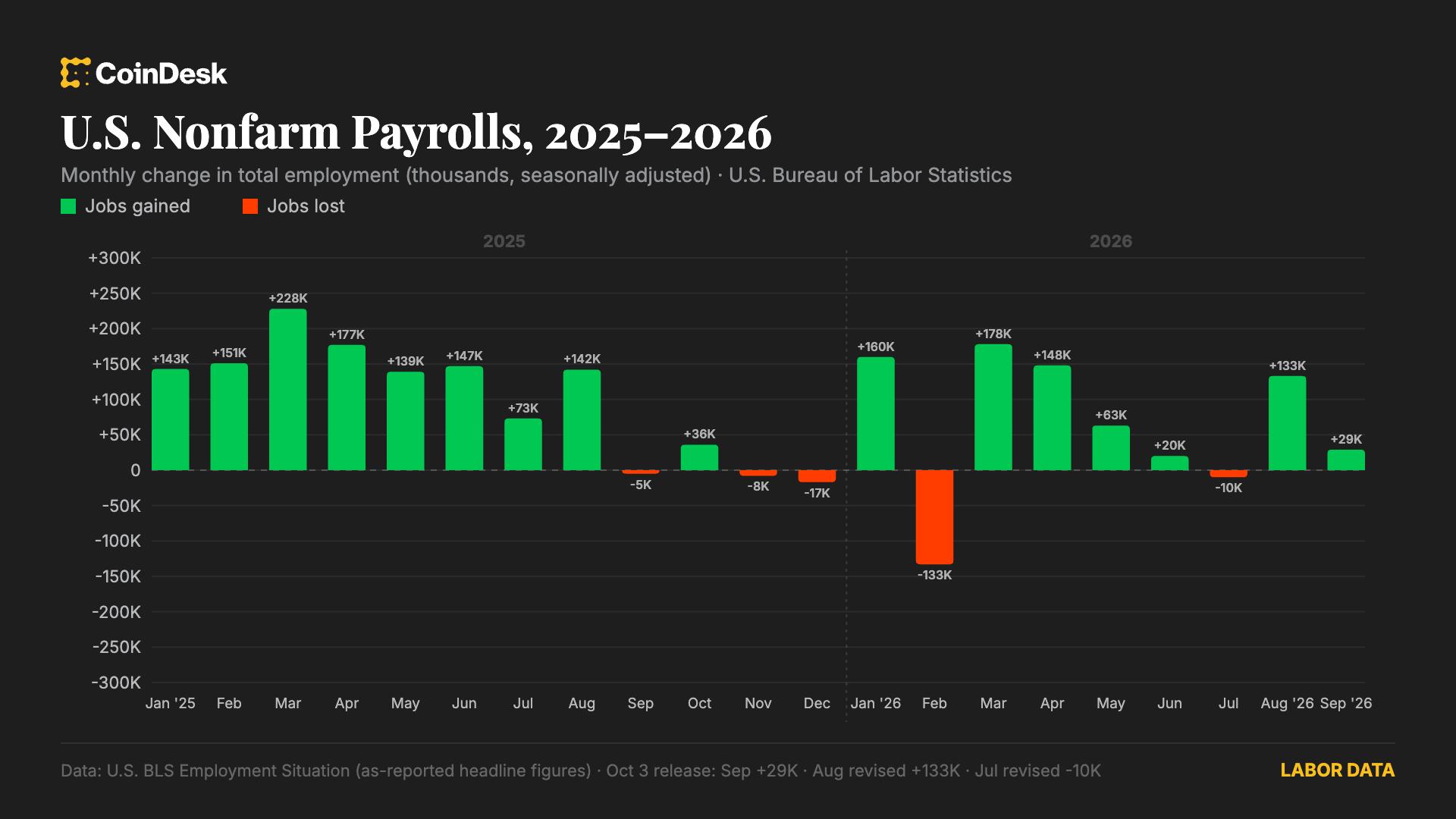
Bitcoin responded to the sluggish September 2026 US employment report with a significant price jump, rising more than 2% over 24 hours to reach the $87,000 threshold. The Bureau of Labor Statistics revealed that the US added only 29,000 jobs during the month, while the national unemployment rate ticked up to 4.2%. This data suggests a cooling labor market, which directly influences the Federal Reserve's monetary policy decisions toward more dovish interventions.
For crypto investors, this weak labor data acts as a bullish catalyst because it lowers the likelihood of prolonged high interest rates. When job growth stalls, the Federal Reserve typically feels pressured to cut rates to stimulate economic activity. Lower rates reduce the yield on traditional savings and bonds, making decentralized assets like Bitcoin more attractive to institutional investors seeking better returns in a high-liquidity environment.
The market reaction highlights Bitcoin's ongoing sensitivity to US macroeconomic indicators in 2026. By holding gains near $87,000, Bitcoin has demonstrated strong support levels despite broader economic uncertainty. This price action reflects a shift in market sentiment where bad news for the traditional labor market is often perceived as good news for the crypto market's liquidity prospects.
Moving forward, traders should keep a close eye on upcoming Consumer Price Index (CPI) readings and any subsequent statements from Fed officials. If inflation remains stable while employment weakens, the narrative for a significant Q4 rally could be cemented. Investors will be watching to see if BTC can decisively break and hold above the $87,000 resistance level, which would likely signal a new phase of price discovery.