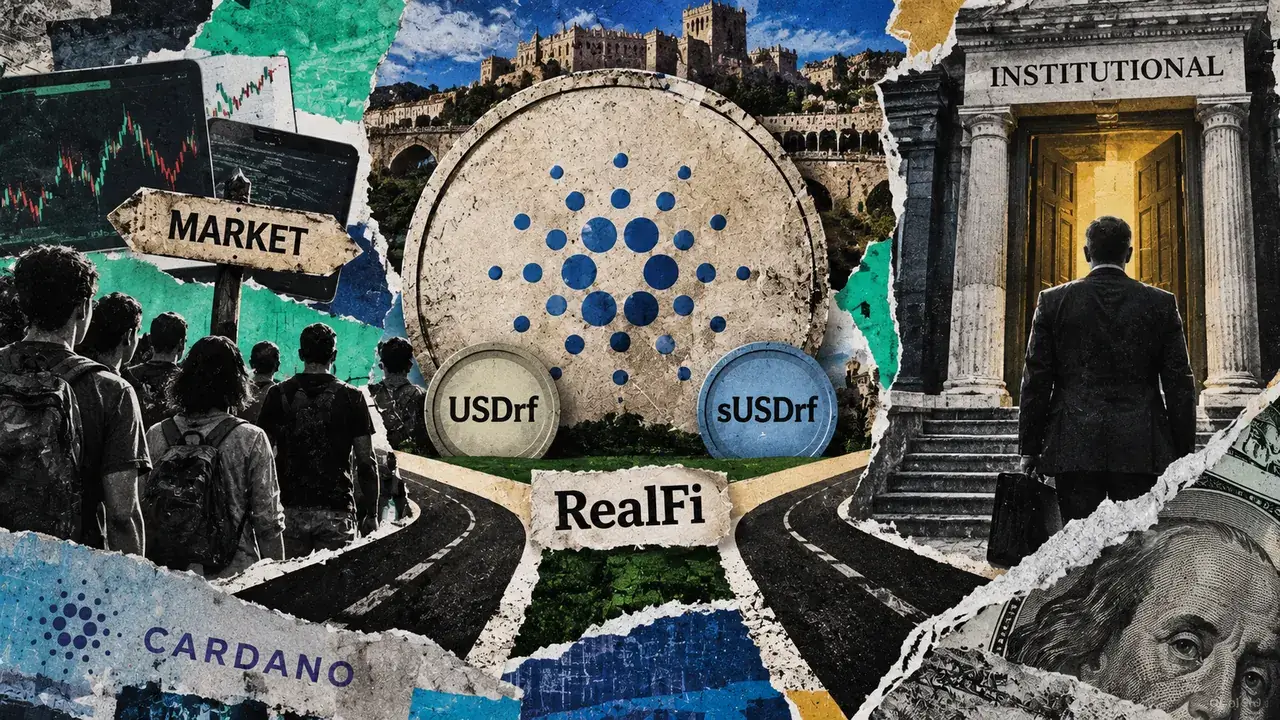
Cardano’s ecosystem is betting on RealFi and institutional credit to stabilize its decentralized finance (DeFi) sector, which has seen its total value locked (TVL) shrink by more than half throughout 2026. The new strategy focuses on bridging the gap between traditional finance and blockchain, allowing verified institutions to request direct issuer redemptions while retail holders continue to rely on market liquidity. This tiered approach aims to provide the regulatory clarity and liquidity guarantees that institutional lenders require to commit significant capital to the Cardano network.
The shift comes as Cardano faces stiff competition from faster-growing Layer 2 solutions and the stagnation of its native retail-driven DeFi protocols. To mitigate the risks associated with institutional lending, the network has implemented a reserve system where stakers essentially act as a backstop, absorbing potential losses to protect protocol integrity. This structure is designed to reassure large-scale creditors that their capital is protected by the network’s underlying consensus layer, even during periods of high volatility.
From a regulatory perspective, this RealFi push aligns Cardano with emerging US guidelines for Real World Assets (RWAs). By requiring institutional verification for redemptions, the ecosystem is positioning itself to be more compliant than fully anonymous lending protocols. For US-based users and investors, this could mean a transition away from high-yield speculative farming toward more transparent, credit-based returns that reflect real-world economic activity.
Market analysts are closely watching the impact of this transition on ADA’s price and the network's long-term utility. While the halving of DeFi TVL is a significant blow to ecosystem sentiment, the successful onboarding of institutional credit could create a more stable and less reflexive liquidity environment. However, the reliance on stakers to absorb losses introduces a new risk profile for ADA holders who may not have previously accounted for protocol-level credit defaults.
Moving forward, investors should monitor the volume of verified institutional redemptions and the growth of RWA-linked smart contracts on Cardano. The success of this pivot depends entirely on whether RealFi can generate enough demand to offset the exit of retail liquidity. If the credit model fails to gain traction by the end of 2026, Cardano may face further pressure to reinvent its utility beyond being a specialized RWA platform.