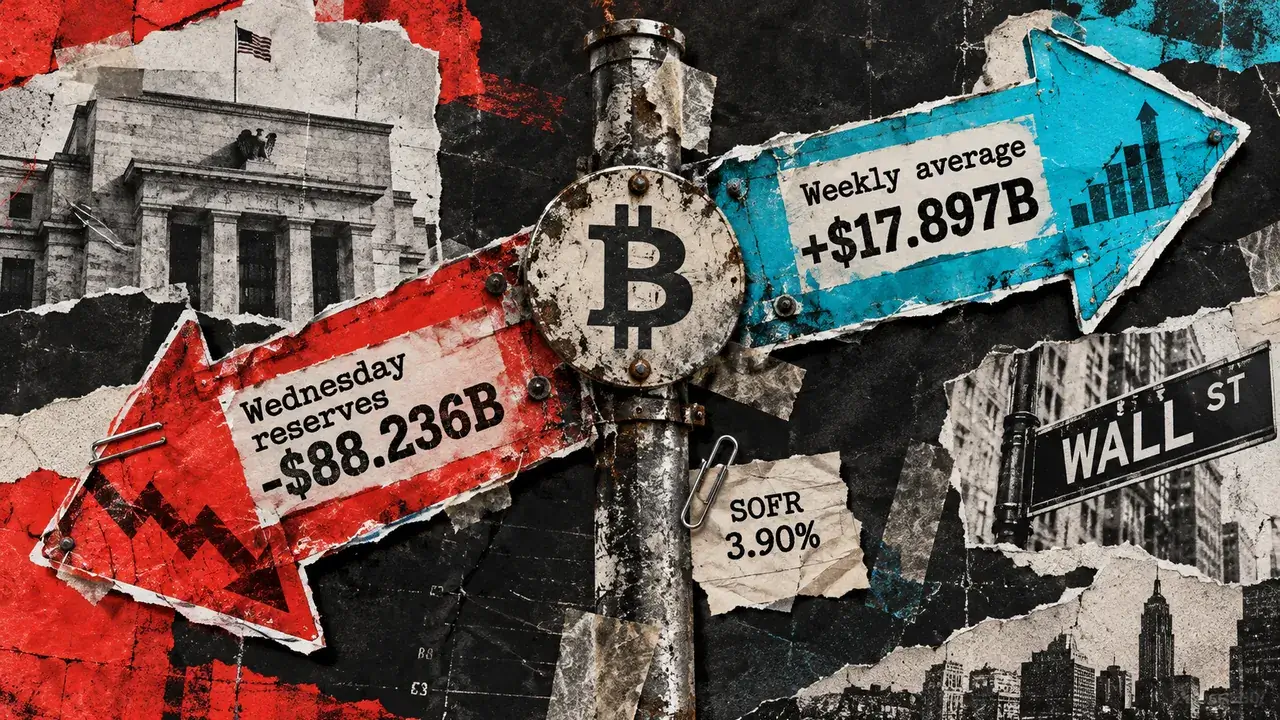
The recent $88.236 billion plunge in US bank reserves recorded this Wednesday does not yet signal a Bitcoin liquidity squeeze, primarily because the broader weekly average actually rose by $17.897 billion. While daily volatility in bank reserves can appear alarming to macro analysts, it often reflects short-term settlements or technical adjustments rather than a structural drain on the capital available for the crypto markets. For US-based investors, this means the immediate 'squeeze' narrative lacks the sustained macro support required to drive a significant BTC price correction.
This data mismatch highlights the limitations of using daily bank reserve figures as a standalone indicator for crypto market health. When daily reserves drop sharply while weekly averages climb, it indicates that liquidity is being redistributed within the financial system rather than exiting it entirely. In the current 2026 economic environment, these fluctuations are frequently tied to specific Treasury settlement cycles that do not necessarily impact the risk appetite of institutional Bitcoin holders.
From a regulatory and geopolitical perspective, the Federal Reserve’s balance sheet management remains the primary driver of these metrics. As we navigate the first half of 2026, fiscal policy adjustments and the Treasury's general account (TGA) movements are causing increased noise in daily reporting. Until the weekly and monthly trends show a consistent, synchronized downward trajectory across all liquidity gauges, the 'liquidity squeeze' remains a theoretical risk rather than a confirmed market reality.
Traders should now watch for a potential convergence in these signals. If the weekly average reserves begin to follow the daily downward trend, it could indicate a genuine tightening of financial conditions that would pressure Bitcoin's price. For now, market participants should monitor the Reverse Repo Facility (RRP) levels and broader Net Liquidity measures to confirm if this $88 billion drop is a temporary outlier or the start of a more restrictive phase in US monetary policy.