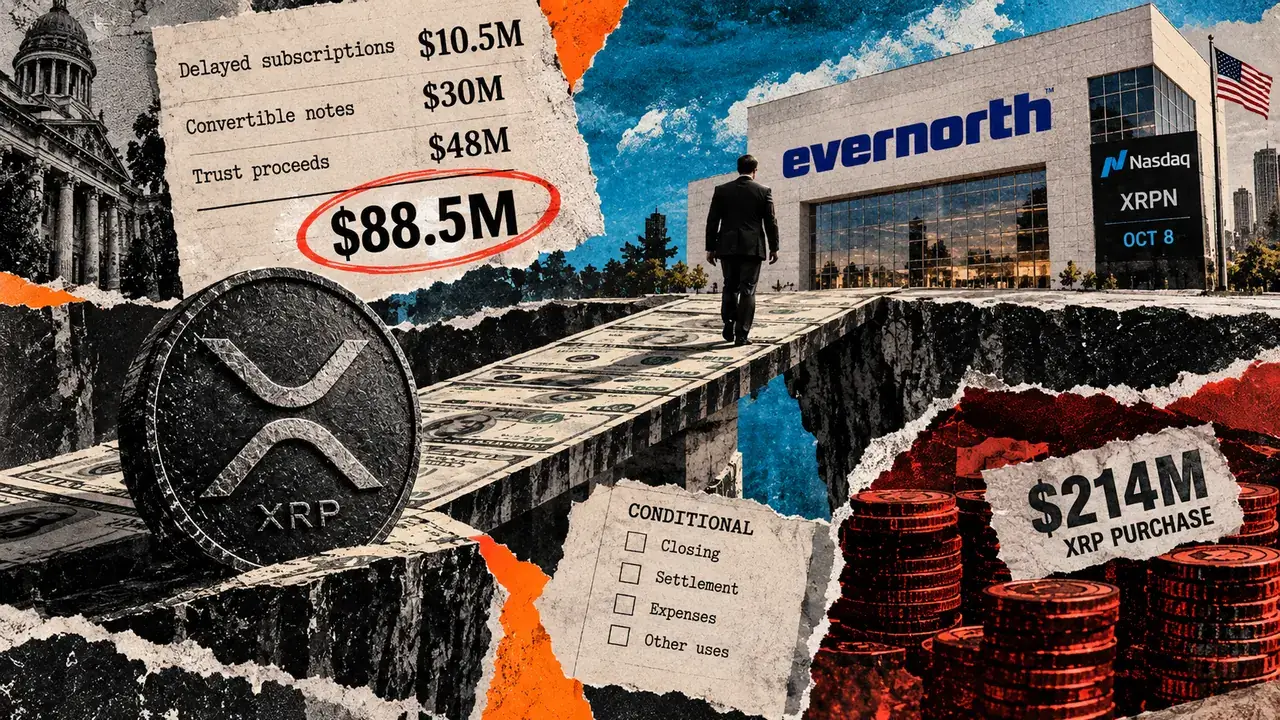
Evernorth’s Nasdaq XRP treasury approval is a milestone for institutional adoption in 2026, but the actual XRP buying power is approximately $211.5 million rather than the widely reported $300 million. Roughly $88.5 million of the total funding remains conditional on closing-linked gross sources, meaning the firm's immediate market impact will depend heavily on its internal expense management and specific spending choices. This distinction is crucial for traders who were anticipating a larger, immediate influx of liquidity into the XRP markets.
The approval allows Evernorth to integrate XRP into its corporate treasury strategy on the Nasdaq, a move that signals growing confidence in Ripple-linked assets following the regulatory clarifications of the mid-2020s. However, the $88.5 million discrepancy stems from conditional gross sources that are not yet guaranteed for direct asset acquisition. As these funds are processed, the actual capital available to bid on XRP will likely be further influenced by operational expenses and strategic reserves.
For the broader crypto market, this development highlights the complexities of institutional 'treasury plays' where headline figures often mask the nuances of liquidity deployment. The inclusion of XRP on a Nasdaq-listed balance sheet provides a layer of legitimacy that could encourage other mid-cap financial institutions to follow suit, potentially creating a new support level for the asset. This move reflects a 2026 trend where corporations are diversifying beyond Bitcoin and Ethereum for their reserve assets.
Investors should closely monitor Evernorth's subsequent SEC filings for updates on the $88.5 million in conditional funds. Any conversion of these funds into active buying power will likely be telegraphed through quarterly disclosures. Furthermore, the market will be watching to see if this move prompts a response from federal regulators regarding corporate custody of digital assets, especially as XRP continues to cement its position in the institutional landscape.