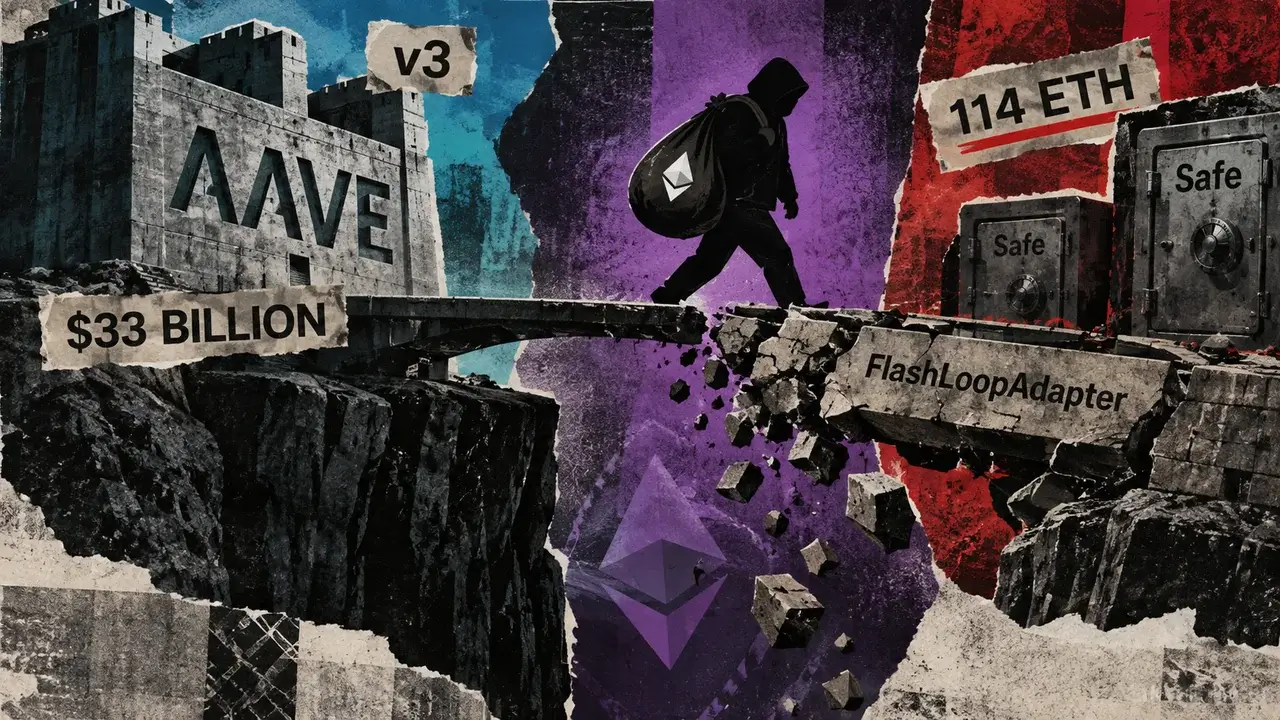
The exploit against Aave v3 positions occurred through a specific logic flaw in the FlashLoopAdapter, a third-party lending tool designed to automate flash loan cycles. On October 2, 2026, an attacker leveraged this vulnerability to compromise two Safe multisig wallets, resulting in the theft of 114 ETH, worth approximately $300,000. It is critical for users to understand that the Aave protocol itself was not breached; rather, the attack targeted the external adapter that users had authorized to manage their positions.
According to a report by blockchain security firm SlowMist, the attacker identified a weakness in how the FlashLoopAdapter interacted with the Safe (formerly Gnosis Safe) multisig environment. This allowed for unauthorized withdrawals from users who had granted the adapter high-level permissions to execute trades on their behalf. This event underscores a recurring theme in the 2026 DeFi landscape: while flagship protocols like Aave have undergone rigorous audits, the peripheral ecosystem tools—often used to maximize capital efficiency—remain the primary vector for sophisticated exploits.
For US-based DeFi participants and institutional investors, this incident emphasizes the dangers of 'composability risk.' The ability to layer different protocols and tools is a core strength of Ethereum, but it also creates a chain of dependencies where a single weak link can jeopardize significant capital. While the loss of $300,000 is relatively small compared to historical DeFi heists, the breach of multisig wallets—traditionally considered the gold standard for security—has caused a temporary dip in sentiment regarding automated yield strategies.
Looking ahead, the market should watch for a full post-mortem from the FlashLoopAdapter developers and potential security updates for other third-party lending adapters. US regulators, particularly the SEC and CFTC, have recently signaled increased scrutiny toward DeFi 'gateways' and middleware providers. This exploit may provide further ammunition for those advocating for stricter code auditing standards for any third-party tool that facilitates transactions on major decentralized exchanges and lending platforms. Users are advised to review their active wallet permissions and revoke access to any third-party adapters that have not released a recent security audit.