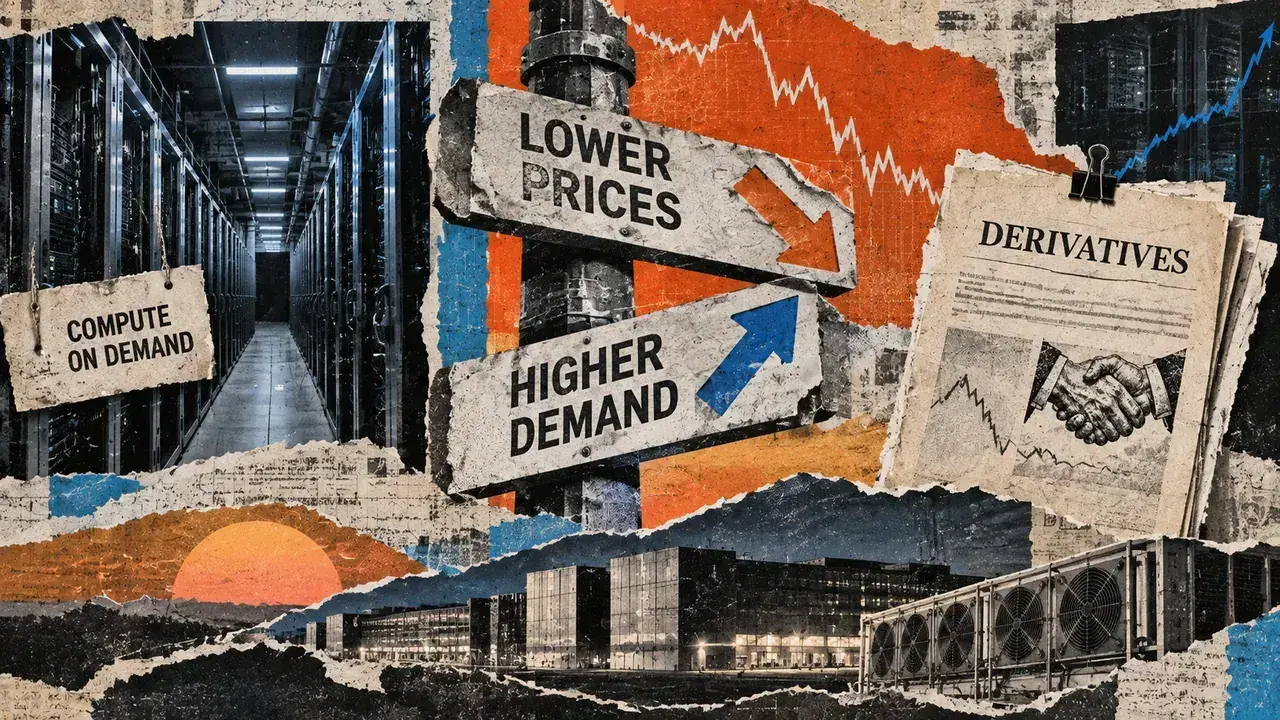
New GPU price hedges—derivative contracts designed to lock in future rental rates—are providing a vital safety net for AI compute hosts facing a supply-induced price crash in 2026. By allowing providers to hedge against falling spot prices for flagship units like the NVIDIA H100 and B200, these instruments ensure that hardware operators can remain solvent and meet financing obligations even as the cost to rent processing power drops. This shift toward commoditized compute allows hosts to trade price certainty for potential upside, stabilizing the infrastructure layer of the AI economy.
Throughout early 2026, a massive influx of specialized hardware into the market has led to a saturation of available compute power. While this is a significant advantage for AI startups and application developers who can now scale their software at a fraction of previous costs, it has created a revenue cliff for the companies that purchased the physical machines. Without these new hedging mechanisms, the rapid depreciation of rental yields would likely lead to a wave of defaults among smaller, independent compute providers.
The introduction of these hedges marks the maturation of 'compute' from a scarce luxury to a standardized commodity, similar to oil or electricity. Financial institutions and specialized decentralized protocols are now offering futures and swap contracts based on GPU-hour benchmarks. This allows large-scale buyers to secure long-term capacity at fixed costs while providing hosts with the predictable cash flow necessary to upgrade to next-generation silicon.
For the crypto sector, specifically Decentralized Physical Infrastructure Networks (DePIN), these hedges are a critical evolution for maintainer incentives. As rental prices fluctuate, DePIN protocols that integrate these financial tools will be better positioned to retain node operators who require stable returns. Investors should monitor the launch of on-chain compute derivatives, as these will likely become the primary tool for decentralized providers to manage market risk in a post-scarcity AI environment.