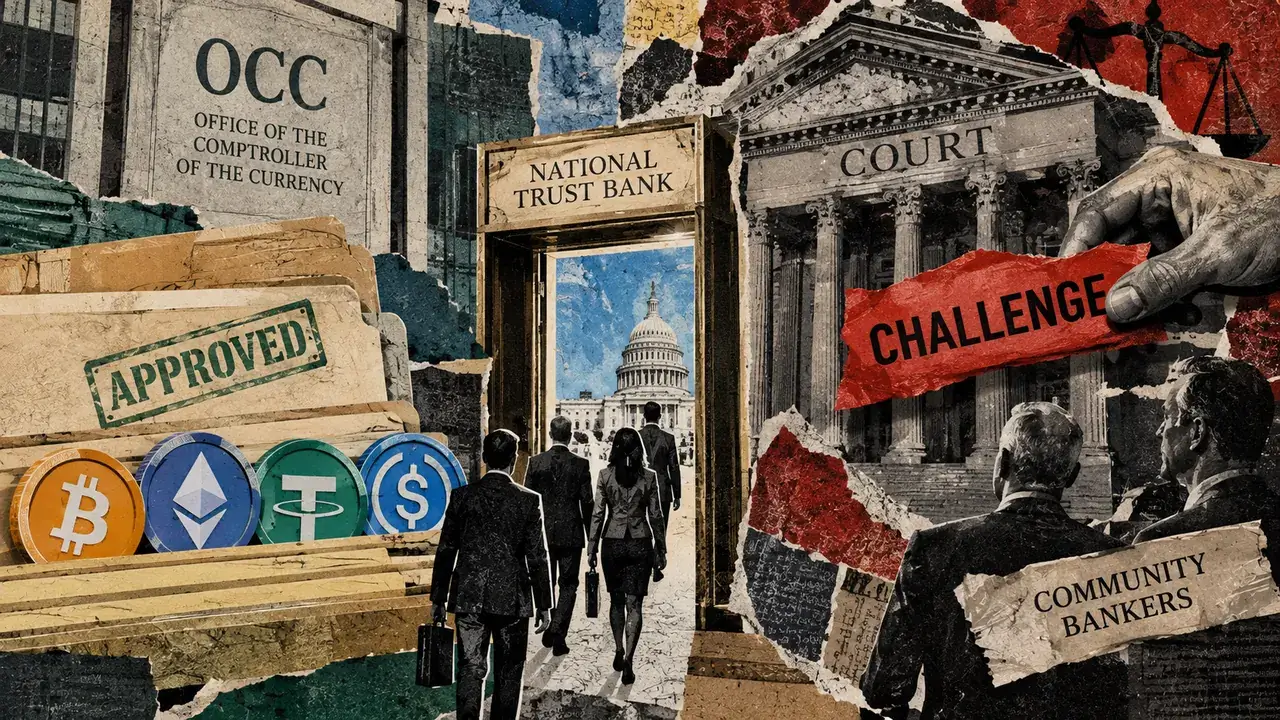
The ICBA lawsuit against the Office of the Comptroller of the Currency (OCC) directly threatens the legal framework that allows crypto-native firms to obtain national trust charters. Filed on October 2, 2026, in a Washington federal court, the complaint asks the judiciary to vacate the OCC’s national trust bank rule and Interpretive Letter 1176. If the court rules in favor of the traditional banking lobby, recently approved entities such as Agora National Trust Bank, Catena Trust Bank, and Bastion Platforms could see their federal status revoked, forcing them back into a fragmented state-by-state regulatory environment.
The legal challenge follows a string of approvals by the OCC that granted national charters to digital asset firms, serving as a catalyst for the ICBA’s action. Traditional bankers argue that the OCC exceeded its statutory authority by granting national bank charters to entities that do not engage in the business of banking, specifically the combination of deposit-taking and lending. By challenging Interpretive Letter 1176, the lawsuit aims to eliminate what the ICBA describes as a regulatory shortcut for crypto firms to gain the prestige and preemption of a federal charter without the full oversight required of commercial banks.
This litigation highlights the intensifying turf war between the US financial establishment and the digital asset sector in late 2026. For crypto companies, a national trust charter is a vital tool for scaling operations across state lines and securing institutional trust. However, the ICBA views these firms as a competitive threat that operates under a different set of rules, claiming that the OCC’s stance creates an unlevel playing field and poses risks to the traditional financial system.
Moving forward, market participants should watch for the OCC’s formal response and any potential motions for a preliminary injunction. A court decision to stay the OCC's rule could immediately halt the operations of existing crypto trust banks and deter new entrants from seeking federal oversight. This case will likely serve as a definitive turning point for how digital asset custody and settlement services are integrated into the US national banking infrastructure over the coming years.