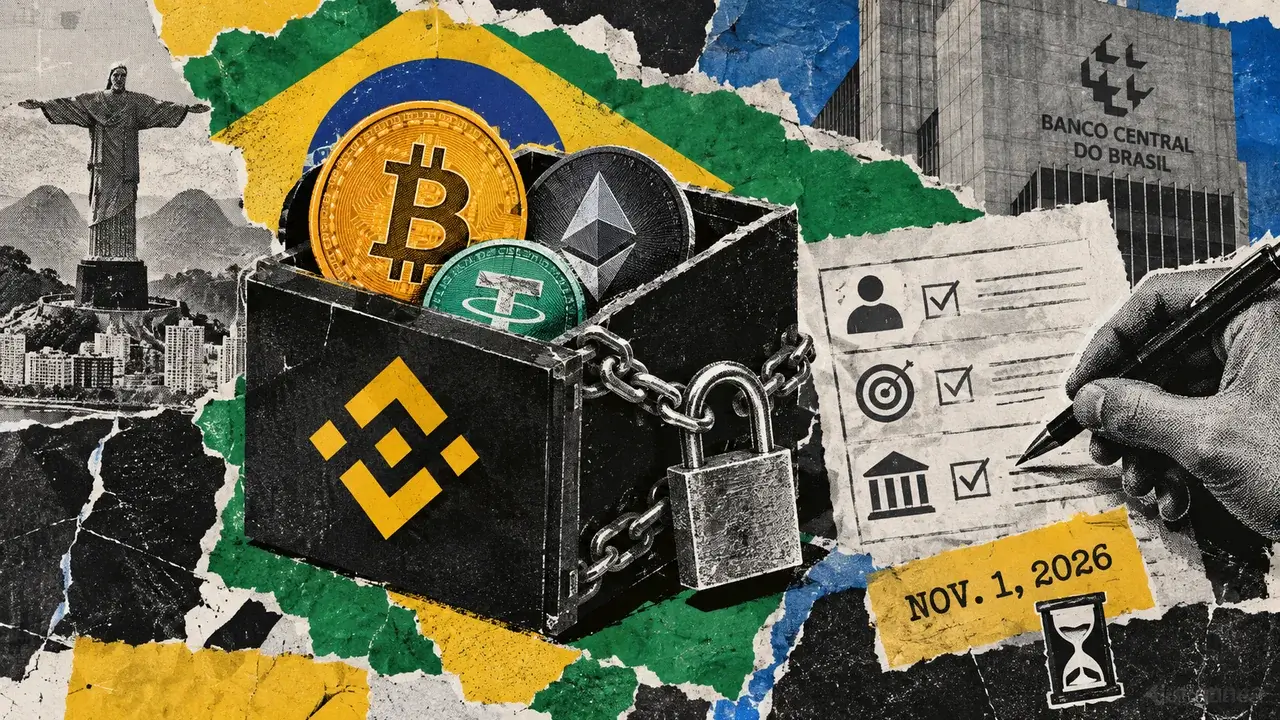
Binance has implemented a new policy in Brazil effective November 1, 2026, where certain international crypto deposits will remain in a pending state until customers provide required transfer details and explanations regarding the source of the funds. This measure aims to bolster the exchange's compliance with increasingly stringent local financial regulations. Users failing to provide these details promptly will face delays in accessing their assets, as the exchange seeks to verify the legitimacy of cross-border inflows.
This shift comes as the Central Bank of Brazil (BCB) and the Securities and Exchange Commission of Brazil (CVM) have matured their regulatory framework for Virtual Asset Service Providers (VASPs) throughout 2026. By mandating transparency for international transfers, Binance is moving to align itself with the Financial Action Task Force (FATF) 'Travel Rule' requirements that have been strictly enforced across the South American region this year. The focus is specifically on high-value or high-frequency international deposits that trigger automated risk flags.
For the broader crypto market, this development highlights the end of the 'frictionless' era for major exchanges in emerging markets. While these rules improve the legitimacy of the crypto ecosystem in the eyes of institutional investors, they introduce significant friction for retail users and cross-border businesses that rely on the speed of digital assets. Brazil remains a key battleground for global exchanges, and Binance’s proactive compliance suggests they are prioritizing regulatory licenses over user anonymity to maintain their market dominance.
Investors and traders in the region should watch for similar policy updates from competing exchanges like OKX and Coinbase, which also maintain a significant presence in Brazil. As the November 1 deadline passes, the speed at which Binance processes these 'pending' deposits will be a critical indicator of whether the new compliance layers will cause a liquidity bottleneck in the Brazilian crypto-to-fiat corridor. Users are advised to keep detailed records of their external wallet transactions and income sources to avoid prolonged asset freezes.