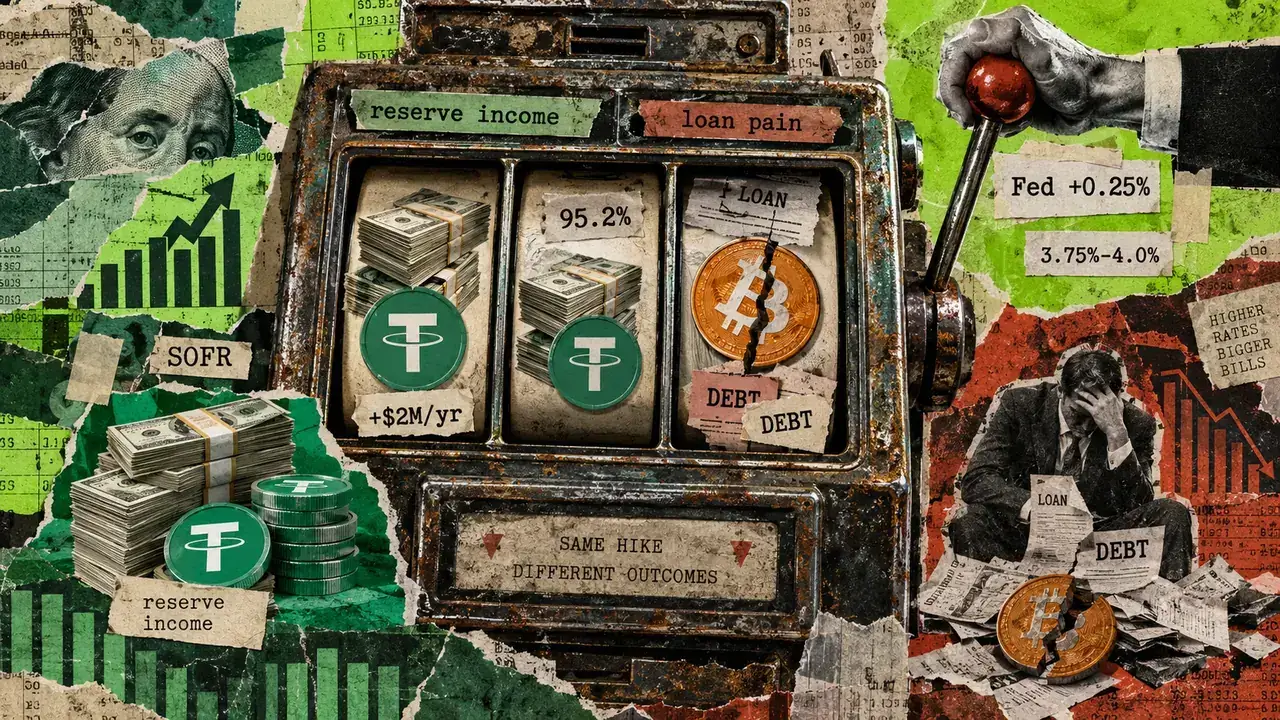
A 2026 Federal Reserve interest rate hike acts as a double-edged sword for the crypto ecosystem, boosting the profitability of stablecoin issuers while straining the balance sheets of leveraged Bitcoin investors. For stablecoin providers, higher rates mean the U.S. Treasuries and cash reserves backing their tokens generate significantly higher interest income. Conversely, companies or institutional traders who have taken out USD-denominated loans to acquire Bitcoin—the 'Bitcoin borrowers'—see their interest expenses rise, which can force liquidations or reduce their overall net equity as the cost of carry becomes prohibitive.
This divergence is particularly relevant in the 2026 economic landscape as the Fed continues to utilize hawkish monetary policy to stabilize the dollar. While DeFi protocols have integrated automated rate adjustments to stay competitive, the underlying reality remains that USD-pegged assets are currently the primary 'risk-free' yield generators for the companies managing them. This has led to a surge in the market cap of institutional stablecoins, which are increasingly competing with traditional money market funds for capital allocation.
From a regulatory standpoint, U.S. lawmakers are closely monitoring these windfall profits. The 2026 legislative focus has shifted toward whether stablecoin issuers should be mandated to pass a portion of these interest gains back to token holders, rather than retaining them as corporate revenue. Meanwhile, the geopolitical demand for digital dollars remains at an all-time high, further insulating stablecoin issuers from the cooling effects that high interest rates typically have on the broader technology and crypto sectors.
For market participants, this high-rate environment favors the infrastructure of the dollar-crypto bridge over speculative leverage. Investors should watch for increased selling pressure from corporate Bitcoin holders who may need to offload assets to service debt if rates remain elevated. Additionally, the spread between decentralized lending rates and the Fed's target rate will serve as a critical indicator for capital flows between traditional finance and the DeFi sector through the second half of 2026.