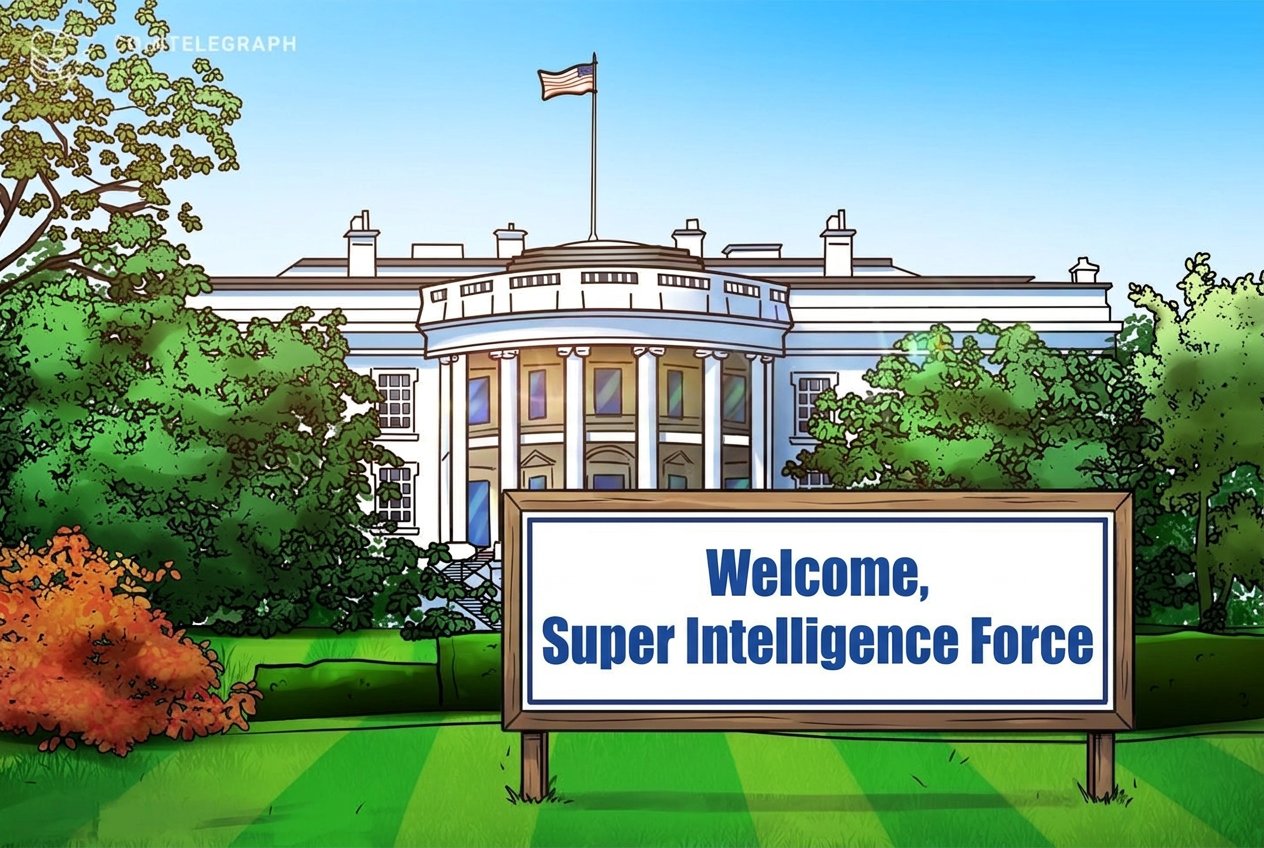
President Trump has officially tapped US Intelligence Chief Jay Clayton to lead the newly formed Super Intelligence Force (SIF), a move that places the former SEC Chairman at the helm of a powerful new oversight body. Reporting directly to the President and Chief of Staff Susie Wiles, Clayton will manage a mandate that integrates national intelligence with strategic enforcement. For the cryptocurrency industry, this suggests that the federal government is moving toward a more centralized and aggressive approach to monitoring blockchain transactions and digital finance infrastructure under the guise of national interest.
The SIF’s structure is designed to bypass traditional inter-agency friction, allowing for rapid intelligence gathering and policy implementation. Jay Clayton, who is well-known in the crypto community for his tenure as SEC Chair where he enforced strict adherence to securities laws, now holds a position that bridges the gap between financial regulation and national security. This dual-role expertise indicates that the Trump administration views the digital asset ecosystem not just as a financial market, but as a critical frontier for domestic and international intelligence operations.
From a regulatory standpoint, the SIF’s direct reporting line to Susie Wiles suggests that crypto policy will be driven by the inner circle of the White House rather than independent agencies alone. This could lead to a more unified federal stance on stablecoin reserves, cross-border payments, and the use of decentralized protocols. Market participants are concerned that this high-level focus could result in stricter AML/KYC requirements and a crackdown on privacy-preserving technologies that the SIF may deem a risk to the administration's security objectives.
Investors should watch for the SIF’s first set of directives, which are expected to outline how the agency will interact with existing regulators like the SEC and CFTC. The primary concern for the market is whether Clayton will use his new platform to fast-track enforcement actions against offshore exchanges or unhosted wallets. As the SIF begins its operations in mid-2026, the industry should prepare for a period of heightened transparency requirements and potential volatility as the new intelligence framework takes shape.