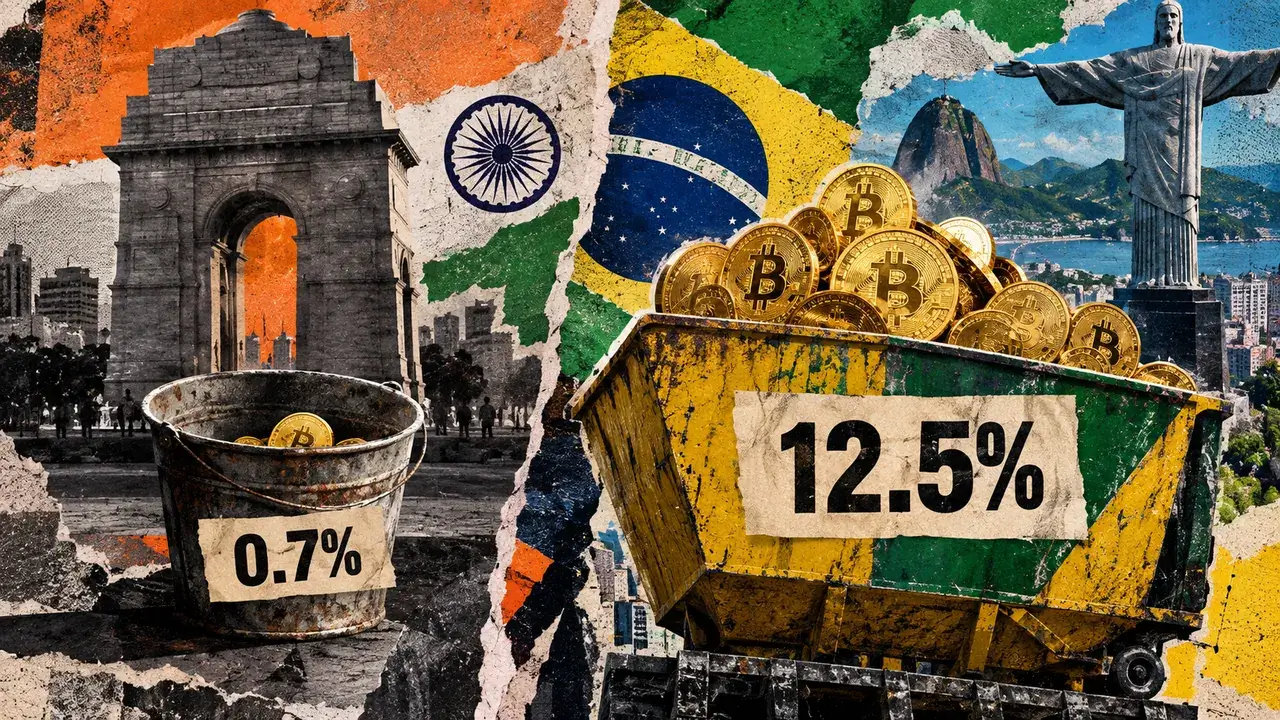
In 2026, Indian crypto exchanges are processing just 0.7% of the nation's total crypto inflows, according to the latest regional intelligence from Chainalysis. This figure reflects a significant disconnect between India's high crypto adoption rankings and the health of its domestic exchange ecosystem. In comparison, local exchanges in Brazil have successfully captured 12.5% of their national inflows, demonstrating that local platforms can thrive when regulatory frameworks align with market activity.
The massive gap in domestic capture is primarily attributed to India's persistent fiscal policies, including the 1% Tax Deducted at Source (TDS) on every transaction and the flat 30% tax on crypto gains. These measures have historically pushed high-volume traders and retail investors toward offshore international exchanges or decentralized finance (DeFi) protocols that offer more liquidity and fewer immediate tax frictions. While India remains one of the largest crypto markets globally by volume, the infrastructure benefiting from this growth is largely located outside its borders.
From a geopolitical perspective, the 2026 data suggests that India's attempts to bring crypto activity under a domestic regulatory umbrella through heavy taxation have largely resulted in capital flight to global platforms. For US-based observers, this serves as a cautionary tale of how tax-heavy oversight can inadvertently hollow out a domestic fintech sector. Meanwhile, Brazil's success in integrating local banking with crypto-native platforms has allowed it to retain a much larger share of the value generated within its own borders.
Moving forward, market participants should watch for potential shifts in the Indian government's stance during the next fiscal cycle. There is growing pressure from local industry bodies to reduce the TDS, arguing that the 0.7% capture rate proves the current system is counterproductive to the 'Make in India' initiative. Any regulatory easing could lead to a significant migration of liquidity back to local exchanges like CoinDCX or WazirX, whereas continued stagnation will likely see global exchanges maintain their dominance over the Indian market.