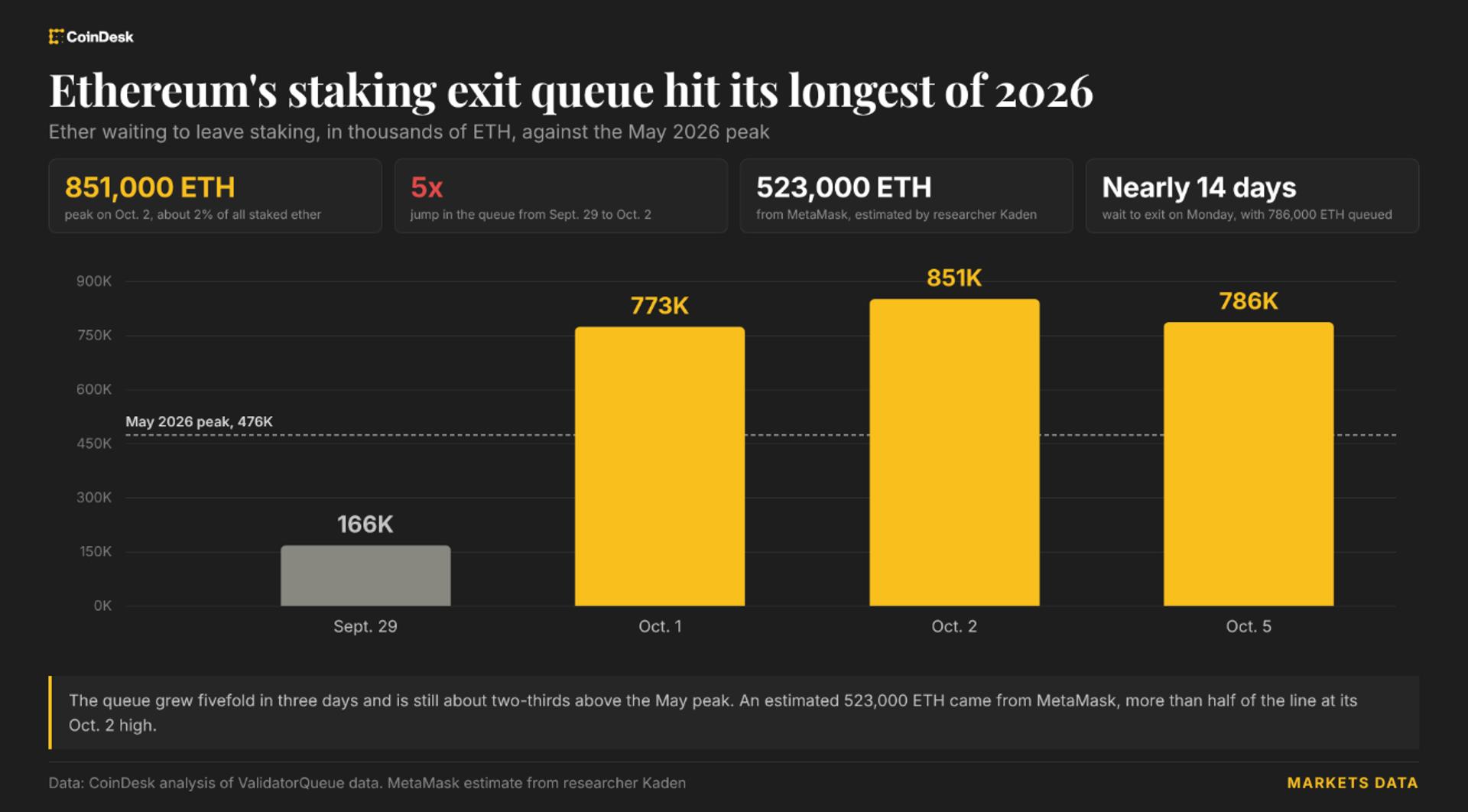
Ethereum investors currently face a 25-day wait to activate new validators as nearly 1.5 million ETH sits in the entry queue. While this suggests significant institutional interest, the entry queue has actually decreased by more than 25% since early September 2026. Simultaneously, the network's exit queue—the time required for validators to withdraw their staked assets—has reached its longest duration of 2026, signaling a major shift in how participants are managing their liquidity.
The reduction in the entry queue suggests that the aggressive surge of new staking capital seen earlier in 2026 may be reaching a point of stabilization. While 1.5 million ETH represents a massive commitment to network security, the thinning of the line indicates that new capital is entering the ecosystem at a slightly slower pace than the record-breaking weeks observed in August. Conversely, the spike in the exit queue is the most significant development, as it suggests large-scale entities or liquid staking providers are beginning to rotate out of positions or seeking liquidity for other market opportunities.
From a market and regulatory perspective, these queue fluctuations often reflect the behavior of US-based institutional stakers. Throughout 2026, clarity regarding the tax treatment of staking rewards and the operations of spot ETH ETFs has influenced how funds move on-chain. The current bottleneck in the exit queue could be a result of institutional rebalancing or a response to shifting macroeconomic conditions in the US, where investors may be looking to move capital into different yield-bearing instruments as the fiscal year nears its final quarter.
Moving forward, traders should closely monitor whether the exit queue continues to grow, as a prolonged withdrawal bottleneck could lead to temporary supply constraints on exchanges followed by potential sell pressure once the ETH is released. Additionally, the Ethereum developer community may revisit validator churn limits if these queues remain imbalanced. Investors should watch for the 1.5 million ETH entry threshold; if it falls further, it could signal a broader cooling of the staking-as-a-service market in favor of other DeFi yield strategies.