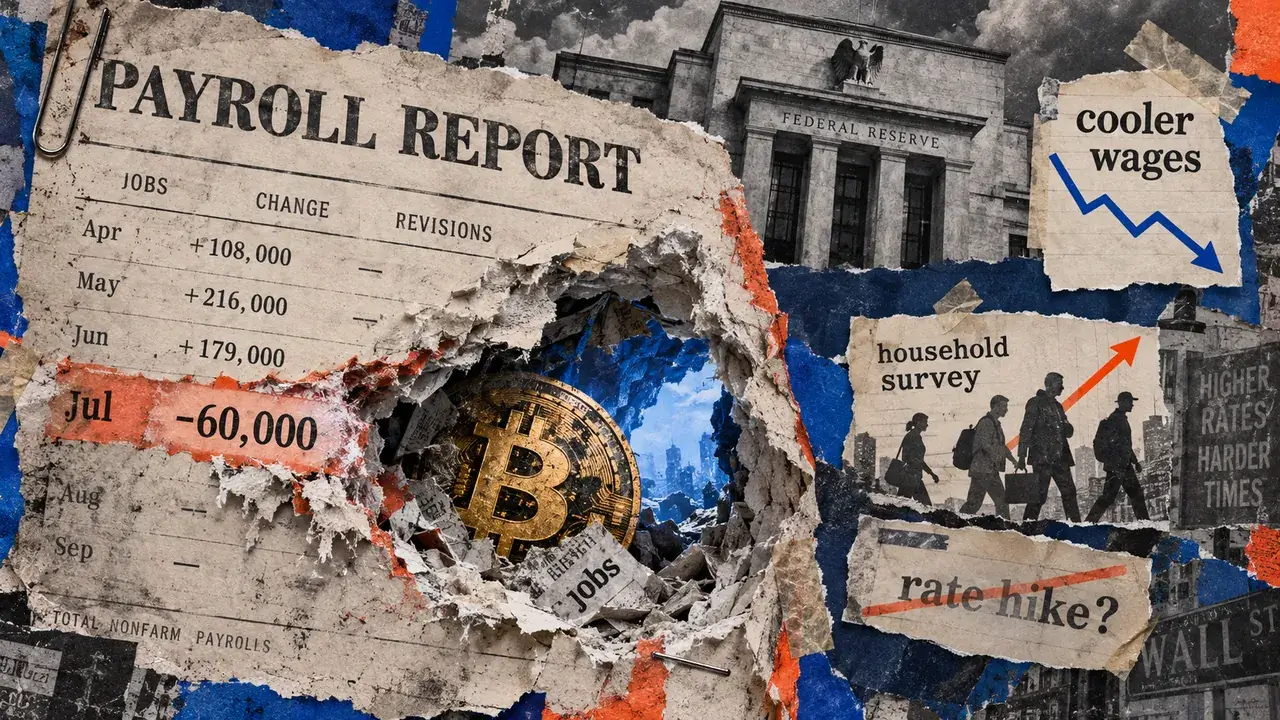
The sudden revision of July 2026 employment data, which flipped a modest 21,000 gain into a net loss of 10,000 jobs, has effectively neutralized the primary justification for a Federal Reserve interest rate hike this fall. This contraction, alongside cooling wage growth, indicates that the central bank's previous tightening cycles are finally curbing labor demand. For crypto investors, this macro shift signals a potential end to the 'higher for longer' interest rate era, creating a more favorable environment for risk-on assets.
While initial reports suggested a resilient labor market, the Bureau of Labor Statistics' updated figures highlight a fragile economic reality. The divergence between household employment data and corporate payrolls complicates the outlook, but the overall trend points toward a cooling economy. Inflation remains a persistent concern for US regulators, yet the lack of job growth makes it politically and economically difficult for the Fed to justify further aggressive tightening without risking a deeper recession.
For the digital asset market, this labor weakness is viewed as a necessary catalyst for a late-2026 recovery. Bitcoin and Ethereum have historically underperformed during periods of rising interest rates as liquidity dries up and the opportunity cost of holding non-yielding assets increases. With the threat of another hike receding, market participants are now pricing in a period of stabilization, which often precedes renewed institutional capital inflows into the crypto ecosystem.
Investors should now closely watch the upcoming Consumer Price Index (CPI) release and the Federal Reserve’s next policy meeting minutes. If the Fed acknowledges that the labor market has reached a tipping point, it may officially pivot to a neutral stance. A 'soft landing'—where hiring slows enough to curb inflation without triggering mass unemployment—remains the ideal scenario for a sustained Bitcoin rally throughout the remainder of the year.