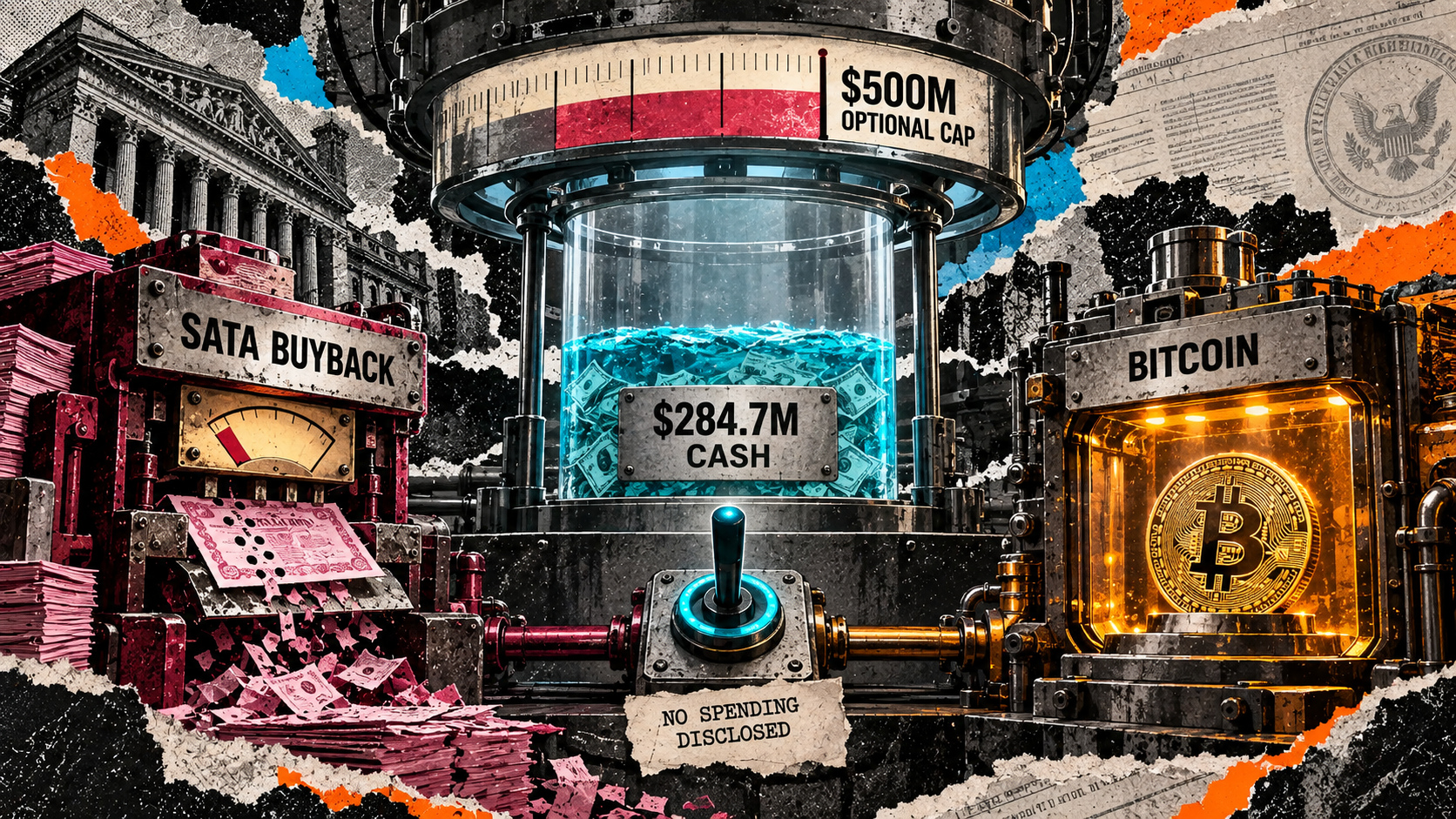
Strive’s decision to fund a $500 million share buyback directly impacts its dividend structure by prioritizing equity concentration over immediate cash distributions to shareholders. By setting a SATA (Share Acquisition and Treasury Allocation) ceiling that is $215.3 million higher than its reported cash reserves as of October 2, 2026, the firm is effectively betting its future liquidity on the performance of its Bitcoin holdings. This pivot marks a departure from its previous dividend-heavy model, signaling a preference for long-term share value appreciation at the expense of short-term yields for its US-based investors.
The financial maneuver comes at a time when Bitcoin treasuries are under increased scrutiny from US regulators regarding their capital adequacy ratios and balance sheet transparency. Without a disclosed dedicated funding source or completed repurchases, Strive is operating in a high-risk zone where its operational cash flow may not be sufficient to cover the buyback without liquidating a portion of its Bitcoin reserves. This "cash-reserve risk" highlights the growing tension within Bitcoin-native firms between maintaining a long-term accumulation strategy and satisfying institutional demand for stock price support through buybacks.
For the broader crypto market, Strive’s move is a bellwether for how publicly traded Bitcoin treasuries handle maturity in 2026. As firms move beyond mere accumulation, the pressure to return value to shareholders often conflicts with the volatile nature of their primary asset. If Strive successfully navigates this buyback without a fire sale of its BTC, it could set a precedent for other corporate treasuries; however, a failure to secure secondary funding could trigger bearish sentiment regarding the sustainability of BTC-backed balance sheets in a high-interest-rate environment.
Investors should closely monitor Strive’s upcoming SEC filings for the remainder of Q4 2026 to see if a dedicated funding source—such as a debt offering or a specific Bitcoin-collateralized loan—is established. The lack of completed repurchases suggests the firm is waiting for a specific market window, making the next earnings report critical for assessing the actual impact on dividend payments. Furthermore, any sudden downturn in Bitcoin prices could force a reconsideration of the $500 million target, potentially leading to a sharp correction in Strive's stock price as liquidity concerns take center stage.