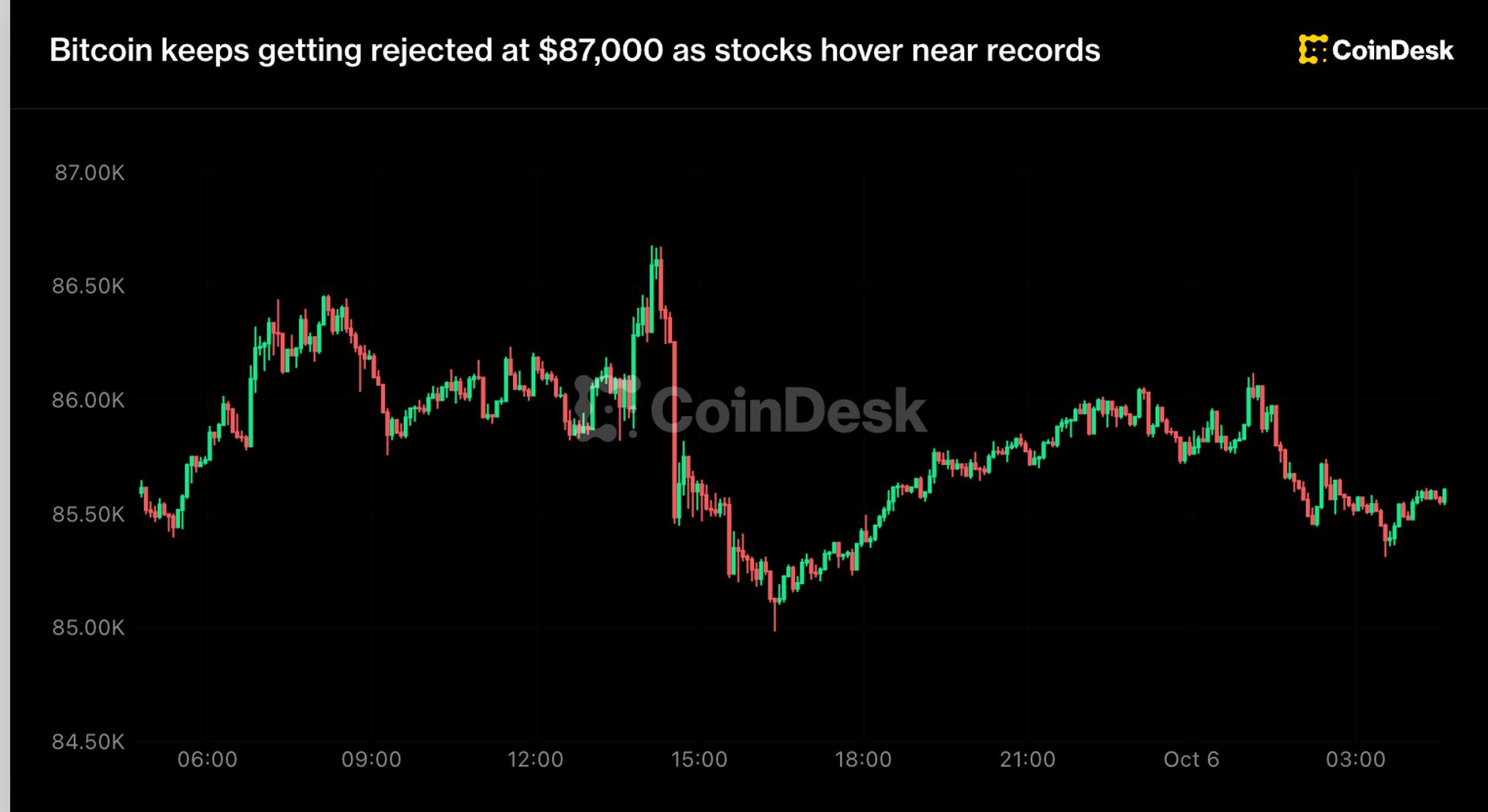
Bitcoin’s inability to surpass the $87,000 mark—marking its third failed attempt since late September 2026—is largely the result of surging U.S. Treasury yields creating a headwind for digital assets. While the Nasdaq recently closed at a record high, the rising cost of capital is discouraging the aggressive 'risk-on' behavior needed to push Bitcoin into a new price discovery phase. As BTC retraced to $85,600 following its latest rejection, the market showed a clear divergence from traditional tech stocks.
The current price action highlights a period of significant technical resistance. Each time Bitcoin approaches $87,000, heavy sell orders have triggered a pullback, indicating that institutional profit-taking is occurring at these levels. This behavior is compounded by the fact that US investors are currently weighing the benefits of record-breaking equity performance against the stability offered by higher bond yields, which often leads to reduced speculative capital for the crypto sector.
From a regulatory and geopolitical standpoint, the resilience of the U.S. dollar and the hawkish stance of the Federal Reserve regarding long-term interest rates are the primary drivers of this volatility. While corporate earnings are bolstering stocks, the crypto market remains more vulnerable to the liquidity drains associated with the Federal Reserve's balance sheet management in late 2026. This has created a environment where Bitcoin is trapped in a narrow range despite positive sentiment in broader financial markets.
For traders, the immediate focus remains on whether Bitcoin can maintain support above $85,000. A continued failure to break $87,000 could signal a deeper consolidation phase or a test of the $82,000 support zone. Market participants should closely monitor upcoming Treasury auction results and Federal Reserve commentary, as any softening in yields could be the catalyst required for Bitcoin to finally mirror the Nasdaq’s bullish trajectory.