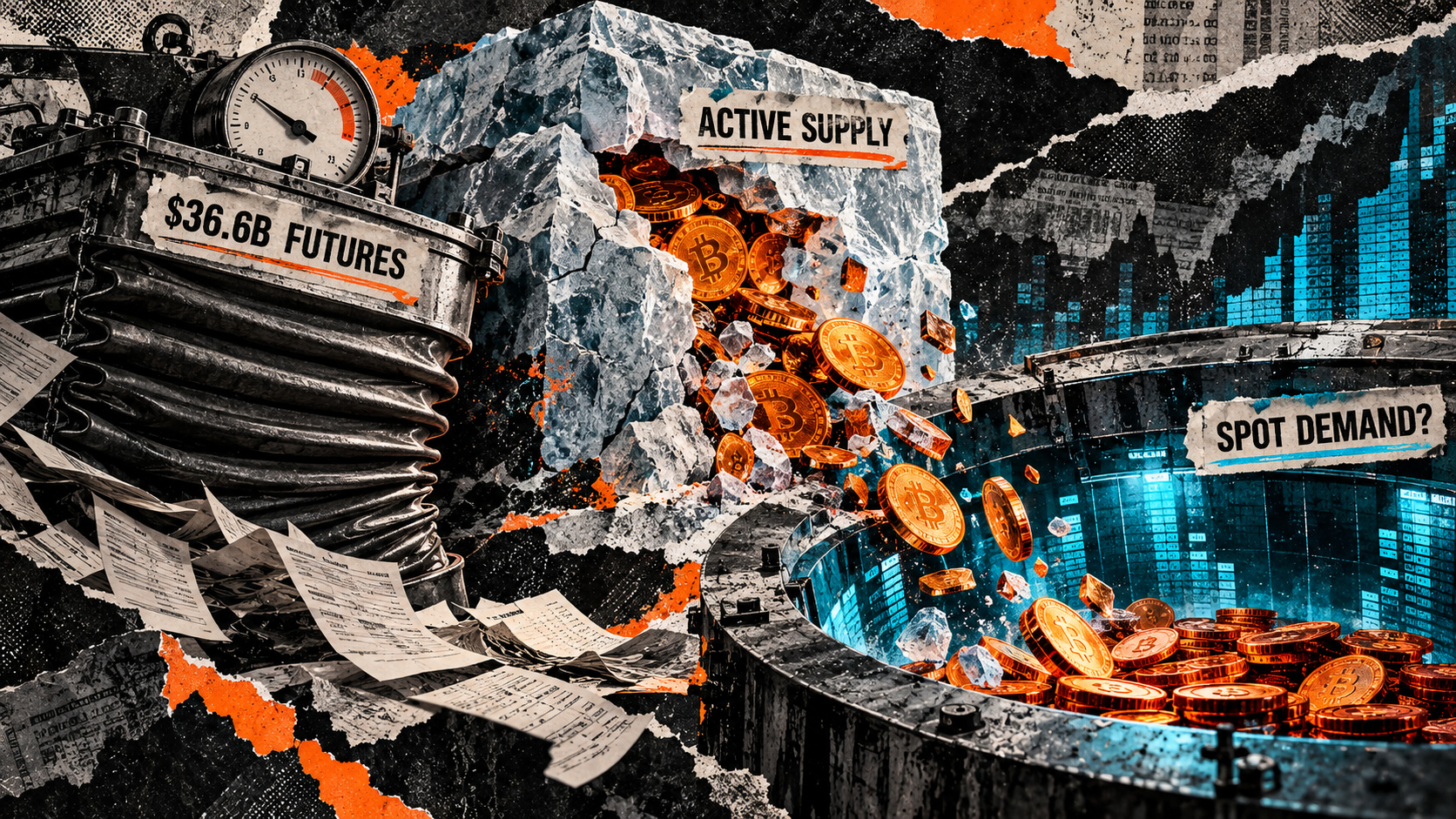
The $1.4 billion drop in Bitcoin futures open interest is contributing to increased price stability by flushing out excess leverage from the market. While a massive reduction in derivatives positions often signals a sell-off, Glassnode data reveals that spot market buyers are actively absorbing the supply, preventing a major price collapse. This shift indicates that the current Bitcoin market is becoming less dependent on speculative liquidations and more grounded in actual asset ownership, which typically reduces the frequency of violent 'flash crashes.'
According to Glassnode’s latest weekly snapshot for early 2026, the derivatives footprint in the crypto space has shrunk significantly. This deleveraging event followed a period of heightened volatility, yet the 'HODL' behavior among long-term investors has remained resilient. Instead of a cascading liquidation event, the market saw a controlled exit of futures traders, paired with a steady increase in wallet addresses holding small-to-mid amounts of BTC, signaling a redistribution of coins from speculators to holders.
In the U.S. market, this transition is particularly relevant as regulators like the CFTC continue to scrutinize highly leveraged crypto products. A market driven by spot demand rather than 100x leverage is generally viewed more favorably by institutional investors and potential ETF providers. The reduction in futures exposure minimizes the risk of systemic liquidations that often trigger regulatory alarms regarding market manipulation and retail investor protection, potentially smoothing the path for further institutional adoption.
Moving forward, traders should monitor the 'Spot Cumulative Volume Delta' (CVD) to see if buying pressure remains consistent. If spot buyers continue to act as a counterweight to derivatives outflows, Bitcoin could establish a higher price floor and lower its overall beta compared to traditional equities. However, if spot demand wanes while futures interest remains low, the market could face a period of low-liquidity stagnation. Investors should also watch for U.S. Federal Reserve interest rate decisions, which could impact the capital flows entering both the spot and derivatives sectors.