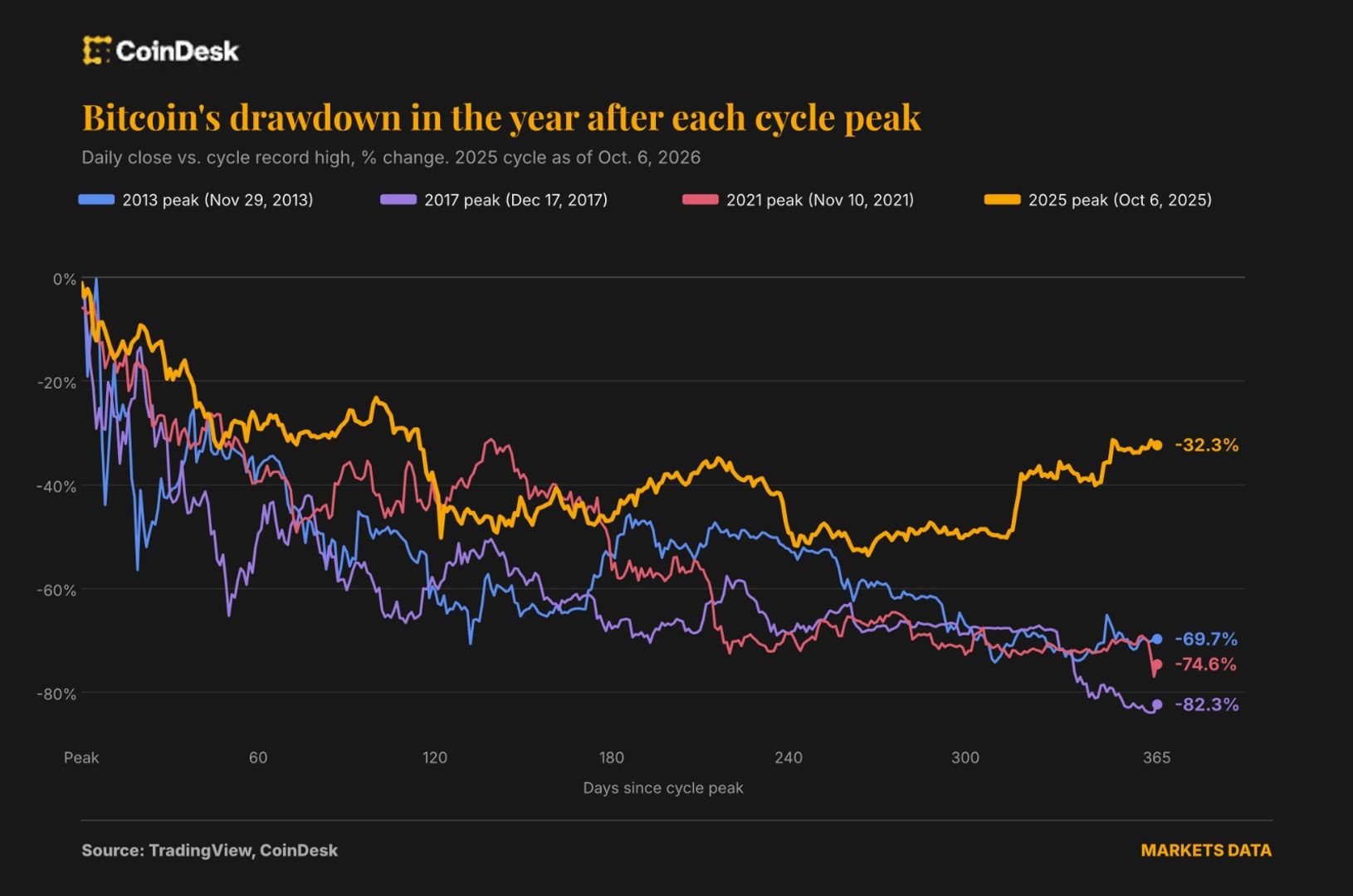
The current Bitcoin bear market is significantly milder than historical cycles because institutional adoption and ETF integration have stabilized the asset's floor. While previous bear markets saw prices plummet by as much as 85%, the 2026 correction has seen Bitcoin retreat only 32% from its record high of $126,000. This change reflects a fundamental shift in holder behavior, as large-scale investors and corporate treasuries now treat BTC as a strategic reserve asset rather than a purely speculative trade.
The record high of $126,000 was fueled by a combination of consistent US spot ETF inflows and a more favorable US regulatory framework established earlier in the year. Unlike the 2021 bull run, which was heavily leveraged by retail traders, the 2025-2026 cycle was dominated by pension funds and institutional managers. When macro headwinds arrived in mid-2026, these entities largely held their positions, preventing the cascading liquidations that characterized previous crypto winters.
Regulatory clarity has also played a crucial role in preventing a deeper crash. The shift in US political sentiment toward crypto as a permanent fixture of the financial system has reduced the 'regulatory risk premium.' Furthermore, as geopolitical tensions continue to affect global markets, Bitcoin has increasingly served as a digital hedge for international investors facing domestic currency devaluations, providing a persistent buy-side pressure that did not exist during the 2022 downturn.
Moving forward, investors should monitor the $85,000 support level, which currently serves as the psychological floor for this cycle. If the US Federal Reserve signals a pivot toward monetary easing later in 2026, the 32% drawdown may be viewed retrospectively as a healthy consolidation phase. Market participants should watch the next round of institutional 13F filings to confirm if major asset managers are using this period to accumulate more Bitcoin.